

In a glass conference room overlooking a busy street in Singapore’s financial district, a risk analyst scrolls through an AI‑generated market summary. The language is polished. The structure is clean. It cites macroeconomic data, references central bank guidance, even quotes a research note from a major bank. Before forwarding it to her team, she pauses. She opens another tab and starts checking the numbers one by one.
This small ritual has become routine across industries. AI drafts the memo, outlines the brief, summarizes the case file. A human follows behind, verifying. The technology moves fast; trust moves slower.
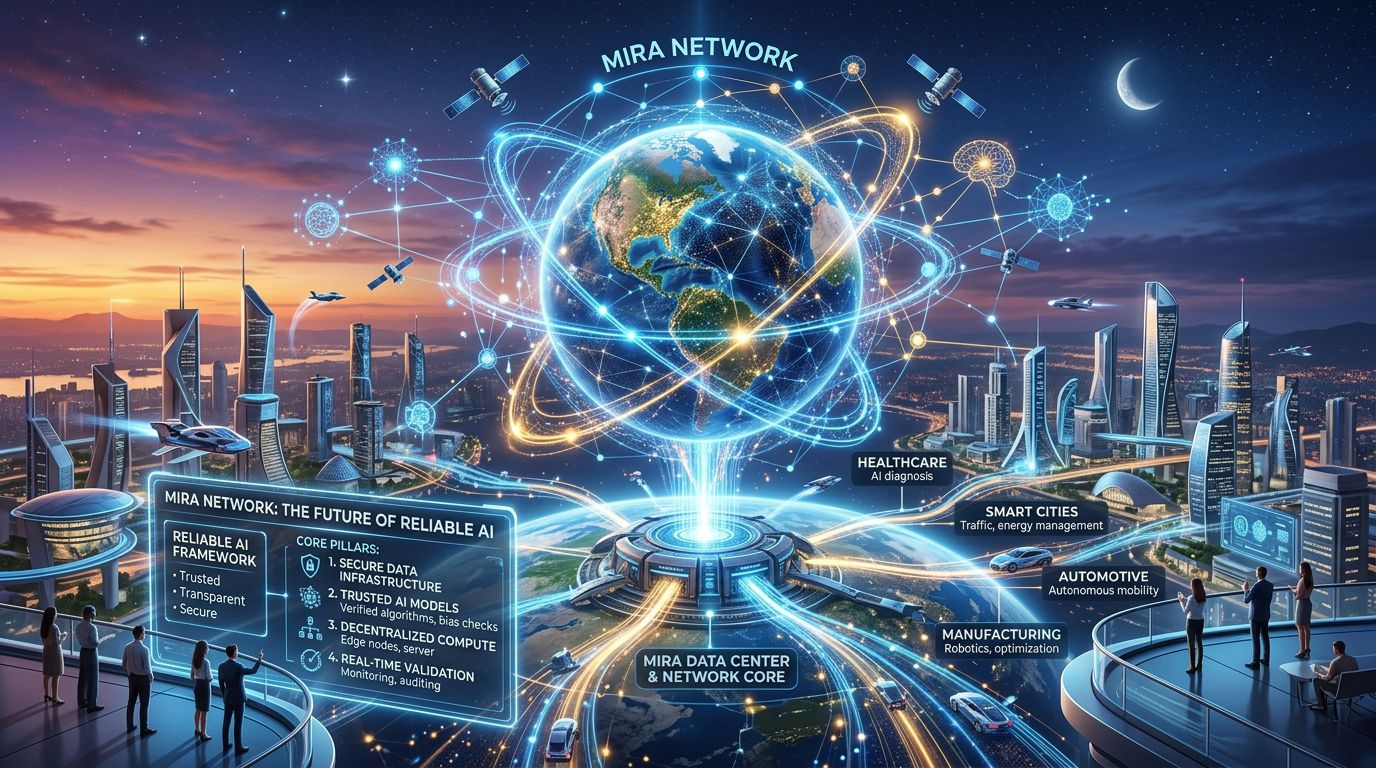
Mira Network is built around that gap.
The standard response has been to improve the models themselves—train on cleaner data, add reinforcement learning from human reviewers, plug them into search engines so they can retrieve real documents. These steps reduce error rates. They do not eliminate the underlying problem that a single system is generating and implicitly validating its own output.
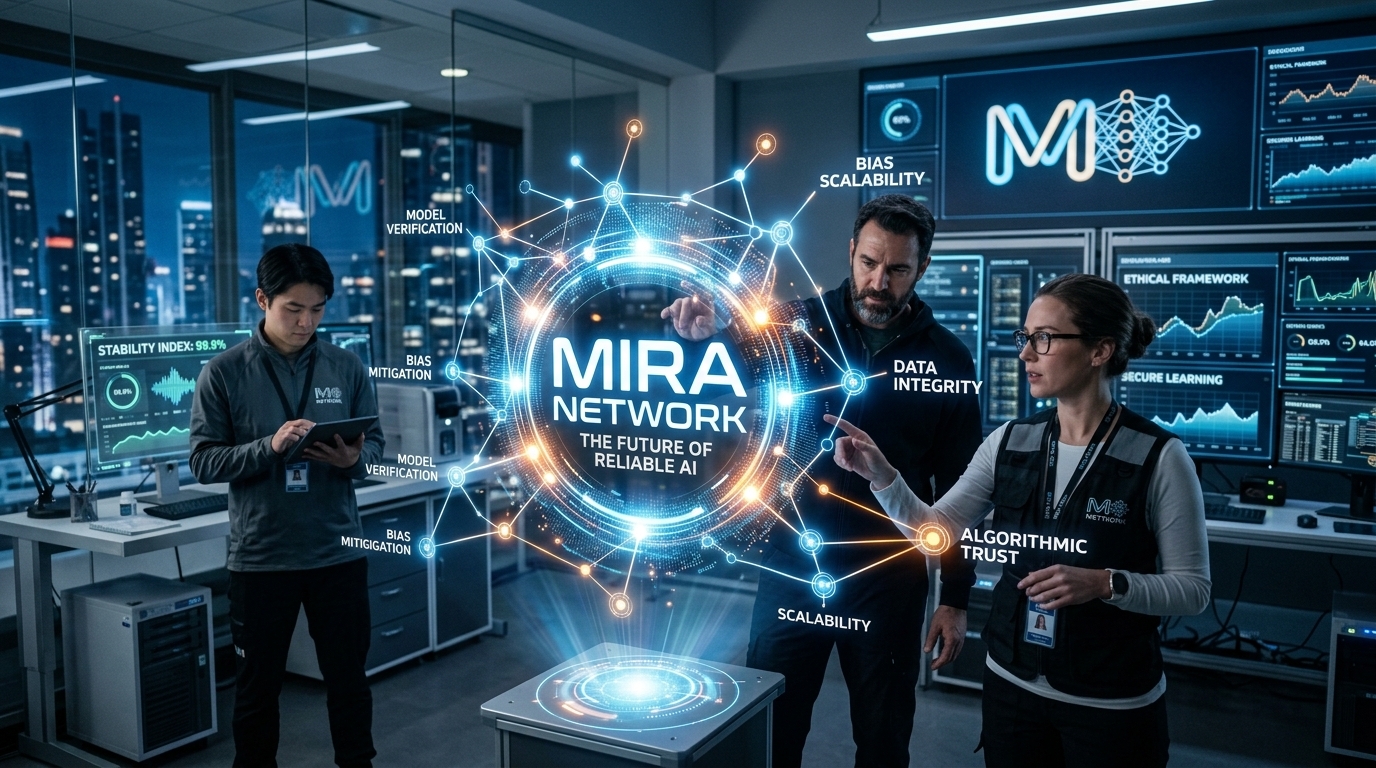
Mira takes a different approach. Instead of asking one model to be both author and arbiter, it separates generation from verification. An AI produces a response. That response is broken into discrete, testable claims. Each claim is then distributed across a decentralized network of independent validators—other AI systems configured differently, or nodes operated by separate participants. They assess the claim against data they can access. Their judgments are recorded.
The mechanics matter. Each validator attaches a cryptographic signature to its assessment, and in many designs, stakes economic value on its accuracy. If a validator consistently approves claims that later prove false, it risks losing that stake. If it builds a record of careful validation, its reputation strengthens.
The effect is less glamorous than the latest model release. It is procedural. A claim about a pharmaceutical approval date must survive independent checks before it is marked as verified. A statistic about unemployment in a specific quarter is compared against public datasets. If validators disagree, that disagreement is visible. The final output carries not just an answer but a traceable history of review.
There are costs. Verification introduces latency. Breaking text into claims requires additional computation. Which decisions justify the extra layer of scrutiny? A social media caption may not. A clinical recommendation probably does.There is also the issue of diversity within the validating network.
Yet the alternative is visible in everyday workflows. Journalists copy AI‑generated summaries into drafts, then spend hours fact‑checking. Compliance officers treat AI outputs as rough notes rather than finished analyses.
Mira suggests that verification itself should be infrastructural, not improvised. The network becomes a shared utility for checking machine‑generated claims. It does not replace human judgment. It reframes it. Instead of scrutinizing every sentence, a user can focus on claims that failed to reach consensus or that carry lower confidence scores.
The early phase was defined by surprise at what these systems could produce—poems, code, research summaries in seconds. The current phase is more sober. It asks how those outputs hold up under pressure. Reliability is not an abstract virtue; it is a practical constraint. A misreported earnings figure can move a stock. An incorrect dosage suggestion can harm a patient.
Blockchain technology, often associated with speculative finance, enters here in a quieter role. Its value is not speed or hype but immutability and shared state. Once a validation record is written, it cannot be quietly altered. Participants see the same ledger. Disputes unfold against a common history.
None of this guarantees a future without AI errors. Systems will still misinterpret ambiguous data. Validators will disagree. Economic incentives can be gamed if poorly designed. But the posture changes. Instead of presenting AI output as a finished product, the system treats it as a claim subject to review.
Back in the conference room, the analyst finishes cross‑checking the market summary. It took twenty minutes. She corrects two figures and removes a citation that leads nowhere. With a network like Mira in place, much of that routine verification could occur before the memo reaches her screen. The time she regains would not eliminate risk. It would allow her to focus on judgment rather than detection.
The future of reliable AI may depend less on making models ever larger and more on surrounding them with structures that assume they can be wrong. Reliability, in that sense, is not a property of a single system. It is the outcome of a process—transparent, distributed, and accountable. Mira’s contribution is to formalize that process, to make verification visible and shared. In a world increasingly shaped by machine‑generated words, that visibility may prove as important as the words themselves.