

Fabric Protocol sits in that question. Engineers adjust sensor fusion parameters after a camera struggles in low light. They refine motion planning algorithms when a robotic arm jitters near delicate components. These are not grand breakthroughs. They are incremental corrections, logged in internal repositories and pushed to fleets after internal review. Outside observers see only the improved performance, not the chain of reasoning behind it.
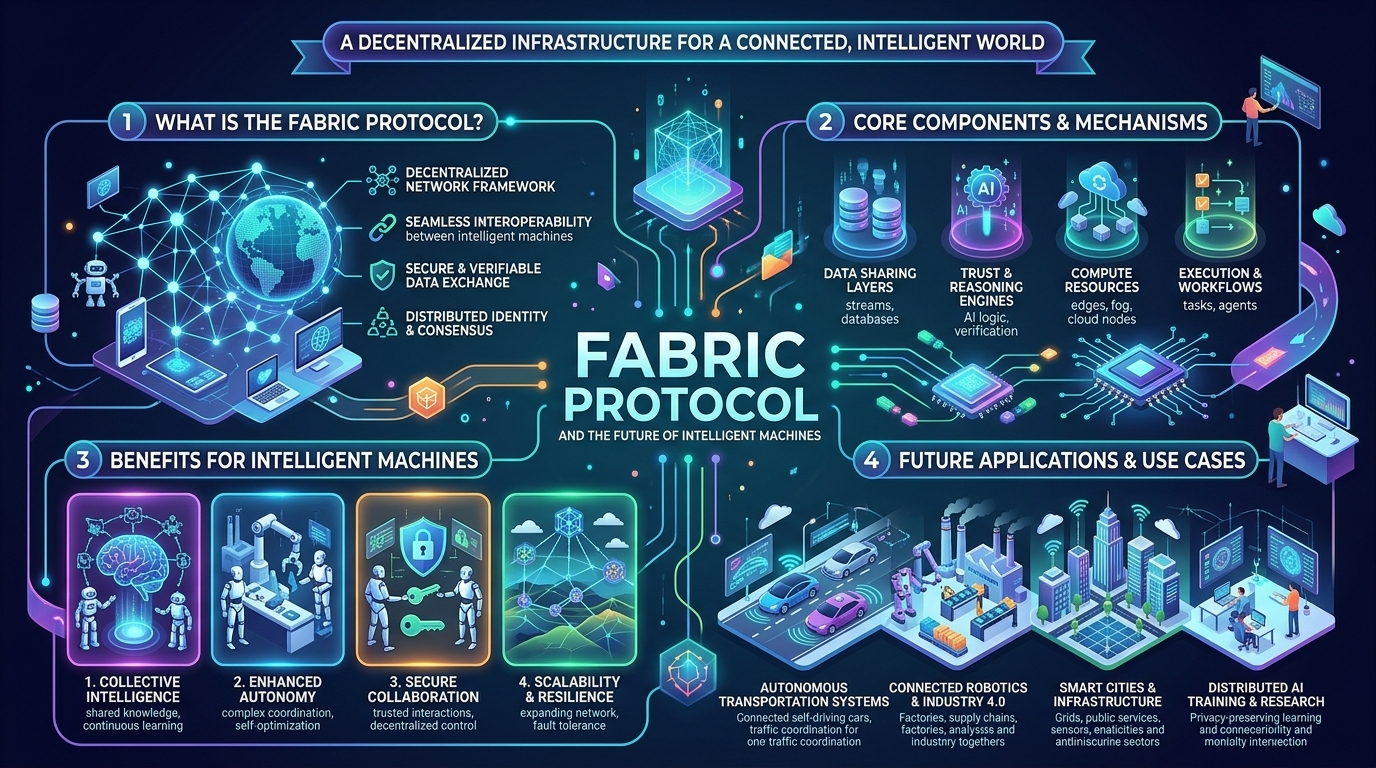
Fabric suggests moving part of that chain into the open. A proposed modification to a navigation stack, for example, could be submitted to a distributed network where independent participants run simulations against their own datasets. One team might test the update against crowded urban footage from Jakarta. Another might evaluate it using warehouse layouts from Hamburg. Their findings—performance gains, unexpected regressions, edge cases—are attached to the proposal and written to a public ledger.
The ledger does not claim to know what is right. It preserves how agreement was reached. Validators attach cryptographic proofs to their evaluations.
This approach introduces friction. Consensus takes time. In a competitive market, time is not trivial. A robotics manufacturer racing to deploy a new model may resist exposing its software roadmap to outside scrutiny. There are intellectual property concerns, regulatory constraints, and plain old pride. Engineers are used to tight teams and fast iterations, not public debate over parameter tuning.
Yet the alternative is visible in the growing patchwork of robotic deployments. Hospitals When incidents occur—a robot blocking a wheelchair ramp, an autonomous cart colliding with shelving—the investigation often depends on logs controlled by a single company.

An open protocol does not eliminate accidents. It changes how they are examined. If a collision avoidance update was approved through a shared validation process, the record shows who tested it and under what conditions. If dissenting evaluations were overruled, that history is visible. Transparency does not assign blame automatically, but it narrows the space for quiet revision.
Economic incentives underpin the system. Participants stake resources when validating updates, creating consequences for careless approval. This is not a philosophical gesture toward decentralization; it is a mechanism to encourage rigor. Designing those incentives is delicate work. Too lenient, and validation becomes perfunctory. Too harsh, and participation shrinks to a small, risk‑tolerant core.
Critics will argue that robotics needs decisive leadership, not distributed deliberation. They are not entirely wrong. In emergency scenarios—a malfunctioning fleet that must be halted immediately—centralized authority can act faster. Fabric does not eliminate the need for decisive intervention. It aims to shape the slower, steadier process of evolution between emergencies. She does not think about governance protocols or cryptographic proofs. She expects the machine to behave safely and predictably. That expectation is a quiet form of trust.
As intelligent machines take on more of the world’s routine labor—sorting, transporting, assisting—that trust becomes infrastructural. It rests not only on hardware reliability but on the processes that guide software change. Fabric Protocol is an attempt to formalize those processes in the open, to treat robotic behavior as something collectively shaped rather than centrally dictated.
Whether such a model can compete with faster, closed systems remains uncertain. Markets reward speed and polish. Public systems often move slower. Yet as robots leave controlled spaces and enter shared ones, the legitimacy of their governance may matter as much as their efficiency. The future of intelligent machines will be written in code, but also in the structures that decide how that code changes. Fabric’s wager is that those structures should be visible, participatory, and accountable from the start.