
into your projects, you'll want to focus on their Verified Generate API and the Mira SDK. As of February 2026, the documentation highlights a developer-first approach designed to be compatible with existing AI standards like OpenAI.
The latest developer resources and integration paths:
1. The Mira SDK (Python & JavaScript)
The Mira SDK is the primary toolkit for building "Flows"—customizable AI workflows that include automated verification.
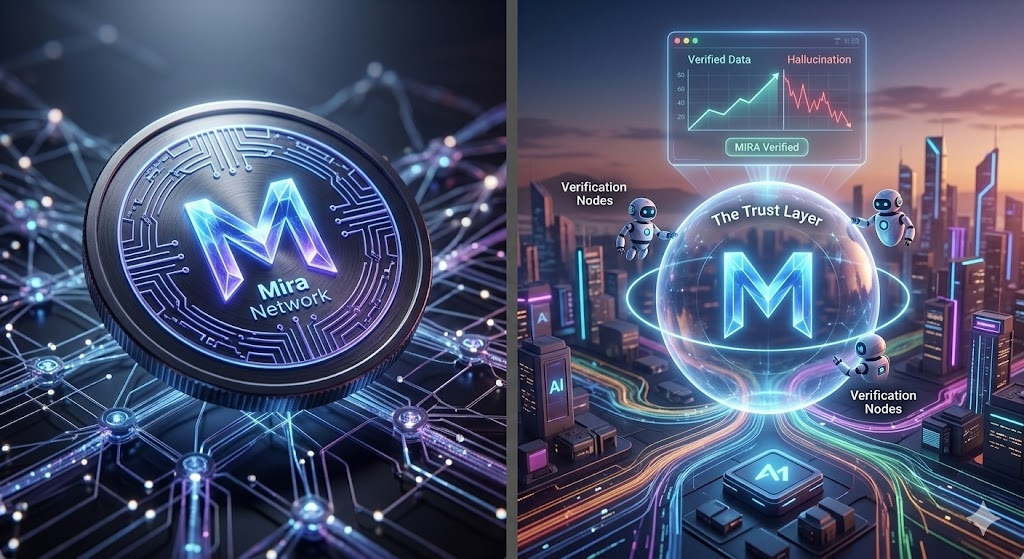 Purpose: Orchestrates multiple models (GPT4, Llama 3, etc.), manages load balancing, and handles the "decomposition" of AI responses into verifiable claims.
Core Feature: it allows you to wrap any standard LLM call in a verification layer that cross-checks the output against 110+ independent nodes before returning the result to your app.
2. Verified Generate API
For developers who want a "plug-and-play" solution without managing complex flows, Mira offers an OpenAI-compatible API.
Benefit: You can simply swap your existing OpenAI base URL with Mira’s endpoint. The network then intercepts the request, performs multi-model consensus verification, and returns a "Certified" response with a confidence score.
Accuracy: Documentation claims this reduces hallucinations from a ~27% baseline down to less than 5%.
3. Key Integration Steps
To get started today, developers typically follow this sequence:
1. Mira Console: Sign up at the [Mira Console](https://console.mira.network) to generate your unique API Key.
2. Flow Configuration: Define your AI task (e.g., "Legal Document Summary") in a `YAML` file.
3. Deployment: Use the CLI to deploy your flow:
4. Execution: Call your verified flow via the SDK in just a few lines of code.
Developer "Builder Fund"
If you are building a unique application on Mira, they currently have a $10 million Builder Fund managed by the Mira Foundation. This fund provides $MIRA grants to projects that increase the network's verification volume, particularly in the healthcare and fintech sectors.