

The drums of war echo not just across mountain passes and straits, but through the world's trading floors and financial centers. As we survey the current geopolitical landscape—with the persistent volatility along the Pakistan-Afghanistan border and the specter of direct U.S.-Iran confrontation—history offers us a powerful, if imperfect, lens through which to view the potential financial fallout. The narrative that emerges from decades of conflict data is not one of unmitigated disaster for global markets, but rather a complex story of short-term panic, remarkable resilience, and the heavy, often overlooked, burden borne by those closest to the fire.
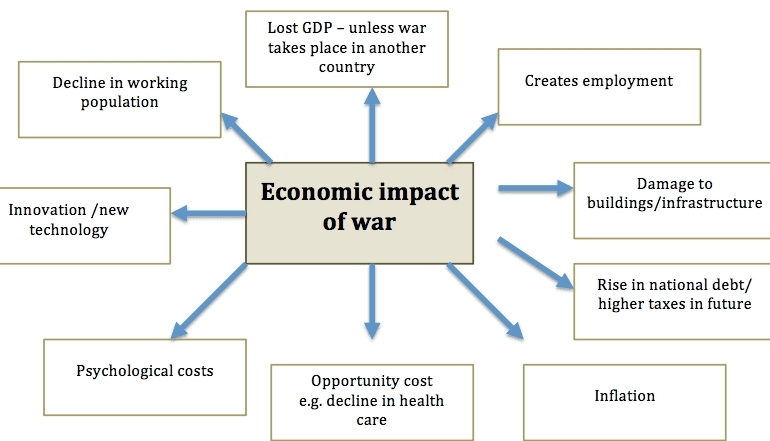
To understand the potential impact of a renewed Pakistan-Afghanistan conflict, one must first reckon with the staggering cost of the last one. In the two decades following its decision to stand as a frontline state in the U.S. "war on terror," Pakistan paid a terrible price. Officials estimate the country suffered over $150 billion in economic losses. This figure, while staggering, only hints at the deeper trauma. It encompasses the destruction of physical infrastructure, the drying up of foreign investment, and the collapse of tourism. More than 70,000 Pakistani lives were lost, and the social fabric of entire communities was torn apart by terrorism and militancy. Reflecting on this painful irony, it was noted that while the U.S. provided billions in aid, Pakistan's economy bled out more than seven times that amount. This was a clear case of catastrophic proximity; the neighbor to a war zone bleeds in ways that a distant superpower does not.
Fast forward to the present, and this historical pattern is repeating in microcosm. The escalating border clashes between Pakistan and Afghanistan have not triggered a global recession, but for the region, the impact is profound. The closure of critical border crossings has choked bilateral trade, which plummeted to under $1 billion in recent years from a high of $2.7 billion just over a decade ago. For Afghanistan, landlocked and heavily reliant on Pakistan for the vast majority of its cross-border trade, the result is a deepening economic crisis and rising inflation. Meanwhile, the Pakistan Stock Exchange has become a barometer of fear, swinging wildly with every new skirmish and diplomatic failure. Here, the financial narrative is not about global portfolio diversification, but about the stark reality for emerging markets: when conflict flares, capital flight accelerates, and the risk premium for any investment soars.
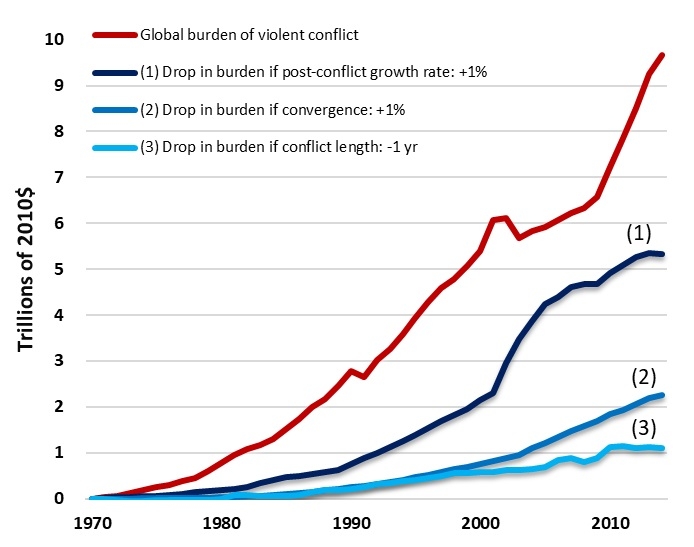
Shift your gaze westward, towards the Persian Gulf, and the financial calculus changes. The potential for a U.S.-Iran conflict introduces a variable that truly is global in its reach: oil. History is unequivocal on this point. The 1973 Yom Kippur War and the subsequent oil embargo, the Iranian Revolution in 1979, and the outbreak of the Iran-Iraq War all sent crude prices more than doubling. This is the "geopolitical risk premium" being added to every barrel. The strategic importance of Iran—and its proximity to the Strait of Hormuz, through which a quarter of the world's crude oil passes—means that any military action immediately threatens the world's lifeblood.
The initial reaction to such a shock is predictable and visceral, a classic "risk-off" stampede. When key escalations occurred in recent years, investors fled to safety; gold surged and U.S. Treasury yields tumbled. When Israel and Iran traded direct blows in recent memory, Bitcoin and stocks dipped, and oil spiked. However—and this is the crucial lesson from the data—these spikes are often remarkably short-lived. Following certain strikes, market anxiety evaporated almost as soon as retaliatory strikes proved to be symbolic and measured. Similarly, after a U.S. strike on Iranian nuclear facilities, markets rebounded within days once it became clear that Iran would not block the Strait of Hormuz, a move that would have crippled its own economy.
This pattern is reinforced by extensive academic research. Studies of numerous invasions over the past two decades found that while stock markets do react negatively, the effects are most pronounced on the first day. Crucially, emerging markets are far more sensitive and suffer greater negative returns than their advanced counterparts. Analysis of major Middle East conflicts involving the U.S. shows that in the vast majority of cases, equity markets recovered within the year. The one glaring exception—the 1973 oil embargo—is instructive: it was not just the conflict itself, but the resulting, sustained macroeconomic shock of rampant inflation and a crippling oil crisis that caused a prolonged downturn. Since the 1980s, no single geopolitical crisis has tipped the global markets into a bear market. Even the attacks of September 11, for all their horror, triggered a decline that, while severe, did not fundamentally alter the market's long-term trajectory.
This market resilience stems from a simple fact: the global economy adapts. Strategic petroleum reserves are released, OPEC+ nations calibrate their output, and traders quickly look past the initial shock to assess the underlying impact on supply and demand. As one strategist observed, once the markets recognize the direction of a conflict, they tend to stabilize. For the U.S., its relative energy independence provides a powerful buffer against oil shocks that would devastate other economies. And for Chinese assets, historical data suggests that Middle Eastern conflicts have no significant direct impact, aside from a day or two of fleeting sentiment.
So, what is the final narrative on the world finance these wars might shape? It is a story of profound inequality in the face of danger. For a Pakistani factory owner trying to convince foreign buyers that his plant isn't on the front line, or for an Afghan family watching food prices climb as borders close, the financial impact is immediate, devastating, and enduring. It is a story of a global market system that has developed thick skin, where short-term panic is often just that—short-term—provided the oil keeps flowing and the conflict remains contained. The dollar might get a brief boost, gold will glitter more brightly, and energy traders will hold their breath. But the underlying macroeconomic currents—inflation, interest rates, and corporate earnings—will ultimately steer the ship.
The greatest danger, then, is not the conflict itself, but what it ignites. History's clearest warning is that geopolitics matters most for global finance when it exacerbates existing macroeconomic shifts. A U.S.-Iran war that truly strangles the Strait of Hormuz, or a Pakistan-Afghanistan conflict that spirals into a broader nuclear flashpoint, could create the kind of sustained supply shock that breaks through the market's defenses. Short of that catastrophic escalation, the world's financial nerve center will likely flinch, then recover. The real and lasting bill, as always, will be paid in the fragile economies on the war's very doorstep.