
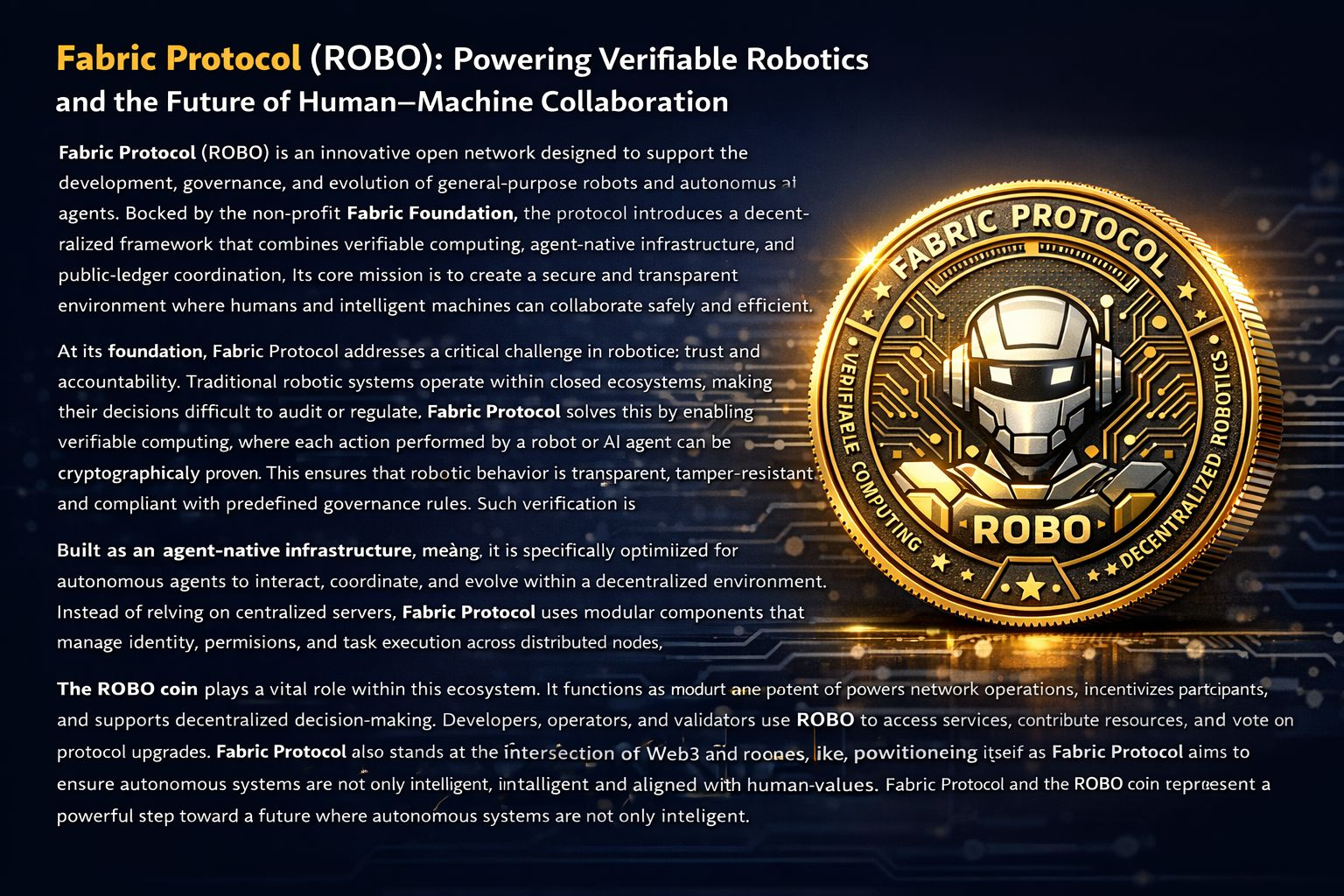
@Fabric Foundation Protocollo Fabric(ROBO): Potenziare la robotica verificabile e il futuro della collaborazione uomo-macchina
Il Protocollo Fabric (#ROBO ) è una rete aperta innovativa progettata per supportare lo sviluppo, la governance e l'evoluzione di robot di uso generale e agenti autonomi. Sostenuto dalla Fondazione Fabric senza scopo di lucro, il protocollo introduce un framework decentralizzato che combina calcolo verificabile, infrastruttura nativa per agenti e coordinamento su libro mastro pubblico. La sua missione principale è creare un ambiente sicuro e trasparente in cui gli esseri umani e le macchine intelligenti possano collaborare in modo sicuro ed efficiente in tutti i settori.
Alla sua base, il Fabric Protocol affronta una sfida critica nella robotica: fiducia e responsabilità. I sistemi robotici tradizionali operano all'interno di ecosistemi chiusi, rendendo difficile l'audit o la regolamentazione delle loro decisioni. Il Fabric Protocol risolve questo problema abilitando il calcolo verificabile, dove ogni azione eseguita da un robot o da un agente IA può essere provata crittograficamente. Ciò garantisce che il comportamento robotico sia trasparente, resistente alle manomissioni e conforme alle regole di governance predefinite. Tale verifica è essenziale per settori ad alto rischio come l'automazione sanitaria, la robotica industriale e la logistica intelligente, dove sicurezza e affidabilità sono imprescindibili.
Il protocollo è costruito come un'infrastruttura nativa per agenti, il che significa che è specificamente ottimizzato per consentire agli agenti autonomi di interagire, coordinarsi ed evolversi all'interno di un ambiente decentralizzato. Invece di fare affidamento su server centralizzati, il Fabric Protocol utilizza componenti modulari che gestiscono identità, permessi ed esecuzione dei compiti attraverso nodi distribuiti. Questa architettura consente a robot, sviluppatori e organizzazioni di collaborare mantenendo il controllo sui propri dati e politiche operative. Di conseguenza, più parti interessate possono implementare e gestire in modo sicuro flotte di macchine intelligenti in ambienti reali dinamici.
Una chiave innovativa del Fabric Protocol è la sua coordinazione di dati, computazione e regolamentazione attraverso un registro pubblico. I dati generati dai robot vengono registrati in tempo reale, consentendo un monitoraggio e una validazione trasparenti. I compiti computazionali possono essere distribuiti attraverso la rete e verificati indipendentemente, migliorando sia la scalabilità che la resilienza. Nel frattempo, le politiche di governance - come permessi operativi, limiti di sicurezza o vincoli comportamentali - possono essere applicate programmaticamente. Ciò garantisce che i sistemi robotici seguano regole condivise e auditabili che evolvono con il consenso della comunità e le esigenze normative.
La #ROBO moneta gioca un ruolo vitale all'interno di questo ecosistema. Funziona come token di utilità e governance che alimenta le operazioni di rete, incentiva i partecipanti e supporta il processo decisionale decentralizzato. Sviluppatori, operatori e validatori usano ROBO per accedere ai servizi, contribuire con risorse e votare sugli aggiornamenti del protocollo. Allineando gli incentivi economici con un'innovazione responsabile, il token aiuta a sostenere un'economia robotica equilibrata e collaborativa.
Il Fabric Protocol si trova anche all'incrocio tra Web3 e robotica, posizionandosi come infrastruttura fondamentale per la prossima ondata di tecnologie autonome. Man mano che le applicazioni decentralizzate si espandono oltre la finanza nell'automazione del mondo reale, la necessità di sistemi robotici sicuri, verificabili e interoperabili diventa sempre più importante. Il Fabric Protocol offre uno strato unificato in cui le macchine intelligenti possono operare in modo trasparente rimanendo responsabili nei confronti dei framework di governance definiti dagli esseri umani.
In ultima analisi, il Fabric Protocol mira a rimodellare il modo in cui la società interagisce con le macchine intelligenti. Combinando trasparenza, modularità e governance decentralizzata, fornisce un percorso scalabile verso una collaborazione sicura tra esseri umani e macchine. Man mano che la robotica e l'IA continuano a integrarsi nella vita quotidiana, il Fabric Protocol e la moneta ROBO insieme rappresentano un passo potente verso un futuro in cui i sistemi autonomi non sono solo intelligenti, ma anche affidabili, verificabili e allineati con i valori umani.
#BlockAILayoffs #AnthropicUSGovClash #MarketRebound #ROBO $ROBO
