

Just before dusk in a neighborhood outside Melbourne, a row of electric vehicles begins to draw power from the grid. Ovens switch on. Air conditioners hum louder as the heat lingers. For decades, this surge would have been met by a distant gas turbine ramping up somewhere beyond the horizon. Tonight, part of the response comes from the houses themselves. A cluster of home batteries discharges in small increments, coordinated not by a single utility’s command center but by a shared protocol that links devices across brands and contracts.
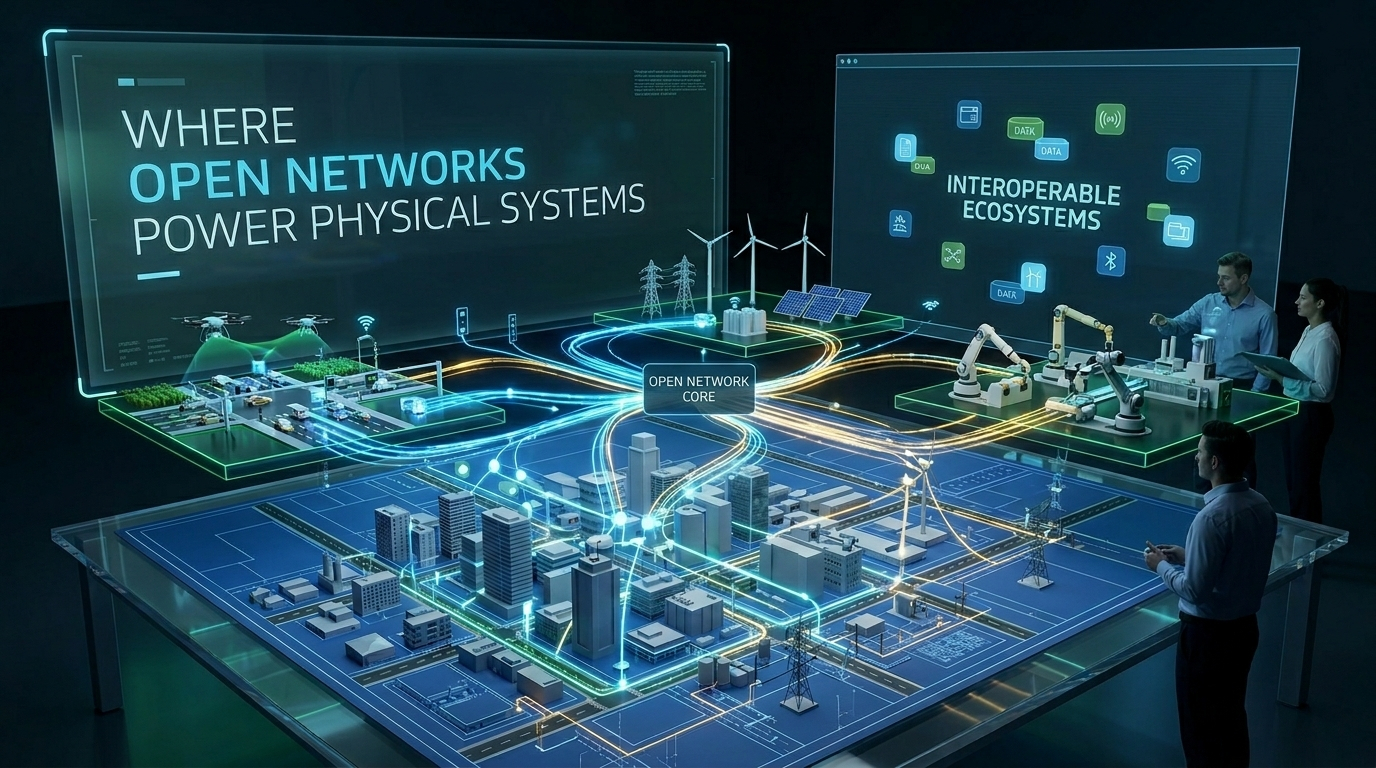
Nothing about the street looks unusual. The lawns are trimmed. The cars are parked at slight angles in driveways. The difference lies in the invisible layer that binds these objects together.
Physical systems used to be isolated by design. A power grid was an engineered hierarchy: generation at the top, transmission lines in the middle, consumption at the edge. Logistics chains were linear, each participant maintaining its own ledger of truth. Manufacturing plants ran on closed control systems that rarely spoke to anything beyond their own firewall. It was not elegant, but it was contained.
The world changed quietly when sensors became cheap and connectivity became ambient. Suddenly, almost anything with a motor or a switch could produce data. A solar inverter could report output every few seconds. A refrigerated container could record temperature deviations mid‑ocean. A streetlight could monitor pedestrian traffic and energy draw.
At first, these signals flowed back to whoever installed the hardware. The solar company had its dashboard. The shipping firm had its portal. The city maintained a traffic system that barely interfaced with the bus network. Each system was smarter than before, yet still largely alone.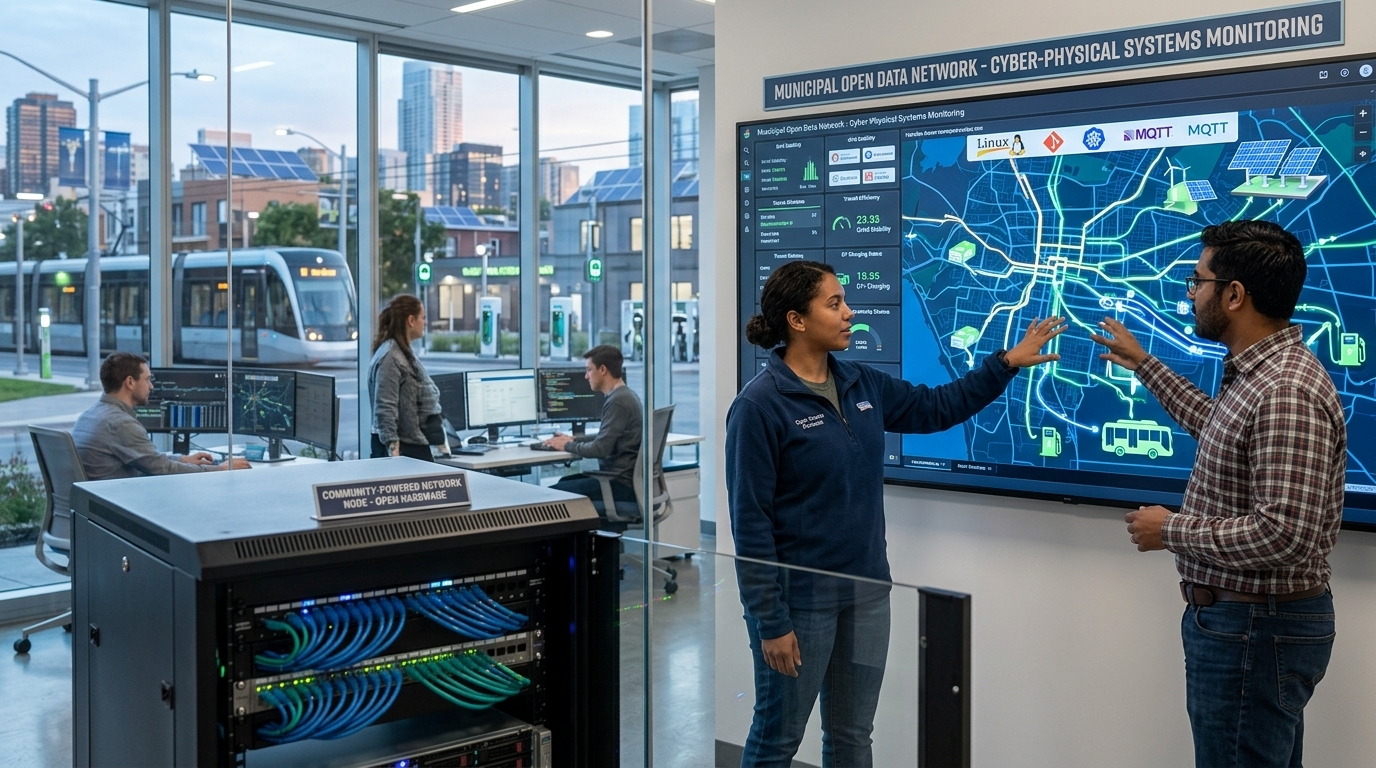
Open networks disrupt that solitude. They create shared rails where devices can publish state, request resources, and coordinate action across institutional boundaries. Instead of a battery speaking only to its manufacturer, it can respond to a standardized market signal. Instead of a shipping container reporting to a single logistics firm, it can write authenticated updates to a ledger visible to insurers and customs authorities alike.
Still, the physical world is not software. Steel rusts. Sensors drift out of calibration. Wireless signals drop in concrete corridors. An open network must contend with noise and failure without assuming perfect uptime. That is why local autonomy remains essential. A wind turbine brakes when wind speed exceeds safe limits, regardless of whether it can reach a global ledger. The network’s role is to record, reconcile, and optimize, not to override immediate safety decisions.
Security becomes a structural concern. When physical systems are coordinated through open protocols, the stakes rise. A corrupted software update to a warehouse robot is inconvenient. A compromised signal to a water treatment plant is catastrophic. Engineers respond with layered defenses: hardware‑rooted identities, encrypted communication, segmented permissions. The architecture aims to make malicious interference expensive and visible.
There is also the question of governance. Open networks do not eliminate power; they redistribute it. Standards must be defined. Updates must be ratified. The process is rarely fast. It is often contentious. But it reflects the reality that no single actor can credibly govern a global mesh of autonomous devices.
Back in Melbourne, the evening peak subsides. Batteries taper off their discharge. Some homes begin charging again at lower overnight rates. The homeowners do not watch these adjustments minute by minute. They notice lower bills, fewer outages, and perhaps a line item credit labeled “grid services.”
That quiet integration hints at a broader pattern. Open networks powering physical systems are less about spectacle than about incremental resilience. They make it possible for small devices—rooftop panels, garage batteries, temperature sensors—to participate in larger economic and operational structures without exclusive contracts.
There are tradeoffs. Openness can dilute control. Companies accustomed to owning entire stacks must share interfaces.
Yet the alternative is fragmentation. A city with ten incompatible scooter systems. A grid that cannot see its own distributed capacity. A supply chain riddled with blind spots.
The shift toward open coordination does not erase the physical constraints of pipes, wires, and asphalt. It overlays them with a layer of shared logic.
Cars rest. Air conditioners quiet. The infrastructure beneath them remains active, adjusting in small ways that most residents will never notice. Where open networks power physical systems, change often appears as continuity. Things simply work a little better than they used to.