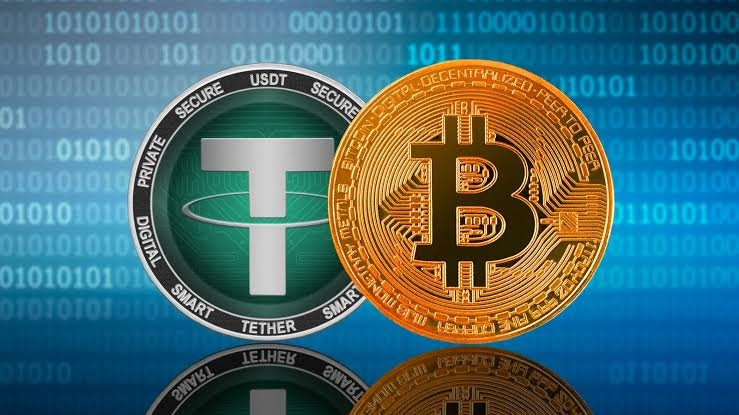
If you’re asking about the current relationship between USDT (Tether) and Bitcoin (BTC), there are a few key things to keep in mind:
1. Market Pairing and Trading
USDT and Bitcoin (BTC) are often paired together in cryptocurrency exchanges. BTC/USDT is one of the most commonly traded pairs, providing liquidity and serving as a stable base for traders. The volume of trading between USDT and Bitcoin can reflect broader market sentiment, especially when the market is volatile.
When Bitcoin’s price rises, traders often move into USDT to lock in gains, as USDT is considered a stablecoin.
Conversely, when Bitcoin’s price falls, traders may move back into BTC to capitalize on lower prices and potential for recovery, using USDT as a store of value.
2. Tether's Role in the Bitcoin Market
USDT plays a crucial role in providing liquidity to the Bitcoin market:
On ramps: Many newcomers into crypto buy Bitcoin via USDT as an entry point.
Market Stability: In times of Bitcoin volatility, traders use USDT to shield their portfolios. The demand for USDT increases when there’s a lot of uncertainty in Bitcoin’s price.
3. Bitcoin & USDT on Different Blockchains
Tether operates on multiple blockchains (e.g., Ethereum, Tron, Solana), and Bitcoin’s price can sometimes impact the supply and flow of USDT across those chains:
Bitcoin-based Tether: Tether is available on Bitcoin’s Omni Layer (a protocol built on Bitcoin's blockchain), allowing for BTC-backed Tether transactions.
Other Blockchains: As USDT has expanded to more blockchain networks (e.g., ERC-20, TRC-20), the relationship between USDT and Bitcoin can be seen in how the supply moves between chains and exchanges. For example, Bitcoin price fluctuations can lead to more USDT moving between platforms like Binance, which can influence the liquidity on specific blockchains.
4. Market Sentiment
The relationship between Bitcoin and USDT is heavily driven by market sentiment:
Bull Markets: During bull markets, Bitcoin often sees huge price rallies, and USDT tends to see a decline in its market share as people move into Bitcoin. In the past, this has caused a "flippening" of sorts, where Bitcoin dominates the market again.
Bear Markets: In bear markets, Bitcoin’s price drops, and there’s often a rush to move funds into USDT to preserve value, which increases its supply. During this time, USDT dominance (in terms of market cap) tends to rise.
5. Recent Trends (2023/2024)
Bitcoin’s Price Action: As of late 2023 and early 2024, Bitcoin has experienced significant volatility in its price, sometimes influenced by broader market conditions and regulatory news. The movement between BTC and USDT has been a critical indicator of market sentiment, with large moves often coming as investors seek safety in stablecoins.
Tether Reserves and Transparency: USDT’s role in the Bitcoin market is also influenced by the health of Tether itself. Any updates on its reserve backing and transparency can impact confidence in USDT as a stablecoin and, in turn, influence the Bitcoin market.
6. Bitcoin Dominance
Bitcoin dominance (its percentage of total crypto market capitalization) has fluctuated as the market has matured. During altcoin seasons, Bitcoin’s dominance can drop, while stablecoins like USDT hold a larger percentage of the market share. Conversely, during a Bitcoin bull run, its dominance increases, and USDT's share may decrease as traders flock to BTC.
7. Bitcoin ETFs & USDT
With the increasing interest in Bitcoin ETFs (Exchange-Traded Funds), such as the Bitcoin spot ETF, USDT could play a role in liquidity management. If these ETFs allow trading with USDT, it could impact how Bitcoin is bought or sold and how USDT is used within the ecosystem.
Conclusion
The relationship between USDT and Bitcoin is multifaceted:
Market Liquidity: USDT serves as a key tool for traders in the Bitcoin market, offering a stable asset to hedge against Bitcoin’s volatility.
Price Fluctuations: Bitcoin’s price movement heavily influences the demand for USDT, especially in terms of market sentiment and liquidity.
Blockchain Expansion: As USDT expands across more blockchains, its role in the Bitcoin market continues to evolve, with a growing number of trading pairs and decentralized exchanges using it for Bitcoin-related transactions.
Are you looking for insights on recent price movements, specific trading pair performance, or news surrounding USDT and Bitcoin?