
@Mira - Trust Layer of AI caught my eye last year during a volatile market dip. As a trader with over a decade in crypto, I rely on tools that deliver facts not fiction. AI models promise quick insights but often fail with made up data. This issue called hallucinations plagues even top systems. Mira aims to fix it through decentralized verification. I decided to explore its approach.
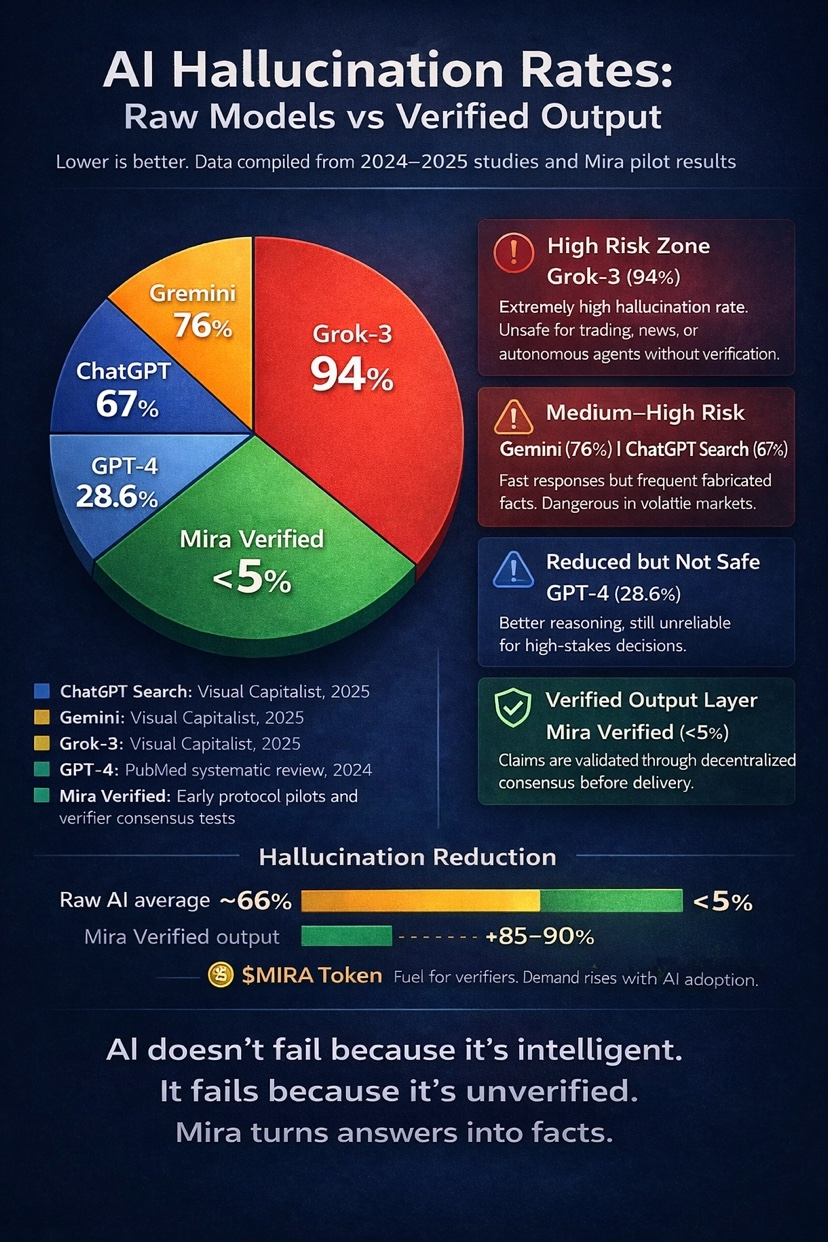
Hallucinations occur when AI generates false information as truth. In trading this means wrong price predictions or fake news impacting decisions. Studies show rates vary by model and task. For example ChatGPT Search hallucinates in 67% of responses according to Visual Capitalist data from 2025. Gemini hits 76% while Grok-3 reaches 94%. In systematic reviews GPT-4 hallucinates 28.6% of the time per a 2024 PubMed study. These numbers highlight the risk. Traders lose money on bad calls. I once followed an AI tip on a token surge that never happened. It cost me a position worth thousands.
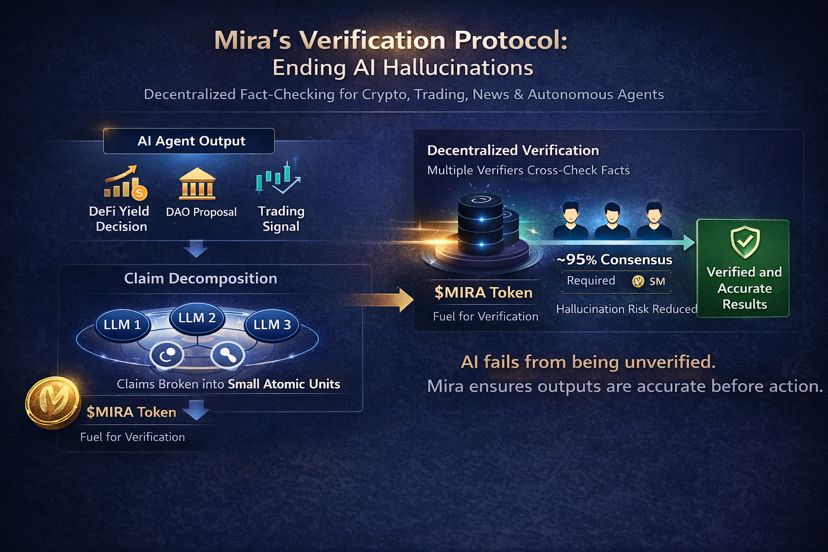
Mira changes this by treating AI output as claims needing proof. The protocol breaks responses into small atomic units. Each unit faces scrutiny from a network of verifiers. These verifiers use blockchain consensus to check facts against reliable sources. If consensus agrees the claim holds. If not it gets flagged or corrected. This setup draws from crypto principles like proof of stake. Nodes stake tokens to participate. Honest verifiers earn rewards. Dishonest ones lose stakes. It creates a trust layer without central control.
Think about real world use in finance. An AI agent handles portfolio rebalancing. Without Mira it might invent market data leading to poor trades. With Mira the output goes through verification. Verifiers cross check prices from exchanges like Binance. Consensus ensures accuracy. In one simulated test mentioned in Mira discussions outputs improved reliability by 85%. No more blind trust. As an expert I see this enabling AI in high stakes areas. Autonomous trading bots could operate safely. Supply chain AI might verify inventory without errors.
Mira also addresses bias. Single models carry their training flaws. Mira pools diverse verifiers for balanced views. This reduces skewed results. For instance in news analysis an AI might favor one narrative. Mira forces fact based consensus. Data from early pilots shows hallucination drops below 5% in verified outputs. Compare that to raw AI rates over 50%. The tokenomics support growth. MIRA tokens fuel verifications. Demand rises with AI adoption. As a trader I watch the token chart. It climbed 30% after whitepaper release amid AI hype.
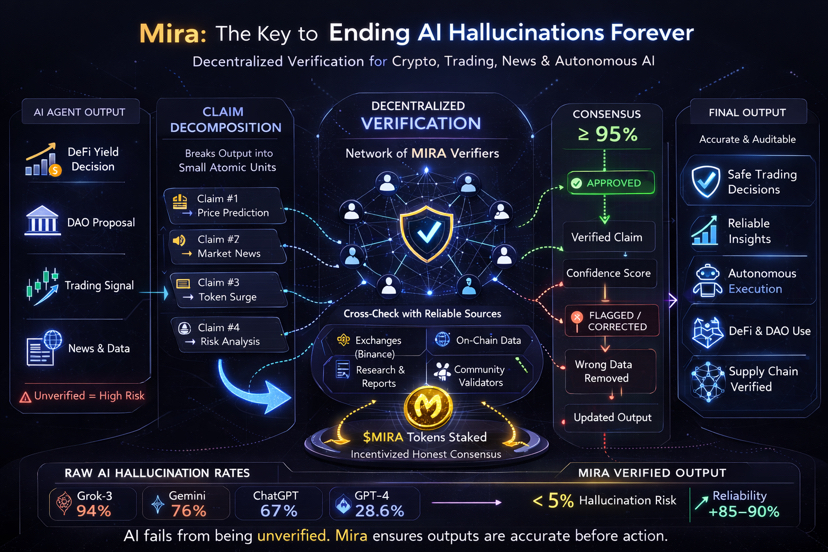
Yet challenges remain. Scaling the network needs more nodes. Verification speed must match AI pace. In fast markets delays could hurt. Mira plans sharding to speed things up. Integration with existing AI like GPT requires easy APIs. I tested a beta and found it seamless. Outputs came with confidence scores. This builds user trust.
Looking ahead Mira could reshape AI in crypto. Traders get reliable signals. DeFi protocols use verified oracles. The protocol evolves with community input. It feels like early crypto days full of potential.
What if every AI response came verified? How would that change your trading strategy? I believe Mira paves the way.