
The conversation around robotics is changing. Not long ago, robots were confined to factory floors, hidden behind safety cages and programmed for repetitive industrial tasks. Today they are stepping into warehouses, hospitals, farms, and even homes. As machines become more intelligent and autonomous, one big question rises above the rest: how do we build a system that people can truly trust? Fabric Protocol is designed as an answer to that question, offering an open global network that rethinks how robots are created, governed, and continuously improved.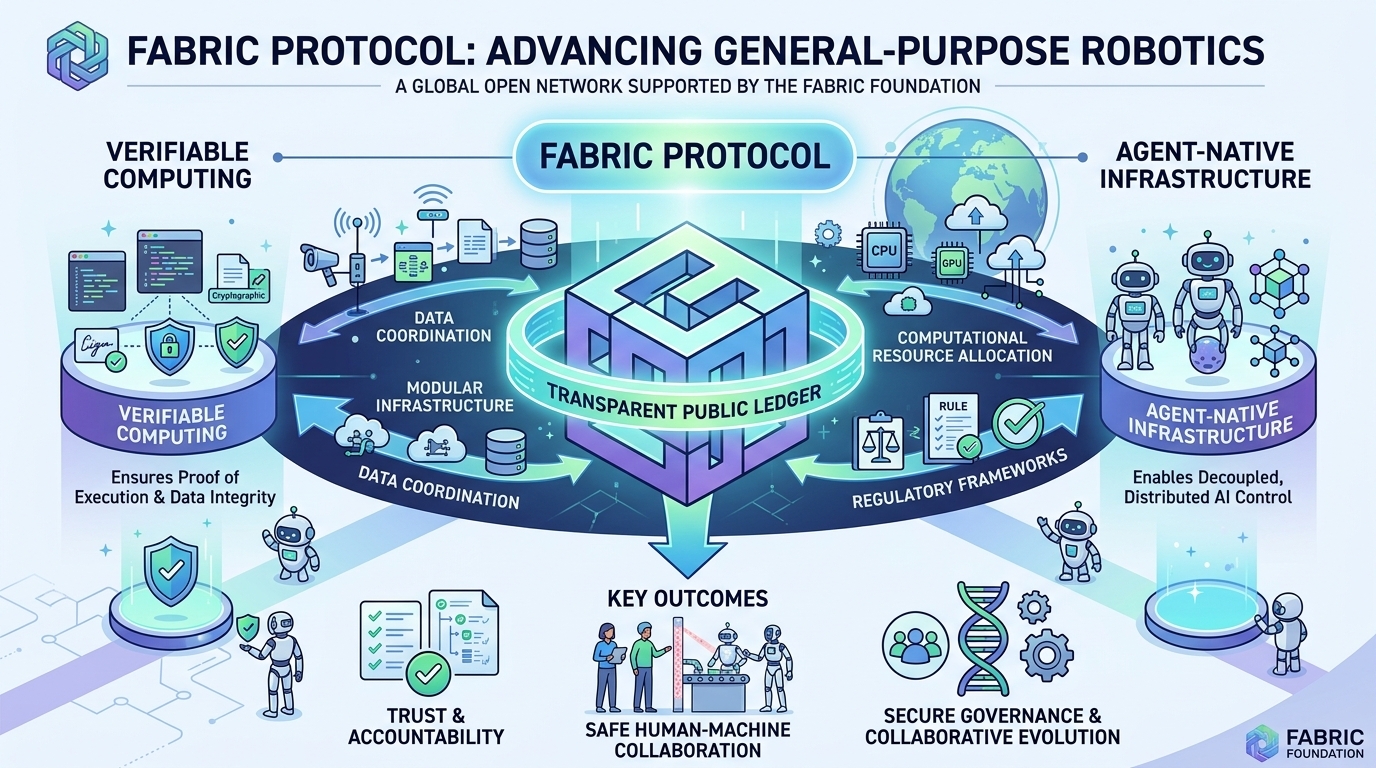
At its core, Fabric Protocol is supported by the non-profit Fabric Foundation and built around a simple but powerful idea—robots should not operate in isolation. Instead of functioning as standalone devices with hidden decision-making processes, machines connected to Fabric operate within a shared digital framework. This framework uses verifiable computing and a public ledger to record and confirm critical actions, updates, and learning processes. In practical terms, that means when a robot receives a software upgrade or makes a complex decision, there is a transparent way to confirm that it followed approved logic and complied with defined safety standards.
Trust is the foundation of this approach. As artificial intelligence becomes more advanced, concerns about opaque algorithms and unpredictable behavior are growing. Fabric Protocol addresses this by making verification a built-in feature rather than an afterthought. Every important computation can be validated cryptographically, creating a reliable record that regulators, developers, and operators can reference. This is particularly important in sectors like healthcare or logistics, where even a small error could have serious consequences.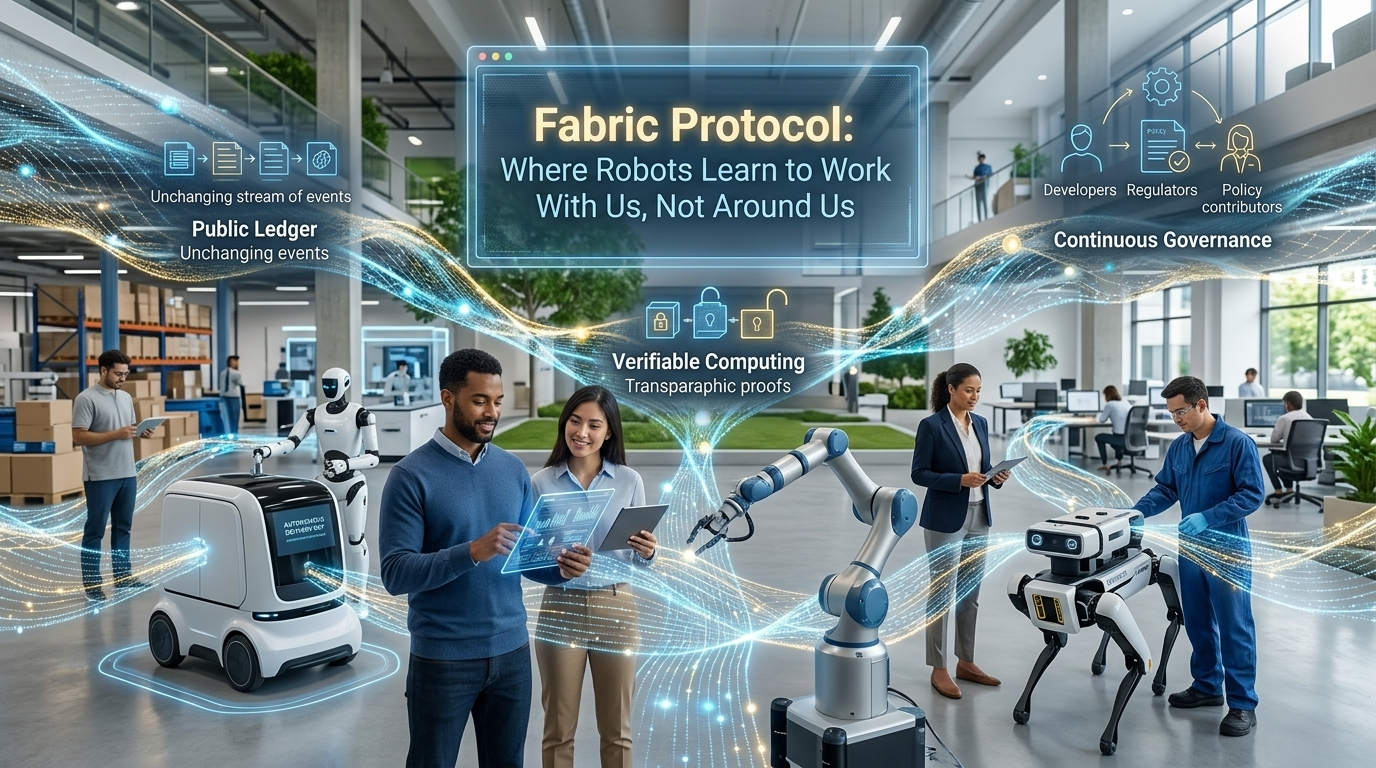
What makes Fabric Protocol stand out is its agent-native infrastructure. Robots within the network are treated as intelligent digital participants rather than simple tools. They can securely communicate, share updates, and integrate modular components developed by contributors around the world. This modular design allows engineers to innovate quickly without compromising safety. A perception module created in one country can be integrated into a navigation system developed elsewhere, all within a standardized and verifiable framework.
Governance is another area where Fabric introduces a fresh perspective. Instead of relying on a single centralized authority, the protocol allows a broad range of stakeholders to participate in shaping operational rules. Developers, operators, and even policy contributors can help define how robots behave within specific environments. As global regulations evolve, this flexible governance structure ensures that systems connected to Fabric can adapt without requiring complete redesigns or fragmented compliance updates.
Recent momentum around the protocol reflects a broader industry shift toward responsible autonomy. Robotics startups and research groups are increasingly aware that scaling intelligent machines requires more than better hardware and smarter algorithms. It requires infrastructure that guarantees accountability. Fabric supports distributed computation, enabling heavy processing to occur efficiently while still anchoring verification proofs to the public ledger. This balance between performance and transparency is essential for real-world deployment.
Security is woven into every layer of the network. Unauthorized updates, hidden model changes, or unexplained behavior shifts are far harder to conceal in a system built around continuous verification. Each participating machine carries a traceable digital history, strengthening confidence among users and simplifying oversight.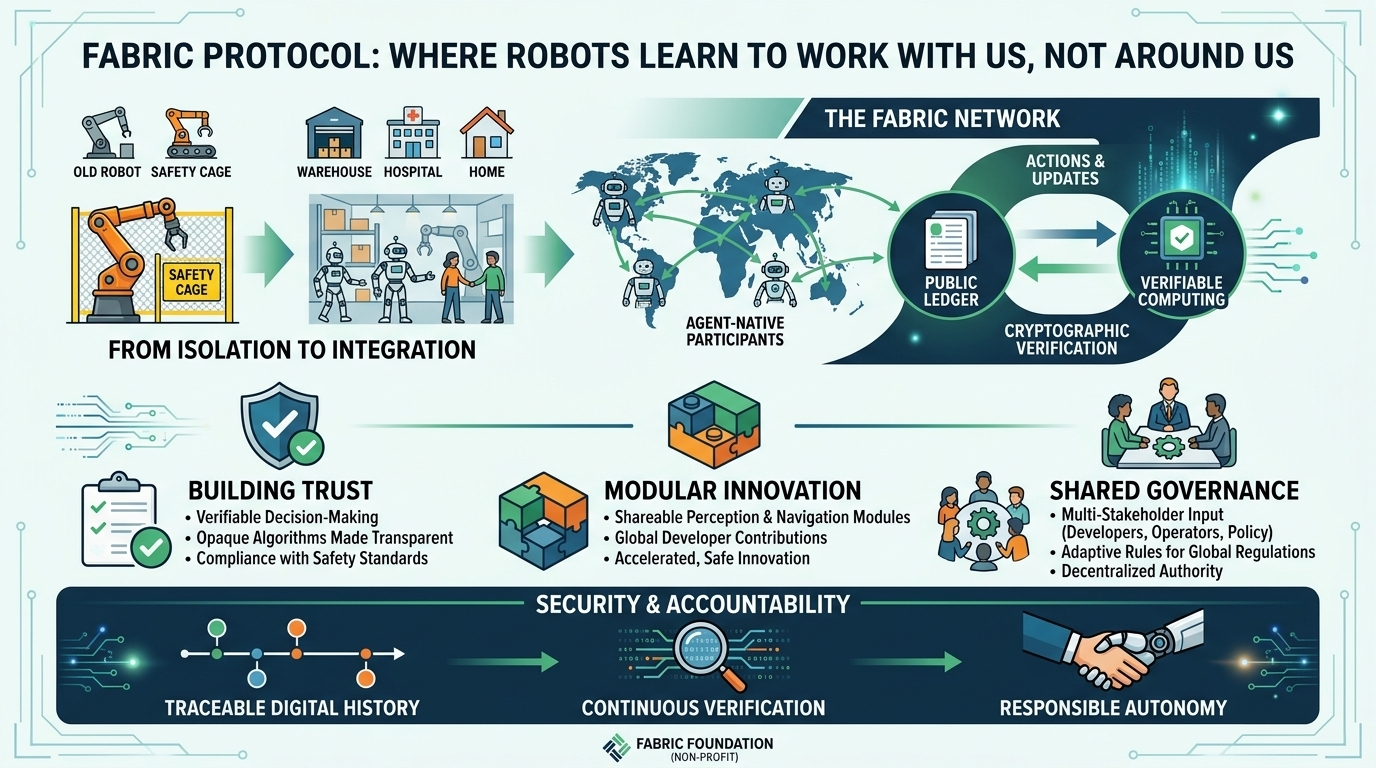
Fabric Protocol is not simply about connecting robots; it is about redefining how humans and machines collaborate. By combining open infrastructure, transparent governance, and verifiable computing, it creates a shared space where innovation and responsibility move forward together. In a world preparing for widespread autonomous systems, Fabric offers something rare and necessary: a structure designed to keep progress aligned with trust.