
Ci troviamo su un precipizio. L'ascesa dell'Intelligenza Artificiale negli ultimi due anni è stata nulla meno che esplosiva. Siamo passati da interfacce chat innovative a IA che può codificare intere applicazioni software, generare immagini fotorealistiche e assistere in diagnosi mediche complesse. La velocità di integrazione nelle nostre vite è senza precedenti. Eppure, mentre ci affidiamo sempre più a questi sistemi, una nube oscura di scetticismo si sta avvicinando rapidamente. Come possiamo sapere che la risposta è giusta?
Questo è il paradosso centrale dello sviluppo moderno dell'IA. Mentre le prestazioni stanno schizzando alle stelle, l'affidabilità è stagnante o, in alcuni casi, in declino a causa della saturazione dei dati. Questo "gap di affidabilità" o la "crisi delle allucinazioni dell'IA" è forse il più grande ostacolo all'adozione di massa dell'IA in settori critici come la sanità, la finanza e i servizi legali. In questo momento, la maggior parte dei modelli di IA mainstream opera come scatole nere. Inseriamo i dati, otteniamo un output e siamo costretti a fidarci del risultato ciecamente perché non abbiamo un modo scalabile per verificare come l'IA sia arrivata a quella conclusione.
Fiducia, ma verificando
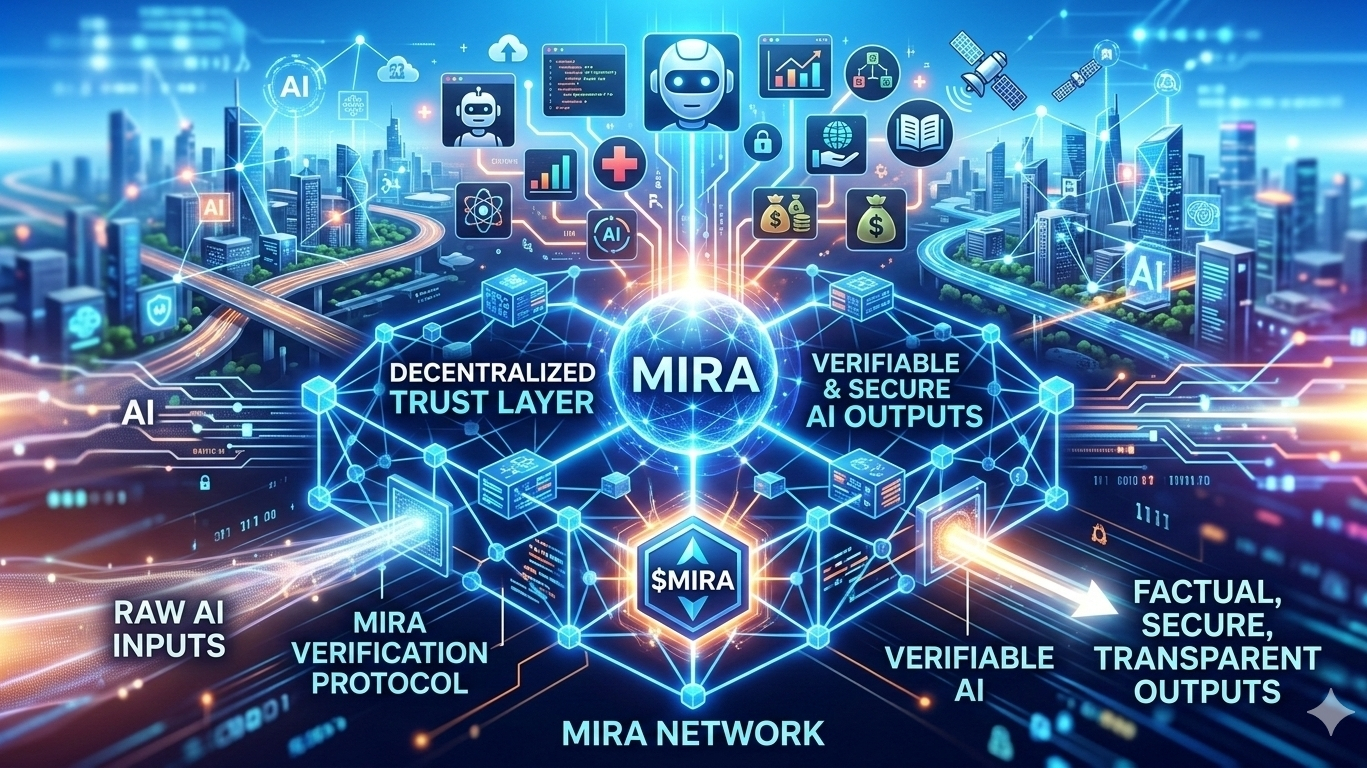
Qui è dove @mira_network entra in scena. Non stanno semplicemente costruendo un altro modello AI; stanno costruendo l'infrastruttura essenziale di cui l'intero ecosistema AI ha disperatamente bisogno: un "Trust Layer" decentralizzato. La missione di Mira è quella di spostare l'AI da uno stato di "intelligenza probabile" (dove incrociamo le dita e speriamo che la risposta sia giusta) a "intelligenza verificabile" (dove la risposta può essere validata in modo crittografico e logico).
Questa distinzione è cruciale. Quando l'AI allucina, non è sempre ovvio. A volte le allucinazioni sono sottili distorsioni dei dati, che possono avere effetti a catena catastrofici. Mira risolve questo introducendo un meccanismo di consenso decentralizzato per l'inferenza AI. Invece di un singolo modello che fornisce una risposta non controllata, Mira scompone le query in componenti verificabili e raggiunge un consenso tra più nodi, essenzialmente auditando la logica dell'AI in tempo reale. Questo garantisce che le uscite non siano solo risposte, ma fatti.
L'approccio ibrido: Fondere velocità con sicurezza
La rete Mira impiega un sofisticato modello di consenso ibrido progettato specificamente per gestire le complessità dell'AI decentralizzata. Non è solo un semplice modello di Proof-of-Stake applicato all'inferenza AI.
Prima di tutto, Mira utilizza elementi del Proof-of-Work (PoW), ma non nel modo ad alta intensità energetica in cui lo fa Bitcoin. In Mira, il "lavoro" è il calcolo AI stesso. Il nodo che esegue l'inferenza deve generare una Proof-of-Inference (PoI), dimostrando che il calcolo è stato eseguito correttamente e ha utilizzato i parametri del modello specificati. Questo previene imbroglio o inferenze di scarsa qualità.
Secondo, Mira integra il Proof-of-Stake (PoS) per la sicurezza economica. I nodi all'interno della rete devono mettere in stake #Mira
Questa architettura unica consente a Mira di rimanere sufficientemente veloce per applicazioni in tempo reale (evitando i colli di bottiglia massivi intrinseci nel tentativo di eseguire modelli complessi su migliaia di nodi lenti) mantenendo al contempo la sicurezza e la mancanza di fiducia.
L'intero ecosistema Mira è alimentato dal token Mira. Non è solo un asset speculativo; è un token di utilità critico richiesto per le operazioni decentralizzate della rete:
Partecipazione dei nodi (Staking): Per diventare un nodo validatore e partecipare alla verifica dell'inferenza AI, gli utenti devono mettere in stake un importo minimo di $MIRA. Questo allinea gli interessi economici dei nodi con la salute della rete.
Pagamenti per l'inferenza: Le aziende, gli sviluppatori e gli utenti che desiderano accedere a uscite AI verificabili devono pagare le commissioni di inferenza in $MIRA. Una parte di queste commissioni viene quindi distribuita ai nodi che hanno eseguito il lavoro e la verifica.
Governance: La rete Mira è progettata per essere governata dalla sua comunità. I detentori di token Mira possono proporre e votare aggiornamenti della rete, modifiche ai parametri del protocollo e allocazione del tesoro della comunità, garantendo che lo sviluppo del "Trust Layer" rimanga decentralizzato e resistente alla cattura da parte di un'unica entità.
Incentivare l'integrità dei dati: La rete premia i fornitori di dati di alta qualità e fidati che contribuiscono con dataset auditabili da utilizzare dai modelli AI all'interno dell'ecosistema, creando un ciclo di feedback positivo per l'affidabilità dei dati.
Guardando al Futuro: L'unico futuro sostenibile per l'AI
La centralizzazione dell'AI—dove un pugno di giganti tecnologici controlla lo sviluppo e il dispiegamento dei modelli su cui tutti noi facciamo affidamento—è un enorme rischio per l'innovazione e la sicurezza. Ma la decentralizzazione da sola non è sufficiente. Senza verifica, l'AI decentralizzata sarà semplicemente un caos frammentato e non verificato.
Mira sta risolvendo il problema centrale. Creando un livello dove la verità è verificabile e il bias è auditabile, stanno rendendo possibile l'integrazione dell'AI nelle aree più sensibili delle nostre vite senza paura. Con l'inasprimento inevitabile delle normative sulla responsabilità dell'AI, la soluzione di Mira diventerà lo standard del settore per l'intelligenza digitale verificabile.
La rivoluzione dell'AI è qui, ma la rivoluzione dell'AI verificata è appena iniziata. Orgoglioso di sostenere la missione di Mira nel costruire un futuro in cui possiamo fidarci. 🚀🌐
Qual è, secondo te, la sfida più grande che l'AI deve affrontare oggi in termini di fiducia? Condividi i tuoi pensieri qui sotto! 👇