
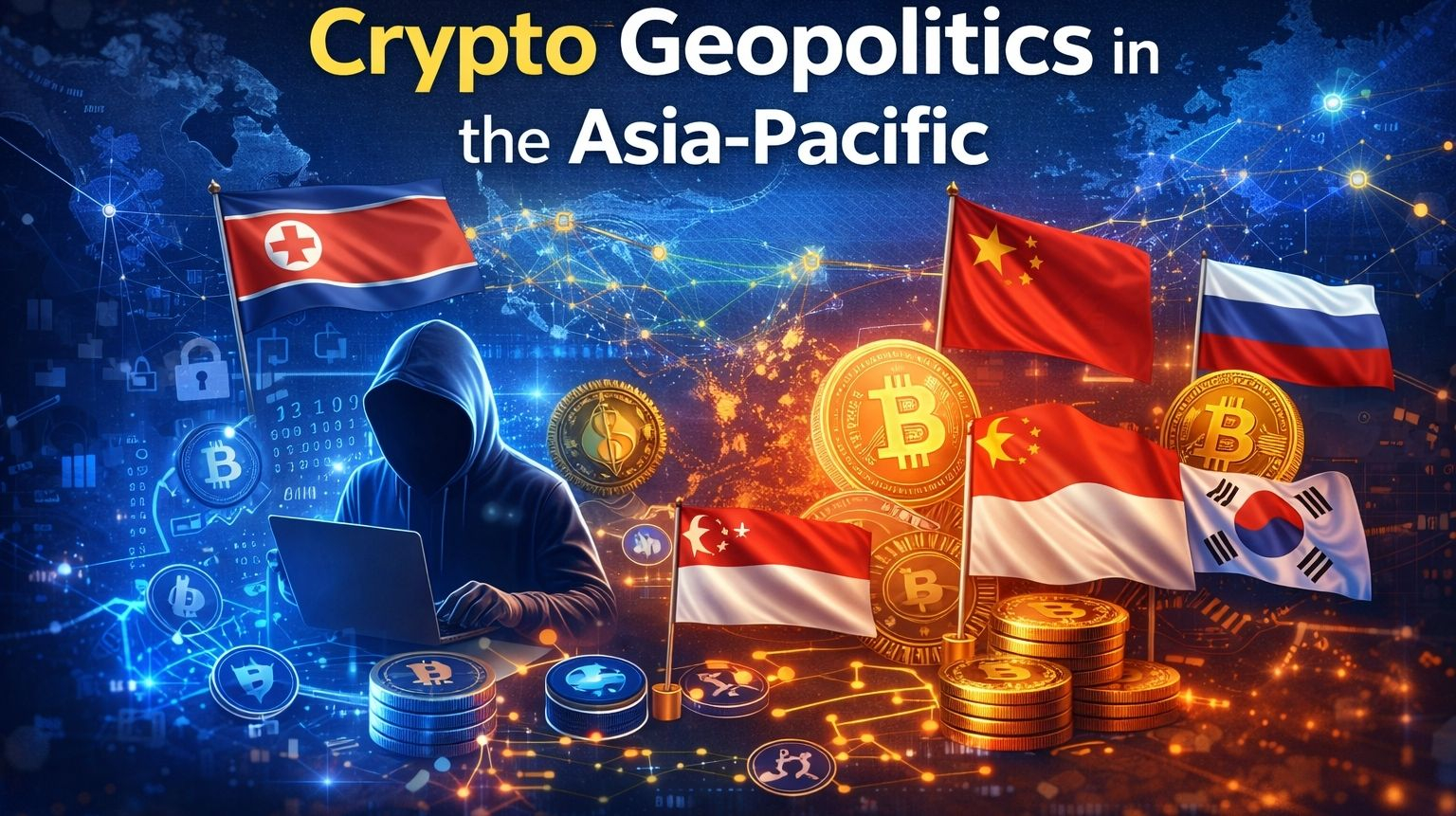
The Asia-Pacific region is becoming a key battleground in the global crypto landscape — not just for innovation, but for geopolitics.
What started as an alternative financial system has evolved into a parallel transaction network that can intersect with sanctions policy, cybercrime, and national strategy. For governments that rely on economic restrictions as a foreign policy tool, cryptocurrency presents a serious structural challenge.
Traditionally, sanctions work through financial chokepoints — banks, dollar-clearing systems, and centralized intermediaries. These create leverage points for enforcement. But blockchain networks operate differently. Public blockchains allow direct peer-to-peer transfers without traditional banks. Digital assets can also be stored independently of regulated financial institutions.
Although exchanges and custodians reintroduce some regulatory control, decentralized finance platforms and over-the-counter brokers make oversight more complicated.
In recent years, authorities have linked major crypto theft and laundering operations to state-connected actors in the region. For example, cyber groups tied to North Korea have reportedly conducted high-profile exchange hacks. Stolen funds are often broken into smaller amounts, moved across blockchains, routed through decentralized protocols, converted into liquid tokens, and eventually transferred into accounts that allow conversion into traditional currency.
Meanwhile, following expanded Western sanctions, Russia has increasingly explored digital assets for certain cross-border settlements. While crypto doesn’t replace traditional trade finance, it has provided alternative payment channels in restricted corridors. Informal over-the-counter markets have also supplied liquidity outside fully regulated systems.
Southeast Asia sits at the center of this evolving landscape. The region includes advanced financial hubs as well as fast-growing retail crypto markets.
Singapore, under the supervision of the Monetary Authority of Singapore, has built one of the region’s most structured licensing regimes for digital asset firms. Companies must follow strict anti-money laundering standards aligned with international norms. However, even strong local regulation cannot fully prevent funds from flowing through offshore platforms or decentralized protocols without formal operators.
South Korea has also tightened compliance requirements, enforcing real-name account systems and enhanced reporting rules for virtual asset providers. These measures increase transparency domestically, but cross-border enforcement still relies heavily on cooperation between regulators.
China presents a different approach. While private crypto trading has been heavily restricted, China has invested significantly in its central bank digital currency, the digital yuan — also known as the e-CNY. Unlike decentralized cryptocurrencies, a central bank digital currency increases state oversight and transaction visibility. This contrast reflects a broader global debate: decentralized financial networks versus sovereign-controlled digital systems.
One common misunderstanding is that crypto transactions are invisible. In reality, public blockchains record every transaction permanently. The real difficulty lies in identifying who controls a specific wallet address. Advanced forensic tools, exchange cooperation, and cross-border intelligence are required to connect digital identities to real-world individuals or organizations.
Decentralized finance adds further complexity. Automated liquidity pools enable token swaps without traditional intermediaries. Cross-chain bridges allow assets to move between blockchains, complicating tracking efforts. Privacy-enhancing technologies can reduce transparency at the protocol level. While blockchain analytics has improved significantly, the technological race between regulators and sophisticated actors continues.
The geopolitical implications are significant. Economic sanctions remain a central pillar of foreign policy. If digital assets provide alternative settlement networks that reduce sanctions effectiveness, policymakers must adapt. This does not necessarily mean banning cryptocurrency. Instead, it calls for integrating digital asset oversight into financial intelligence systems, export controls, and cybersecurity frameworks.
Encouragingly, cooperation across the Asia-Pacific is increasing. Financial intelligence units are sharing more information related to virtual asset activity. Joint investigations targeting ransomware and online fraud show that blockchain transparency — when paired with legal authority and international coordination — can support asset tracing and seizure.
However, regulatory gaps remain. Some jurisdictions still lack clear definitions for virtual asset service providers. Others have yet to implement strong travel rule requirements or clarify how decentralized platforms should be treated under law.
The Mekong region highlights another concern: large-scale online fraud networks using crypto to receive and distribute illicit funds. These operations often layer transactions across multiple wallets, convert funds into stablecoins, and move them through regional exchanges before converting to fiat currency.
At the same time, cryptocurrency is not inherently a vehicle for sanctions evasion. Many major exchanges comply with strict regulations, conduct customer due diligence, and monitor suspicious activity. Stablecoin issuers have frozen assets linked to sanctioned individuals when legally required. The reality is more complex than labeling crypto as purely harmful or purely innovative.
The real question for Asia-Pacific governments is balance. Overregulation could push activity into opaque channels. Weak oversight creates vulnerabilities. Effective policy requires technical expertise, clear licensing rules, and enforceable cross-border collaboration.
For Western policymakers, engagement with Asia-Pacific regulators is now part of a broader economic security strategy. Coordinated enforcement, intelligence sharing, and harmonized compliance standards are becoming essential to maintaining the credibility of sanctions.
Cryptocurrency has reshaped the geography of financial power. Transfers that once relied on centralized banking systems can now cross borders in minutes through decentralized networks. The Asia-Pacific region — at the crossroads of innovation, competition, and capital flows — will remain central to how this transformation unfolds.
In the end, whether digital assets weaken or strengthen geopolitical enforcement will depend less on the technology itself — and more on the regulatory systems and international cooperation built around it.#Binance