


Bitcoin has managed to recover toward the $73,000 level, but the recent bounce does not necessarily mean that the bull market has returned. Market data suggests the current move is more likely the result of fading selling pressure rather than strong new demand entering the market.
Despite the price rebound, the Bull Score Index — a metric that measures the overall health and participation of the Bitcoin network — remains extremely low, hovering around 10. Such a reading indicates weak activity across the network and limited investor engagement.
Earlier in the cycle, Bitcoin experienced a powerful rally from around $60,000 to above $120,000. During that period, the Bull Score Index frequently stayed above 60, reflecting strong demand across multiple fronts. Capital inflows increased, derivatives trading expanded, and spot market demand remained robust. These factors worked together to sustain the bullish momentum.
However, conditions began to change after the market peaked in mid-2025. Rising macroeconomic risks and heavy profit-taking triggered a gradual exit of liquidity from the market. As investors pulled capital out, confidence weakened and demand began to contract significantly.
This shift caused Bitcoin’s price to decline sharply while volatility increased across the broader crypto market.
Over time, weaker market participants started exiting their positions. Demand contraction improved from around negative 136,000 BTC to roughly negative 25,000 BTC. At the same time, selling pressure from long-term holders dropped by nearly 70% since November 2025. This reduction in supply helped Bitcoin stabilize near the $70,000 region.
Even so, broader market participation has yet to return. Institutional positioning remains cautious, and derivatives market activity is still relatively muted. These factors are keeping the Bull Score Index depressed and signaling that investor confidence remains fragile.
Because of this, analysts believe the current recovery likely reflects temporary seller exhaustion rather than the start of a strong, structurally supported bull run.
Coinbase Premium Turns Positive
One interesting development is the shift in the Coinbase Premium Index. After nearly 40 days of negative readings, the indicator has recently turned positive.
The Coinbase Premium measures the price difference between Bitcoin on U.S. exchange Coinbase and other global trading platforms. A negative reading often indicates selling pressure from U.S. investors.
Earlier in the decline, the index repeatedly dropped below -0.15 as Bitcoin fell from around $95,000 toward the mid-$60,000 range. This showed that U.S. traders were actively selling during the downturn.
As Bitcoin stabilized near $70,000, the premium gradually moved back toward zero and eventually turned positive. This suggests that some U.S. buyers have started absorbing supply again.
However, with the Bull Score Index still deeply bearish, analysts believe this may represent early signs of stabilization rather than confirmation of a new bullish trend.
Short Liquidations Helped Fuel the Rebound
Another factor behind the recent price recovery is the liquidation of short positions in derivatives markets.
During bearish phases, many traders open short positions expecting prices to fall further. Funding rates often turn negative in these periods, meaning short sellers pay long traders to maintain their positions.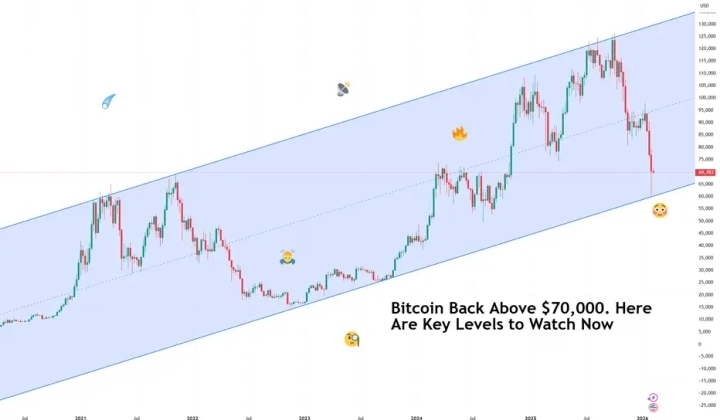
When the price begins to stabilize or move slightly higher, these short positions can quickly get liquidated. Recently, about $736 million worth of short positions were wiped out as Bitcoin pushed back toward $70,000.
These liquidations force traders to buy Bitcoin to close their positions, which can rapidly push prices higher and create sharp rebounds.
Meanwhile, inflows of Bitcoin to exchanges have slowed compared to earlier peaks, suggesting fewer traders are eager to sell their coins at current prices.
Market Still Lacks Strong Conviction
Although Bitcoin has stabilized around the $70,000 level, analysts caution that the broader market structure still appears fragile. The recent rallies are largely being driven by short squeezes and selective whale accumulation rather than widespread investor demand.
Until network participation improves, institutional activity increases, and the Bull Score Index rises significantly, the current price movements are more likely tactical rebounds within a weak market environment rather than the start of a new bull cycle.
#AltcoinSeasonTalkTwoYearLow #SolvProtocolHacked #USJobsData #MarketRebound