
## Russia Signals End to Discounted Oil for India: “Now It’s Business, Not Friendship”
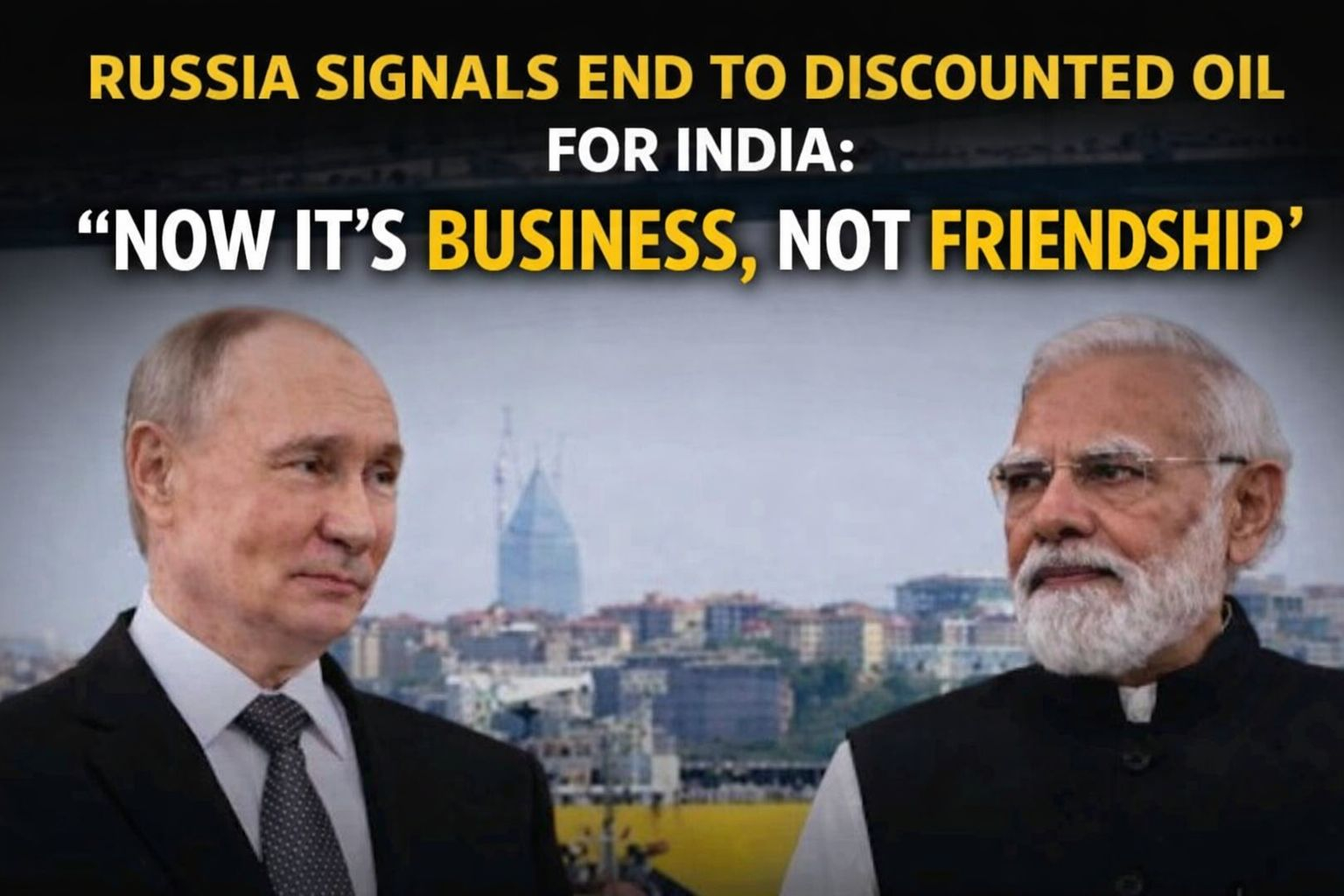
Vladimir Putin has reportedly sent a strong message regarding Russia’s energy relationship with Narendra Modi’s India, signaling a potential shift in how Russian oil will be sold to one of its largest recent buyers.
According to emerging reports, Russia may end the special discounted oil deals that have been a cornerstone of its energy trade with India since the start of the Russian invasion of Ukraine in 2022.
The message from Moscow appears clear: future transactions will be treated strictly as business.
### A Turning Point in Russia–India Energy Trade
Since 2022, India dramatically increased its purchases of Russian crude oil. Western sanctions and price caps forced Russia to offer deep discounts to attract buyers outside Europe, and India quickly became one of the biggest beneficiaries.
Cheap Russian oil allowed India to:
* Lower import costs
* Control domestic fuel prices
* Reduce inflation pressure
* Strengthen its role as a major refining hub
At one point, Russia even surpassed traditional suppliers in the Middle East to become one of India’s top crude providers.
However, new statements attributed to the Kremlin suggest frustration over changes in buying patterns.
Russia reportedly criticized India for reducing purchases without prior communication, only to later seek to increase imports again. Moscow’s response appears to be a warning that the era of preferential pricing could be ending.
### What “Business, Not Friendship” Means
If Russia removes the discount structure, Indian refiners could face significantly higher crude prices.
Previously, Russian oil was often sold well below global benchmarks, making it extremely attractive for Indian importers. Without those price advantages, India may be forced to look elsewhere for supply.
Possible alternatives include:
* Middle Eastern producers such as OPEC members
* Increased imports from the United States
* Diversification toward other global energy suppliers
But these options typically come at higher prices, which could ripple through India’s economy.
### Potential Impact on Global Oil Markets
The shift could have broader consequences beyond bilateral trade.
If India begins purchasing more crude from the Middle East or other global suppliers, it could increase demand pressure in those markets. That may push international oil benchmarks higher, especially if supply remains tight.
The potential effects include:
* Bullish pressure on global oil prices
* Higher shipping and refining costs
* Greater competition among major oil importers
Energy markets are particularly sensitive to geopolitical developments, and this latest signal from Moscow could add another layer of uncertainty.
### Geopolitics and Energy Leverage
Russia’s message also reflects how energy has become a strategic geopolitical tool.
Since Western sanctions limited its access to European markets, Russia has relied heavily on countries like India and China to maintain oil export revenues. At the same time, those buyers benefited from discounted supply.
By signaling a shift toward purely commercial terms, Moscow may be attempting to regain negotiating leverage over its largest energy customers.
### The Bigger Picture
While the long-term outcome remains uncertain, the message highlights how quickly geopolitical dynamics can reshape global energy flows.
If Russia follows through with its warning, India could face higher energy costs, global oil markets may tighten, and the balance of energy diplomacy could shift once again.
For now, the situation underscores a growing reality in global energy markets:
Strategic partnerships can change quickly when economics and geopolitics collide.
👍👍👍 Please follow me, repost, like this post and comment. If you follow me then you will get back 💯% 👍👍👍