
Introduction
Solana (SOL) $SOL has become one of the most talked-about blockchain projects in the cryptocurrency industry. Known for its fast transaction speed and low fees, Solana aims to provide a powerful platform where developers can build decentralized applications (dApps) that can scale to millions of users. Because of these features, SOL has gained strong attention from investors, developers, and the wider crypto community.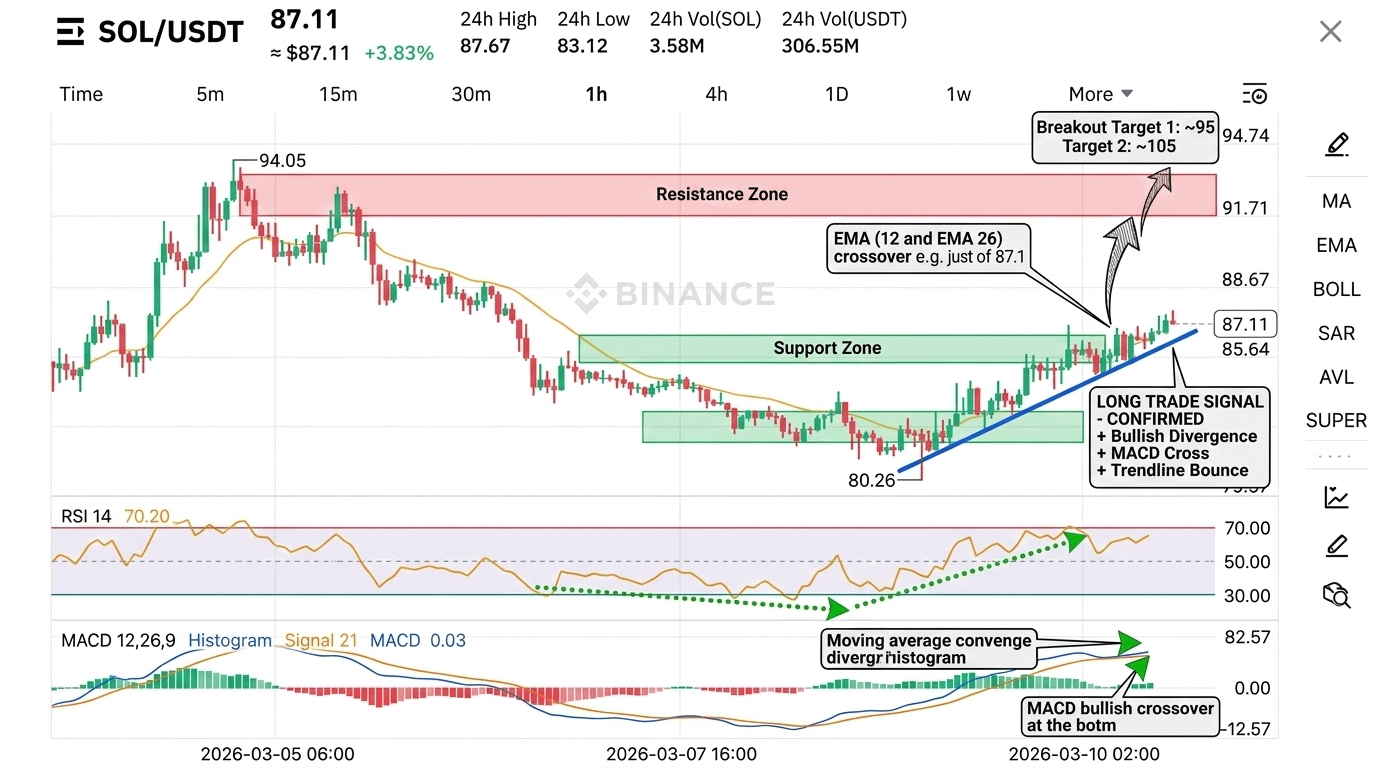
What is Solana?
Solana is a high-performance blockchain network designed to support decentralized finance (DeFi), NFTs, blockchain gaming, and many other Web3 applications. The network was created with the goal of solving two major problems in blockchain technology: slow transaction speeds and high transaction costs.
Unlike many traditional blockchains, Solana uses a combination of Proof of History (PoH) and Proof of Stake (PoS). This unique system allows the network to process thousands of transactions per second while maintaining security and decentralization.
Why Solana is Popular
One of the biggest advantages of Solana is its speed. Transactions on the network are processed within seconds, making it suitable for applications that require fast responses. At the same time, transaction fees remain extremely low, which helps attract developers and users.
The Solana ecosystem has also grown rapidly in recent years. Many DeFi platforms, NFT marketplaces, and gaming projects are now built on the Solana blockchain. This growing ecosystem increases network activity and strengthens the overall value of the platform.
Advantages of Solana
Fast Transaction Speed
Solana can process thousands of transactions per second, making it one of the fastest blockchains available.
Low Fees
Transaction costs on the Solana network are very low compared to many other blockchains.
Growing Ecosystem
More developers are building applications on Solana, which expands its use cases.
Strong Community Support
The project has gained strong interest from both developers and investors around the world.
Challenges to Consider
Like many blockchain networks, Solana has also faced challenges. Network congestion and temporary outages have occurred in the past, which raised discussions about stability. However, the development team continues to work on improvements to strengthen the network.
Final Thoughts
Solana has positioned itself as a high-speed blockchain designed for the next generation of decentralized applications. Its combination of fast performance, low fees, and an expanding ecosystem makes it one of the most important projects in the Web3 space.
As the crypto market continues to evolve, Solana may play a significant role in shaping the future of decentralized finance, NFTs, and blockchain-based applications.