

@Fabric Foundation I keep coming back to the same thought when I read about Fabric Protocol because the hard part of autonomy is no longer making a machine do something clever. The harder part is making that machine legible and accountable and governable once it starts acting in the real world. From the Fabric Foundation’s own materials that is exactly the problem it wants to solve. Fabric is described as an open network for general purpose robots that coordinates data and computation and oversight through public ledgers while also supporting identity task allocation payments and machine to machine communication. That framing matters because it moves the conversation away from robot demos and toward infrastructure.
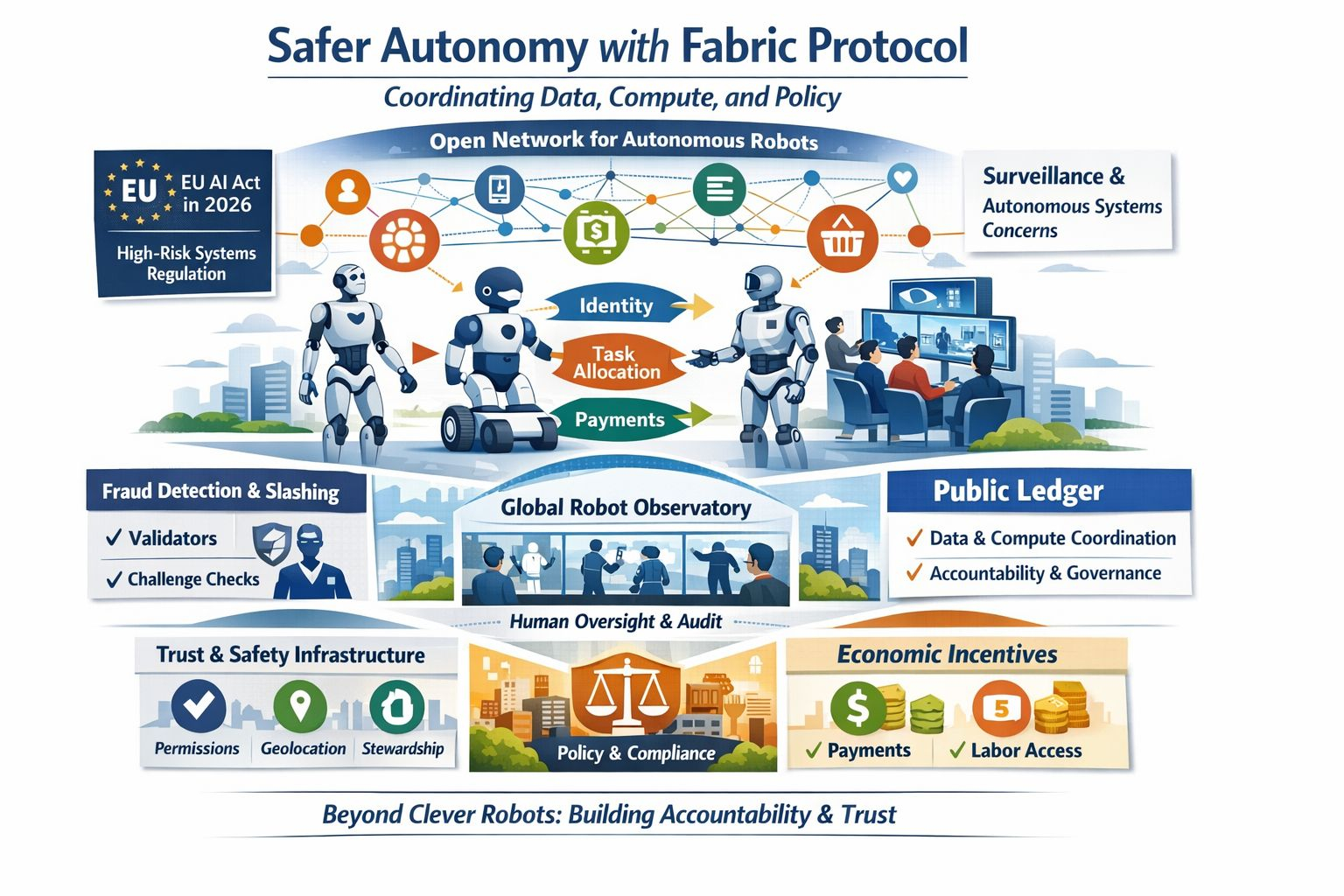
What interests me most is that Fabric tries to treat safety as a coordination problem instead of only a model problem which feels more realistic to me. In its white paper the project talks about validators and challenge based fraud detection and slashing for proven fraud or poor availability and even a Global Robot Observatory where humans can observe and critique machine behavior. I find that more grounded than the usual talk about perfect autonomous intelligence because real systems fail in ordinary ways through missed handoffs weak incentives bad data and silent drift. Fabric seems to accept that reality and build around it. Whether that design will work at scale is still an open question yet it is at least asking the question that matters most which is who checks the robot and what happens when it gets something wrong.
I also think the topic is trending now because the wider environment has changed very quickly and the shift feels hard to ignore. NVIDIA has already released open humanoid robot foundation models and simulation frameworks aimed at speeding real world robot development which suggests that the field is moving beyond one off prototypes and toward shared platforms. At the same time the World Economic Forum has been making a sober point that innovation now slows less on raw capability and more on the institutions infrastructure and trust needed to deploy technology at scale without raising new risks. That rings true because we’re in a strange in-between moment where autonomy can genuinely help, but still makes too many mistakes to quietly run in the background.
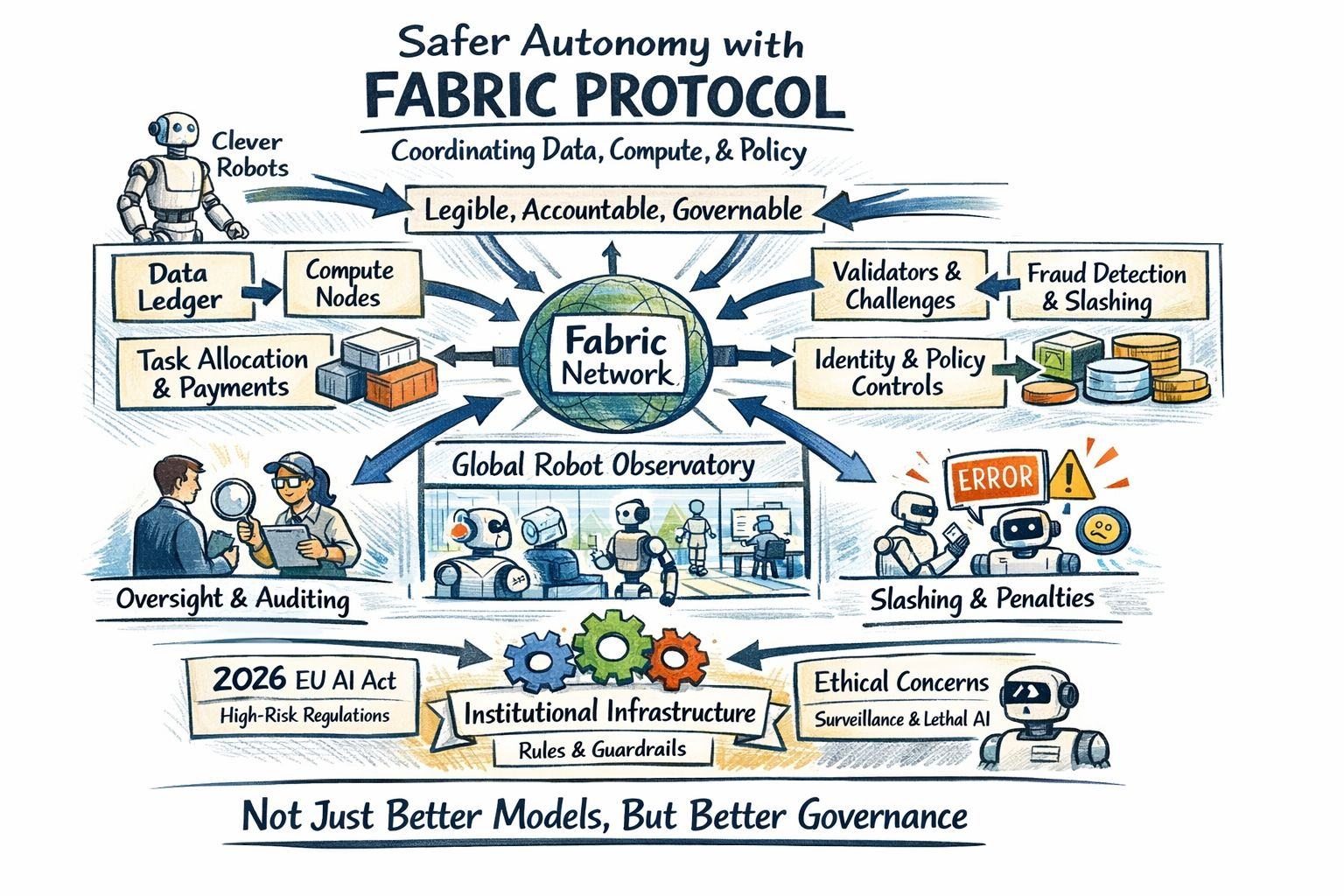
Policy pressure is another reason this conversation feels more urgent. The EU AI Act timeline shows that major obligations and enforcement for many high risk systems are set to apply on 2 August 2026 which means the governance era is no longer theoretical. At the same time concerns about oversight are becoming more visible in public. Reuters reported on 7 March 2026 that OpenAI hardware leader Caitlin Kalinowski resigned after the company’s Pentagon deal and argued that questions around surveillance and lethal autonomous systems needed more deliberation and stronger guardrails. I do not bring that up for drama. I bring it up because it really captures how this moment feels. People are no longer just asking what autonomous systems can do. They are asking who authorizes them who audits them and what lines should never be crossed.
From that angle Fabric Protocol feels less like a robotics product and more like a proposed civic layer for machine behavior. The Foundation says it is building public good infrastructure around machine and human identity accountability and human gated and location gated payments along with long term stewardship. I like that emphasis because it acknowledges a simple truth that autonomy is never just compute. It is also data permissions money geography labor and social consent all working together at once. If a robot can perform a task but cannot prove what it did cannot be paid under clear rules or cannot be stopped cleanly when conditions change then the intelligence is only half built.
My honest view is that Fabric is still early and that matters because the white paper makes clear that much of the ecosystem remains under development. Still I think the project has landed on a real gap. The next phase of autonomy will not be won only by better models because it will also be shaped by who builds the rails around those models through evidence permissions payments and policy. That is why Fabric has started drawing more attention in 2026 through its December 2025 white paper and its March 2026 blog push as well as its February 2026 ROBO launch materials. I would not call it proven yet. I would call it timely.