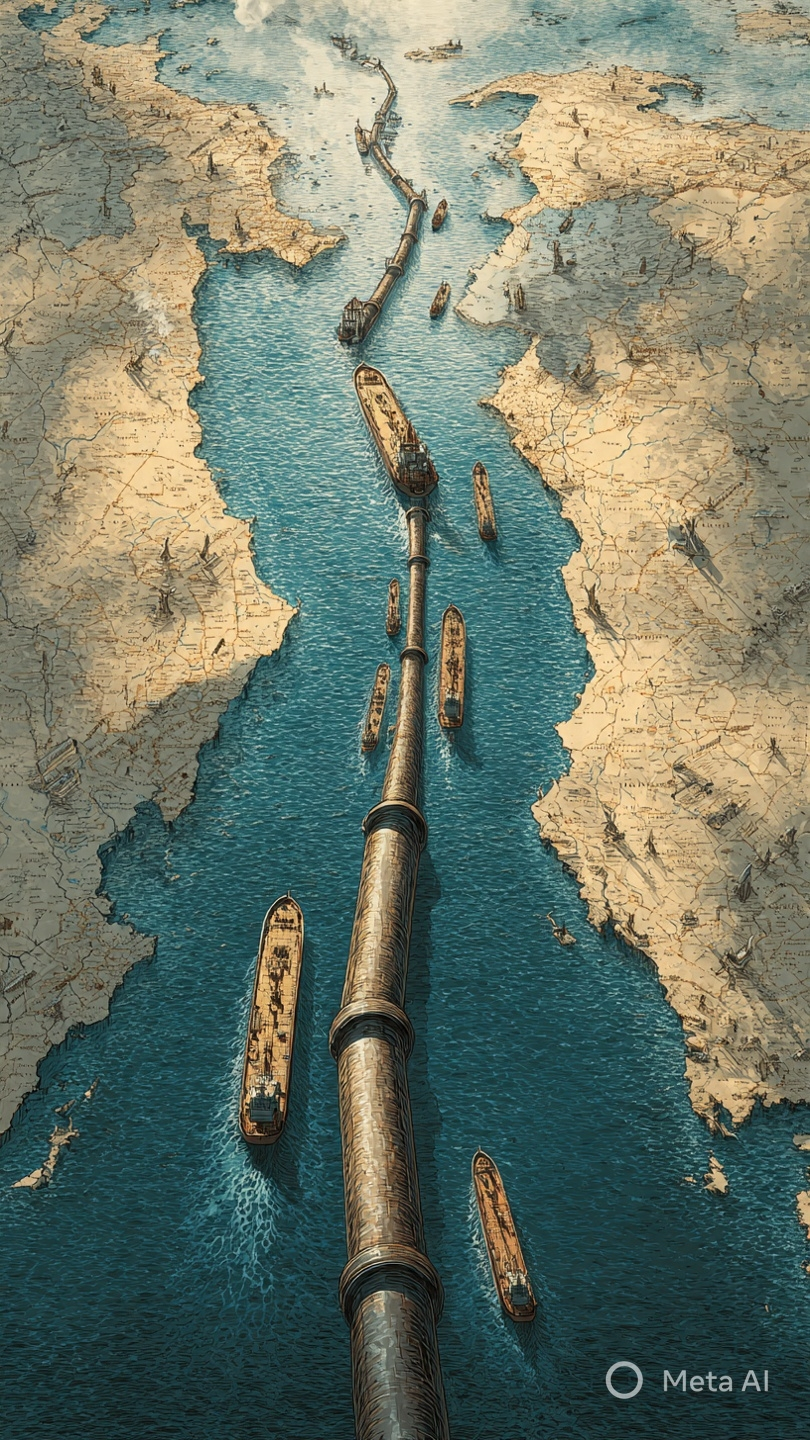
$BTC About 45 years ago, Saudi Arabia quietly built a massive 1,200-km oil pipeline connecting the Persian Gulf to the Red Sea. At the time, it looked like just another infrastructure project — but in reality, it was a brilliant geopolitical insurance policy.
The reason was simple: protect the country’s oil exports if the Strait of Hormuz ever became blocked due to war, conflict, or political tension.
Fast forward to today, and that decision looks incredibly strategic.
🌍 Nearly 20% of the world’s oil supply normally passes through the narrow Strait of Hormuz. If that route were ever shut down, global energy markets could face serious disruption, price spikes, and supply shocks.
But Saudi Arabia planned ahead.
Instead of relying completely on Hormuz, the country built an alternative energy corridor — allowing oil to move directly from the Gulf to ports on the Red Sea, safely bypassing one of the world’s most vulnerable maritime chokepoints.
⚡ Why this matters now
With geopolitical tensions rising across the Middle East, the possibility of disruptions in the Strait of Hormuz is once again being discussed by analysts and energy markets.
And suddenly, this decades-old pipeline is looking like one of the smartest long-term energy strategies ever implemented.
While many nations remain heavily dependent on a single shipping route, Saudi Arabia created a backup lifeline for global oil supply long before today’s crisis headlines.
📊 The big picture
If tensions escalate and the Strait of Hormuz faces disruption, this pipeline could become a critical artery for global energy flows, helping stabilize oil supply and preventing even greater market chaos.
Sometimes the smartest strategies aren’t the newest ones —
they’re the plans made decades before the crisis arrives.⛽🌍
#BinanceTGEUP #DOGE #ETHETFsApproved #BNB_Market_Update