
I’m watching the activity forming around Midnight Network, and I’m trying not to rush to conclusions. I’m waiting to see how people actually behave once the initial curiosity settles. I’m looking closely at the way participants move when they feel their information is no longer constantly exposed. I’ve noticed that behavior changes in subtle ways when people believe they can operate with a little more control over their own data. I focus on the quiet patterns rather than the loud narratives. I’m tracking who experiments early, who waits on the sidelines, and who begins quietly positioning themselves before most observers realize anything meaningful is happening. Lately I keep seeing the same thing: when protection becomes part of the environment, people start testing boundaries in ways that aren’t always obvious at first.
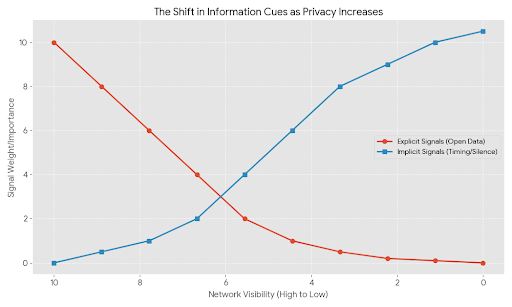
One pattern that keeps appearing is how differently participants interpret the same conditions. Some approach the network cautiously, treating privacy as a safety layer. Others seem to view it as strategic space—an environment where they can move faster without constant observation. That difference matters more than it initially seems. When visibility drops, the signals people rely on start changing. Instead of reacting to open data and obvious activity, participants begin reading between the lines. Timing becomes meaningful. Silence becomes meaningful. Even small movements begin to carry weight because they’re often the only visible clues about what others might be doing.
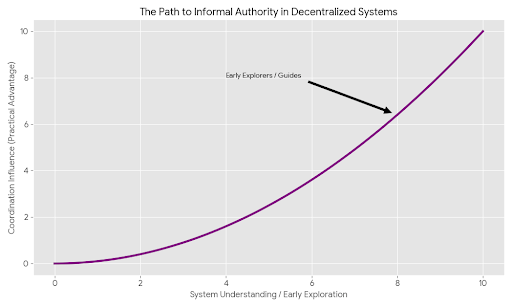
I’m also noticing how incentives begin drifting once real participation starts. Systems can be designed with certain assumptions about behavior, but once people arrive with their own goals, those assumptions start bending. Participants aren’t just interacting with the technology—they’re interacting with each other through it. Over time, some individuals start understanding the system faster than others. They learn where friction exists and where the architecture quietly allows more flexibility. That understanding gradually becomes influence. Not formal authority, but a kind of practical advantage that pulls coordination toward them.
The tension between privacy and coordination keeps surfacing as well. Protection reduces exposure, but it can also make collective action more complicated. When people can’t easily see everything happening around them, they start relying on different cues. Liquidity flows start telling a story. The speed of certain decisions begins to matter more. Even the absence of activity can hint at strategic positioning. I’m seeing the early stages of that adjustment now, where participants slowly develop a new language of signals that doesn’t rely on constant transparency.
Pressure will eventually test all of this. Calm environments rarely reveal the real structure of a system. It’s only when incentives tighten—when money, competition, or disagreement enters the picture—that deeper patterns appear. Privacy-focused environments sometimes delay visible conflict rather than preventing it. Instead of open arguments, tensions build quietly. Participants respond with subtle moves, strategic timing, or shifts in alignment. When stress arrives, those quiet adjustments tend to expose the system’s hidden dependencies.
Power concentration is another thing I keep an eye on. Distributed systems often start with the appearance of balance, but influence tends to grow wherever understanding grows first. Early participants who spend time exploring the system develop a feel for its boundaries. They learn what works and what doesn’t. That knowledge slowly becomes valuable to others. Over time, coordination begins to orbit around those individuals—not because they were appointed leaders, but because they’ve become familiar guides in an uncertain environment.
Economic pressure will probably shape most outcomes here. Privacy and ownership can change the conditions of participation, but they don’t eliminate incentives. If opportunities appear inside the system, participants will naturally push the architecture to its edges. Some will search for efficiency. Others will search for advantage. That process tends to expose the tradeoffs that exist beneath the surface. Protection can empower individuals, but it can also make accountability harder to observe. Ownership can encourage independence, but it can also intensify competition.
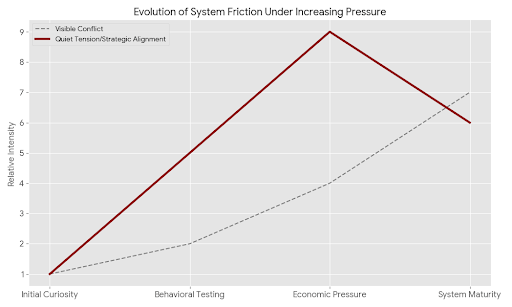
For now, I’m just continuing to watch how the patterns evolve. Systems like this rarely reveal themselves all at once. They unfold through thousands of small decisions made by people reacting to each other in real time. Some participants adapt quickly, others take longer, and that uneven pace creates the dynamics that eventually define the network. Midnight still feels like a system in its early behavioral phase—less about certainty and more about observation. The architecture is there, but the real structure will come from how people respond to it under pressure. And that part is only beginning to surface.