
A recent event in the cryptocurrency world highlights the power—and risks—of MEV (Miner Extractable Value) bots. A single bot reportedly earned $10 million by exploiting a $50 million crypto swap that went wrong, demonstrating how automated trading algorithms can capitalize on market inefficiencies in seconds.
What Happened?
The incident involved a large decentralized exchange (DEX) trade. A trader attempted to swap a substantial amount of crypto tokens, but due to a slippage miscalculation and delayed transaction confirmation, the trade created an opportunity for MEV bots.
MEV bots scan the blockchain for profitable opportunities like arbitrage, liquidations, and sandwich attacks.
In this case, the bot front-ran the transaction, securing a massive profit before the original trade could finalize.
How MEV Bots Work
Monitoring Pending Transactions: Bots track unconfirmed transactions in the mempool.
Identifying Profit Opportunities: They detect trades that could be manipulated for gain.
Executing Faster Trades: Using advanced algorithms, bots execute trades milliseconds before or after target transactions.
The Impact
Trader Loss: The original trader lost a portion of their $50M swap due to the bot’s action.
Market Insight: Such events reveal vulnerabilities in DEX trading, especially for large orders.
MEV Growth: Reports suggest MEV activity continues to grow as automated trading becomes more sophisticated.
Lessons for Traders
Break Large Trades into Smaller Ones: Reduces the chance of bot exploitation.
Use Slippage Protection: Setting tighter slippage limits prevents unexpected losses.
Monitor Network Conditions: High congestion increases MEV risk.
✅ Conclusion:
This $10M bot profit underscores both the efficiency and risk of decentralized trading ecosystems. As MEV bots evolve, traders must adopt smarter strategies to protect l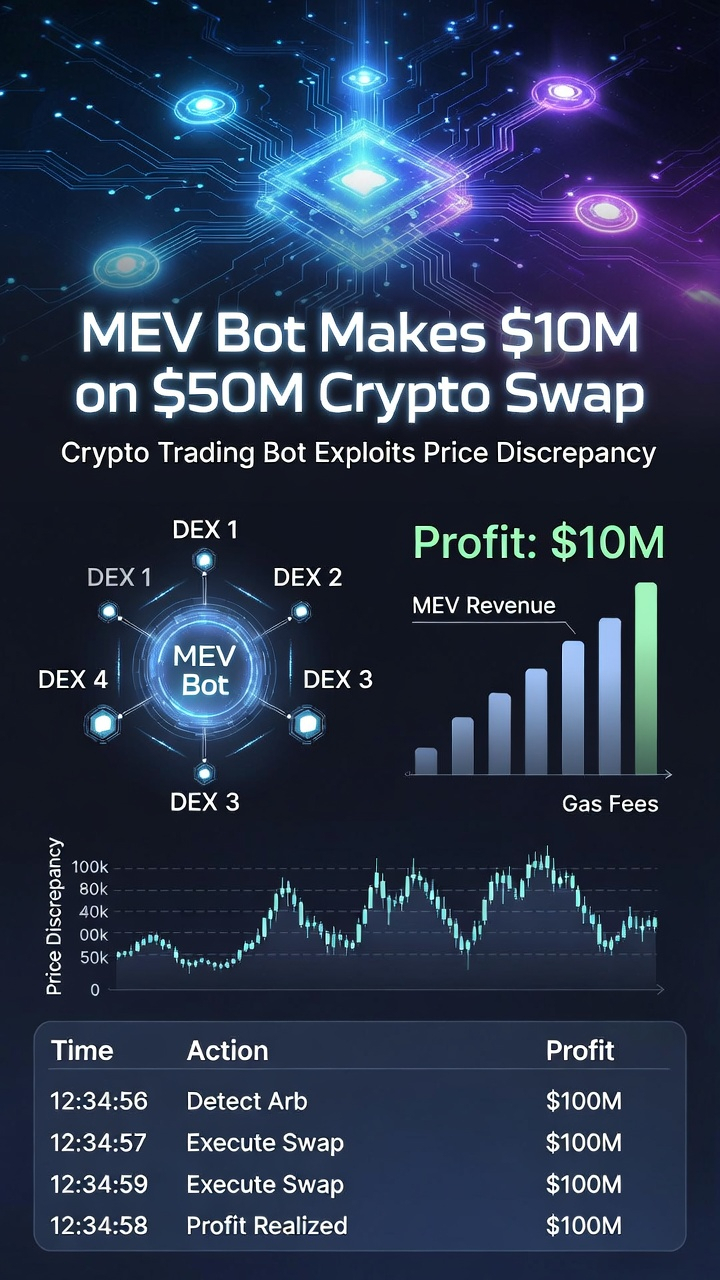 arge crypto swaps.