

When I first started exploring Fabric Protocol, I found myself thinking about a question that rarely gets discussed in the Web3 world: what happens when robots start participating in real economic activity? We already understand how blockchains coordinate money, tokens, and digital assets. But the moment machines begin performing tasks in the real world — delivering goods, managing warehouses, monitoring infrastructure — the challenge becomes much bigger. Someone has to coordinate those machines, verify their work, and manage their economic interactions.
The more I studied Fabric Protocol, the more I realized that this project is trying to build the missing infrastructure for exactly that future.
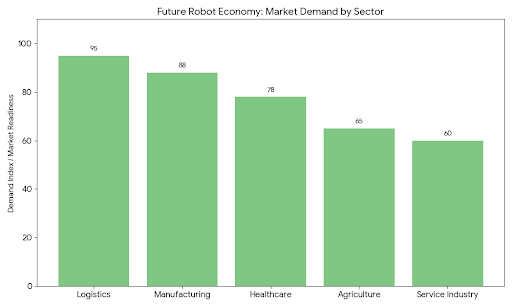
Fabric Protocol is designed as a global open network supported by the Fabric Foundation. Its goal is to enable the construction, governance, and collaborative evolution of general-purpose robots through blockchain infrastructure. What makes this idea powerful to me is that it treats robots not just as hardware controlled by companies, but as participants inside an open digital economy. Through a public ledger, the protocol coordinates data, computation, and governance so that interactions between humans and machines can be verified and trusted.
From my perspective, one of the most important parts of Fabric Protocol is the concept of verifiable computing. If robots are performing real work — whether it is delivering packages, scanning farmland, inspecting buildings, or operating inside factories — there needs to be a way to prove that the work actually happened. Traditional systems rely on centralized companies to verify this, but Fabric attempts to move that verification onto a decentralized ledger. By recording tasks and results through blockchain validation, the network creates a transparent system where robotic work becomes auditable.
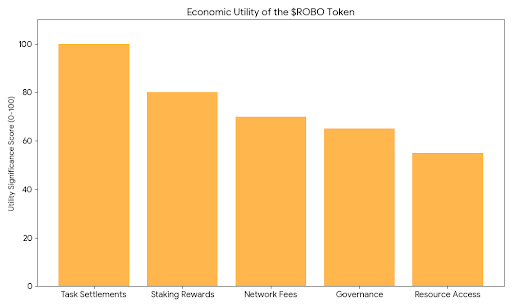
When I look at this from a Web3 point of view, it feels like a natural extension of blockchain technology. Web3 has already transformed digital ownership through tokenization. Now Fabric is exploring how tokenized incentives can coordinate machines that operate in the real world. The protocol introduces a native token that helps power the network economy. This token is used for governance, staking, network fees, and payments for robotic services. In simple terms, when robots complete tasks or consume computational resources, rewards can be distributed automatically through the protocol.
Another idea that really stands out to me is machine identity. In the Fabric ecosystem, robots are given cryptographic identities that allow them to authenticate themselves on the network. Each robot can have a blockchain wallet, a history of tasks, and a reputation built from verified work. I think this is an important step toward a future where autonomous machines can safely interact with humans without relying on centralized control systems.
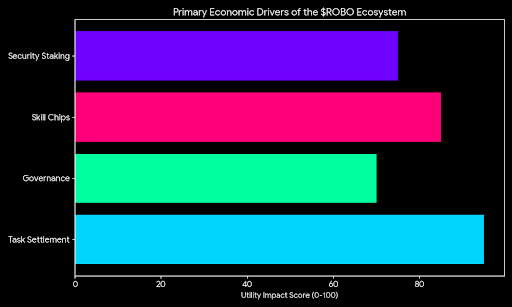
The role of blockchain architecture in this system is also interesting. Fabric is designed to work within the broader Web3 ecosystem, with compatibility that allows developers to build decentralized applications around robotics. Over time, the network may evolve toward its own optimized infrastructure capable of supporting large volumes of machine-to-machine transactions. That kind of scalability is important because robotic systems can generate massive amounts of interactions compared with traditional financial transactions.
Another dimension I find compelling is how Fabric touches on real-world asset coordination. Robots themselves can be considered productive assets. Through decentralized infrastructure, communities or organizations could theoretically deploy robotic fleets and coordinate their activity through the network. Tasks can be registered, verified, and paid for using blockchain settlement, which creates a transparent economic layer for automation.
Privacy is also an area where the protocol has to be thoughtful. Robots often collect real-world data through sensors and cameras, and not all of that information should be publicly exposed. Fabric’s architecture focuses on verifying outcomes rather than revealing raw operational data. That balance between accountability and privacy could become extremely important as autonomous systems become more widespread.
When I imagine the potential use cases, the possibilities are surprisingly broad. Autonomous delivery networks could operate without centralized management. Agricultural robots could coordinate monitoring and harvesting tasks through open marketplaces. Infrastructure maintenance robots could verify inspections on-chain, creating trusted records for cities and companies. Even warehouses and factories could connect robotic systems to decentralized coordination layers that distribute work and payments automatically.
From my perspective, the most interesting part of Fabric Protocol is not just the technology but the economic philosophy behind it. Instead of automation being controlled by a handful of corporations, the protocol suggests a model where robotics infrastructure can evolve through open participation. Developers can build applications, operators can deploy machines, and communities can help govern the network through token-based voting.
That idea feels very aligned with the broader goals of Web3 — creating systems that are transparent, decentralized, and collaborative.
As I look at the bigger picture, Fabric Protocol sits at the intersection of several powerful technological trends: robotics, artificial intelligence, blockchain, and decentralized governance. Each of these fields is advancing quickly on its own. But when they start combining, the result could be an entirely new economic structure where machines and humans collaborate in ways we have never seen before.
For readers discovering projects like this on Binance Square, I think Fabric Protocol represents an example of how blockchain innovation is moving beyond purely financial use cases. Instead of focusing only on tokens and trading, the project explores how decentralized infrastructure can support real-world automation systems.
In the end, I see Fabric Protocol as an ambitious attempt to design the economic operating system for the robot age. By combining blockchain verification, tokenized incentives, machine identity, and decentralized governance, the network aims to create a trusted environment where robots can perform work and interact with humans safely.
@Fabric Foundation #robo $ROBO
