
I’ve learned that the projects worth watching usually do not hit me all at once. They grow on me slowly. A chart catches my eye, then the language, then the people around it, and after that I start asking the only question that really matters to me now: is this built to last, or just built to trend? That is where Fabric started to separate itself for me.
What made it interesting was not the easy part. Anyone can say robotics, AI, agents, and open infrastructure and get people curious for a few days. Crypto is full of projects that know how to sound early. Very few know how to sound necessary. Fabric gave me the feeling that it was trying to become useful in a way that survives the narrative cycle, and that is a much rarer thing.
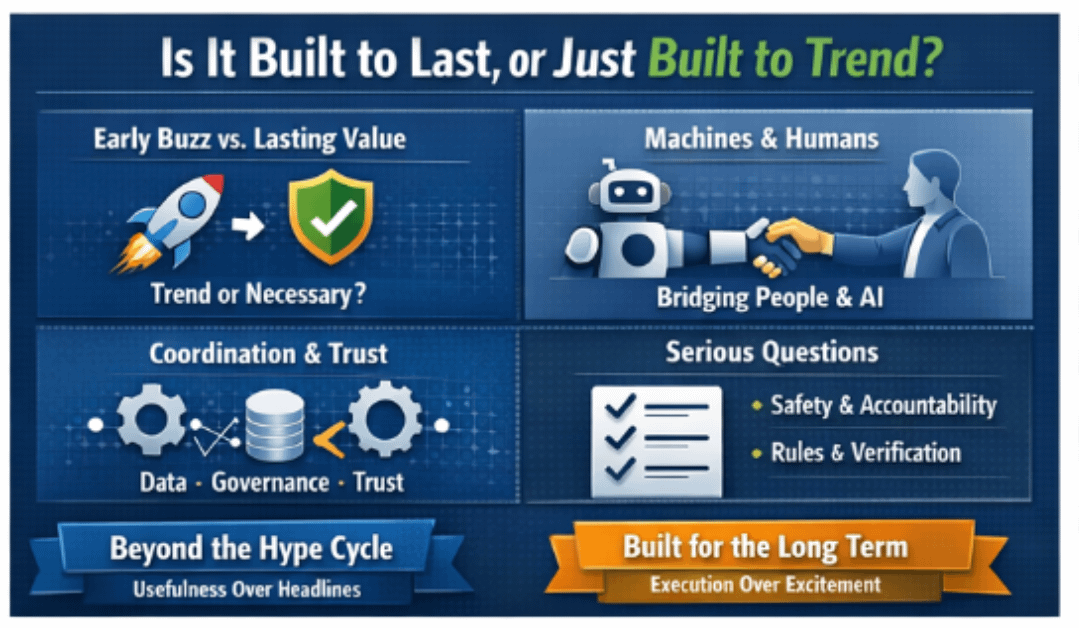
The deeper idea here is not hard to understand. If machines are going to play a bigger role in the world, then someone has to build the system that helps humans work with them, guide them, verify them, and set the rules around them. That is what makes Fabric stand out to me. It does not just seem interested in the machine side of the future. It seems interested in the relationship between people and machines, and that is where the real value probably sits.
That is also why I think a lot of people will read something like this too quickly and miss the point. They will see the category first. They will file it under AI, robotics, onchain infrastructure, and move on. But the more interesting layer is coordination. How do data, computation, governance, and trust come together in a way that people can actually use and keep using? That is a much more serious question than simply asking whether a sector is hot.
From a market perspective, that difference matters. Crypto can price excitement very fast, but it is much slower to price systems that create real repeat behavior. That is usually where the better opportunities hide. Not in what gets attention first, but in what keeps making sense after the first wave of attention moves somewhere else. Fabric feels like that kind of project to me. It feels less like a headline trade and more like a longer test of whether real coordination can become its own source of value.
I also respect that it does not seem to run away from the hard parts. Safety, rules, governance, accountability, verifiable processes. Those are not the flashy parts of the story, but they are probably the parts that decide whether something like this ever becomes real. A lot of crypto still treats those things like friction. Fabric seems to treat them like infrastructure. That makes me pay closer attention.
None of that means it is easy. In fact, that is probably the risk. Big ideas like this do not fail because they sound weak. They fail because execution is brutal, adoption is slow, and the market loses patience long before the system has a chance to prove itself. Fabric still has to show that people and developers actually want to keep showing up, contributing, and building around it. If that loop does not form, the vision stays impressive but unfinished.
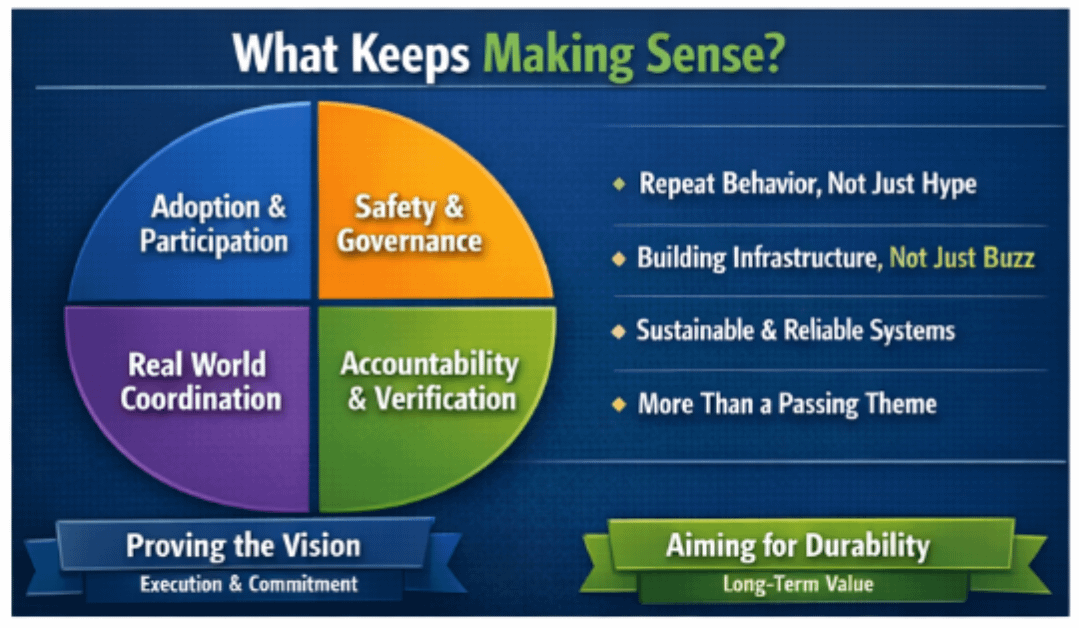
Still, I keep coming back to it because it feels like one of the few projects here that is trying to solve something real before the market fully understands why it matters. That always gets my attention. Not because it guarantees upside, but because it suggests there may be more here than a passing theme.
And honestly, that is rare enough in crypto that I do not ignore it when I see it. Fabric did not stand out to me because it was loud. It stood out because the more I looked at it, the less it felt like a pitch and the more it felt like a system trying to be needed.