
I still remember sitting in that cramped community center, watching a room full of farmers argue about technology they had never heard of until that day. We were supposed to be excited about putting their supply chain on a blockchain. I had spent weeks prepping, convinced I was bringing them the future.
Then Maria, who runs a small organic plot with her sisters, looked at me and asked the question that broke my whole pitch. So if my yields are good one year, and my neighbor's aren't, everyone can see that forever and use it against me next time we bid for the same buyer?
I opened my mouth to explain transparency and trustlessness and all the beautiful theory. Nothing came out. Because she was right. I had been so in love with the technology that I forgot to ask the obvious question. Why would anyone want their personal business broadcast to the world just to get the benefits of a shared system?
That moment has stuck with me for years. It is the tension nobody in crypto wanted to talk about for a long time. You either get the openness of a public ledger, or you retreat to the old world of databases controlled by someone else. Pick one. There was no third option.
Until now, maybe.
Midnight Network is the first project that makes me feel like someone finally listened to Maria. As it moves toward its full launch in 2026, it is not just slapping a privacy feature onto an existing blockchain. It is rethinking the whole premise from the ground up. And honestly it is about damn time.
The Data War Nobody Is Winning
To get why Midnight matters, you have to step outside the crypto bubble for a minute. Look at what is happening in the real world with data.
For the last decade, governments have been obsessed with data localization. The thinking goes, if you force companies to keep their servers inside your country's borders, you have solved the sovereignty problem. Your data is safe because it is physically here.
Ville Sirviö, who runs a big European tech institute, recently called this out as dangerously naive. A server sitting in Frankfurt does not mean much if the company controlling the code is in Silicon Valley and answers to US laws. True control is not about geography. It is about who holds the keys, who wrote the rules, who can change them when nobody is looking
Meanwhile, the most valuable data in the world sits locked in silos, paralyzed by fear. Hospitals will not share patient records with researchers because they are terrified of lawsuits. Supply chains cannot prove they are ethical without exposing their secret supplier relationships. Banks cannot verify customer information across borders without violating privacy laws.
Everyone is stuck. Everyone is losing.
Midnight's bet is that zero knowledge proofs can break this logjam. Not by forcing transparency, but by enabling something we have not really had before. The ability to prove something is true without revealing the underlying facts. It is like showing a bouncer your ID without letting him memorize your address and birth date. Simple in concept. Revolutionarily hard to actually build.
How It Actually Works Without the Jargon
The thing that finally made Midnight click for me was understanding the dual state architecture. Stay with me, because this matters.
Most blockchains treat all data the same way. It goes on the ledger, everyone sees it, forever. Some newer projects try to hide everything by default. But Midnight says, why force either extreme?
Instead, it gives developers the ability to build smart contracts that operate on private state. That is data that never, ever touches the public ledger. What touches the ledger is a cryptographic promise, a proof that something is true, without the truth itself being revealed.
Think about what that enables. A hospital can generate proof that a patient meets the criteria for a clinical trial without sending the patient's actual medical history across the internet. A supplier can prove their coffee is fair trade without revealing their farm's exact location and contract terms. A teenager can prove they are old enough to enter a website without uploading a scan of their driver's license.
The academic research has known this was theoretically possible for years. But the bottleneck has always been practical. How do you make this stuff usable by normal developers who are not PhDs in cryptography?
Midnight's answer is a compact domain specific language. Fancy term, simple idea. They are building a programming language where the act of writing code naturally respects the boundary between public and private. You do not have to be a ZK wizard to make it work. You just write your contract, and the language handles the complexity.
I have talked to enough developers to know, if this actually works, it changes everything. Complexity has been the silent killer of every ambitious crypto project. Make it simple enough that real people can build on it, and you have won more than half the battle.
Walking the Path Where the Rubber Meets the Road
I was skeptical about adoption until I started following Midnight's actual partnerships. There is a pattern in this industry of announcing big names and then going completely silent. Midnight's approach feels different because the use cases are painfully, mundanely specific.
Take healthcare. Fahmi Syed, the Midnight Foundation's President, mentioned a partnership with a healthcare company in Turkey managing three million patients. Three million. That is not a testnet with twenty users. That is real people, real data, real regulatory pressure.
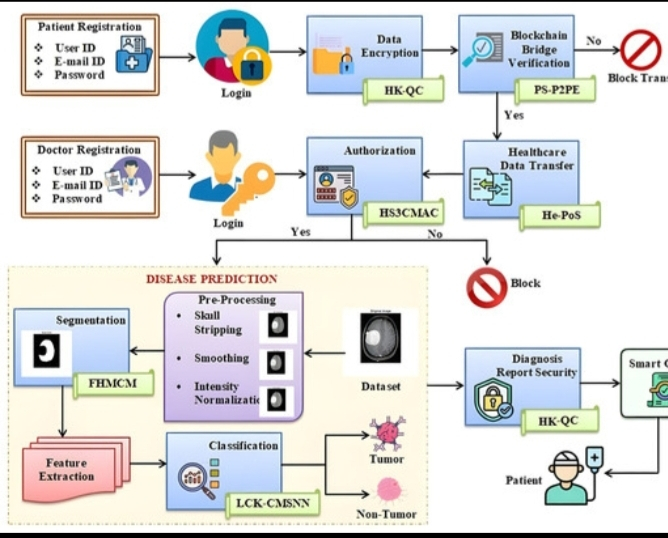
They are using Midnight to generate proofs of medical histories. When a patient switches doctors or joins a cross border clinical trial, they do not have to email their 200 page PDF record to a stranger who might lose it or misuse it. Instead, they generate a cryptographic proof that says, this patient has been diagnosed with X, has taken Y medication for Z years, and has had no adverse reactions. The new provider verifies the proof, not the raw data. The patient maintains ownership. The data never leaves its original silo.
Now the team is in conversations with a large hospital in California about using the same mechanism for multi site clinical trials. Anyone who has worked in healthcare knows what a nightmare this currently is. Legal agreements take months. Anonymized data exports get re identified. Administrative overhead eats research budgets alive.
If each site can generate proofs of patient outcomes against the trial protocol without ever exposing underlying records, that is not an incremental improvement. That is a new paradigm.
The Partners That Made Me Pay Attention
I will admit it. When I first heard about Midnight's federated node model, I rolled my eyes. A blockchain launching with trusted partners instead of being fully permissionless. The purists hate this. I have been around long enough to be skeptical of anything that compromises on decentralization.
But then I looked at the actual partner list.
MoneyGram signed on as a federated node operator. MoneyGram. The second largest money transfer company on the planet. They are not doing this for fun or as some marketing gimmick. They are exploring how Midnight's selective disclosure can underpin compliant, private global payments. They need to know who their customers are, that is non negotiable regulation. But they do not need that data plastered across a public forum where competitors or bad actors can see it.
Then there is Vodafone, joining through its Pairpoint joint venture to provide trusted digital identities for IoT devices. This is the Economy of Things becoming real. Cars paying tolls autonomously. Machines negotiating with other machines for services. That requires verifiable identity and private transactions. You cannot have a machine's entire financial history and identity exposed on a public ledger. It is not just a privacy risk, it is operationally impossible.
And yes, Google Cloud is there too. But honestly, the MoneyGram and Vodafone partnerships tell me more. These are not crypto native companies dipping a toe in the water because it is trendy. These are infrastructure players in finance and telecom, willing to run nodes because they see a real business need that existing technology cannot meet.
The Token Thing That Actually Makes Sense
I have to talk about the economics, because Midnight made a choice here that is both controversial and, in my opinion, completely right.
The two token system of NIGHT and DUST.
The current model on most blockchains is, frankly, broken. Think about it this way. Imagine if every time you drove your car on the highway, you had to pay the toll with a tiny sliver of your retirement account. That is what we do now. We pay transaction fees with the same asset we are holding as an investment. When the network gets busy, fees spike. When the asset price goes up, fees become prohibitively expensive. You are literally consuming your capital just to use the network.
Midnight decouples these functions.
NIGHT is the ownership token. You use it for governance, for staking, for holding as a store of value. You buy it because you believe in the network's future.
DUST is the consumption token. You generate it by holding NIGHT, but it expires within seven days and cannot be transferred to anyone else. You use DUST to pay for transactions.
This design makes the cost of using the network predictable and shields it from the volatility of the investment asset. Holding NIGHT gives you the right to generate the resource you need to use the network. You are not cannibalizing your investment every time you interact with a dApp.
It also addresses the regulatory concerns that killed earlier privacy coins. DUST is not a store of value. It cannot be hoarded or traded on exchanges. It is just a mechanism for paying fees. That simple design choice sidesteps a whole host of legal problems.
What It Actually Feels Like
I have been thinking a lot about Maria, the farmer from that community center years ago. What would she think if I could show her Midnight today?
I think she would still be skeptical. She should be. Trust is earned, not granted. But I think she would also see something different. A system that does not force her to choose between participating and protecting herself. A system where she can prove her yields are legitimate without broadcasting them to every competitor. A system that treats her data as hers, not as fuel for someone else's network.
That is what verifiable privacy actually means. It is not about building fortresses around our information. It is about building doors with locks where we control the keys. It is about being able to show just enough to participate, and no more.
Midnight is not perfect. The federated start will make decentralization purists nervous, and they are right to be vigilant. The success of the programming language depends on whether developers actually want to use it. The roadmap is ambitious, and ambitious things fail all the time in this industry.
But for the first time in a long time, I am looking at a blockchain project and thinking about real people solving real problems. A hospital in California trying to run clinical trials faster. A farmer in Turkey wanting fair prices without exposing her business. A teenager trying to prove their age without handing over their identity.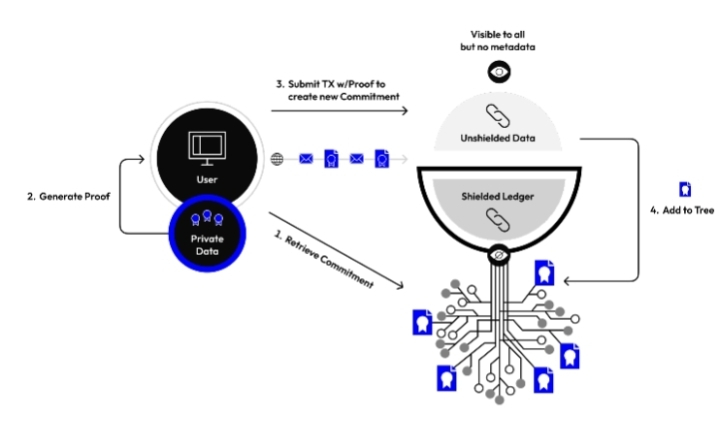
That feels like progress. That feels like technology finally catching up to what humans actually need, instead of forcing humans to adapt to what technology demands.
And honestly it is about time.
@MidnightNetwork #night $NIGHT
