
@MidnightNetwork $NIGHT #night
I was thinking the other day about how we trust everyday systems without even noticing. Take grocery delivery, for example. You place an order, it shows up at your door, and you simply assume everything is correct. Most of the time, it is. But behind the scenes, there’s inventory tracking, route optimization, and sometimes last-minute substitutions—yet somehow it all works seamlessly.
Now imagine a system where all of that happens without anyone seeing the order itself, but it can still be verified as accurate. That’s essentially what Midnight Network is trying to achieve with blockchain.
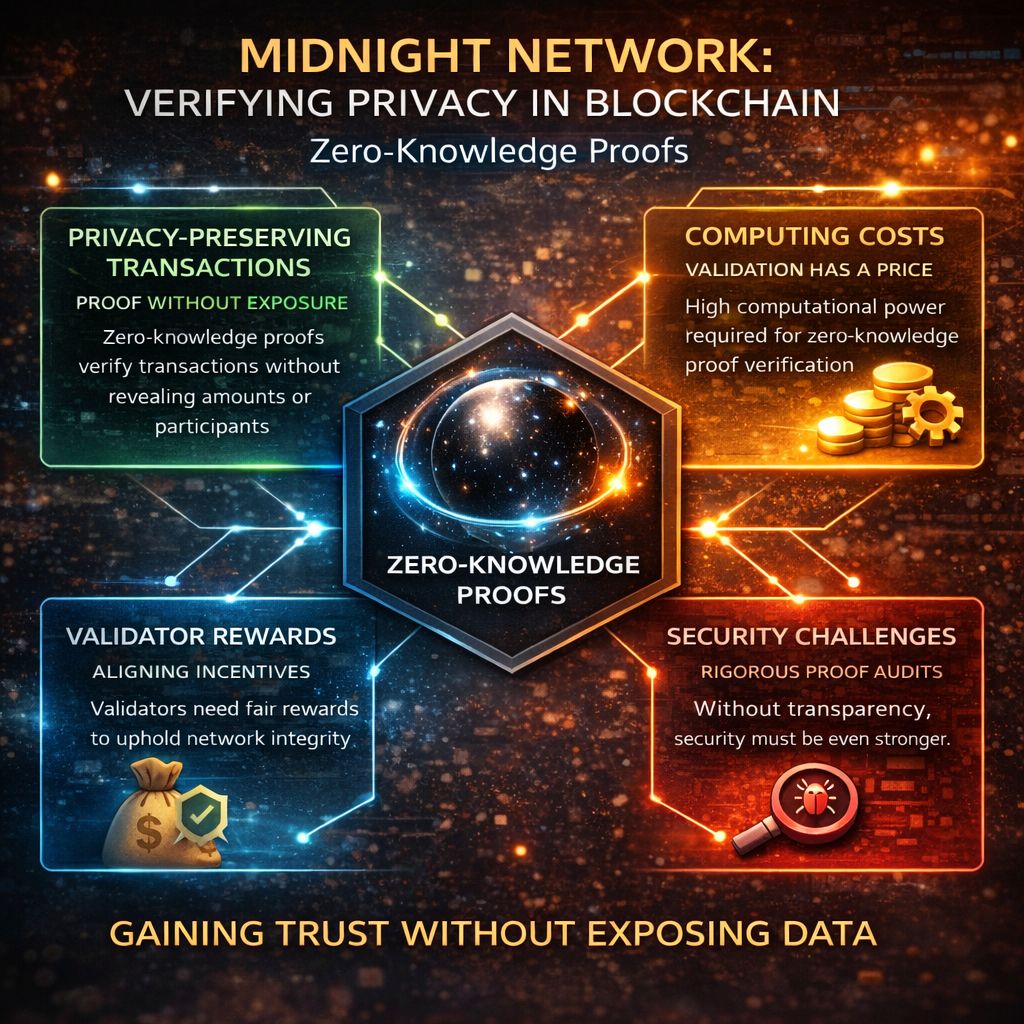
It’s built on zero-knowledge proofs. A technical term, but the concept is straightforward: you can prove something is true without revealing the underlying data. This means a transaction can be validated without exposing amounts, identities, or any sensitive details. Conceptually, it’s elegant—almost like a precise mathematical trick. But the real question is: how does this perform in the complexity of the real world?
Traditional public blockchains rely on transparency to maintain trust. With privacy embedded by design, the challenge becomes aligning incentives for validators and users. Additionally, zero-knowledge proofs are computationally intensive—they require significant processing power. This raises an important question: who ultimately bears that cost? These practical considerations often determine whether a technology succeeds or struggles to gain adoption.
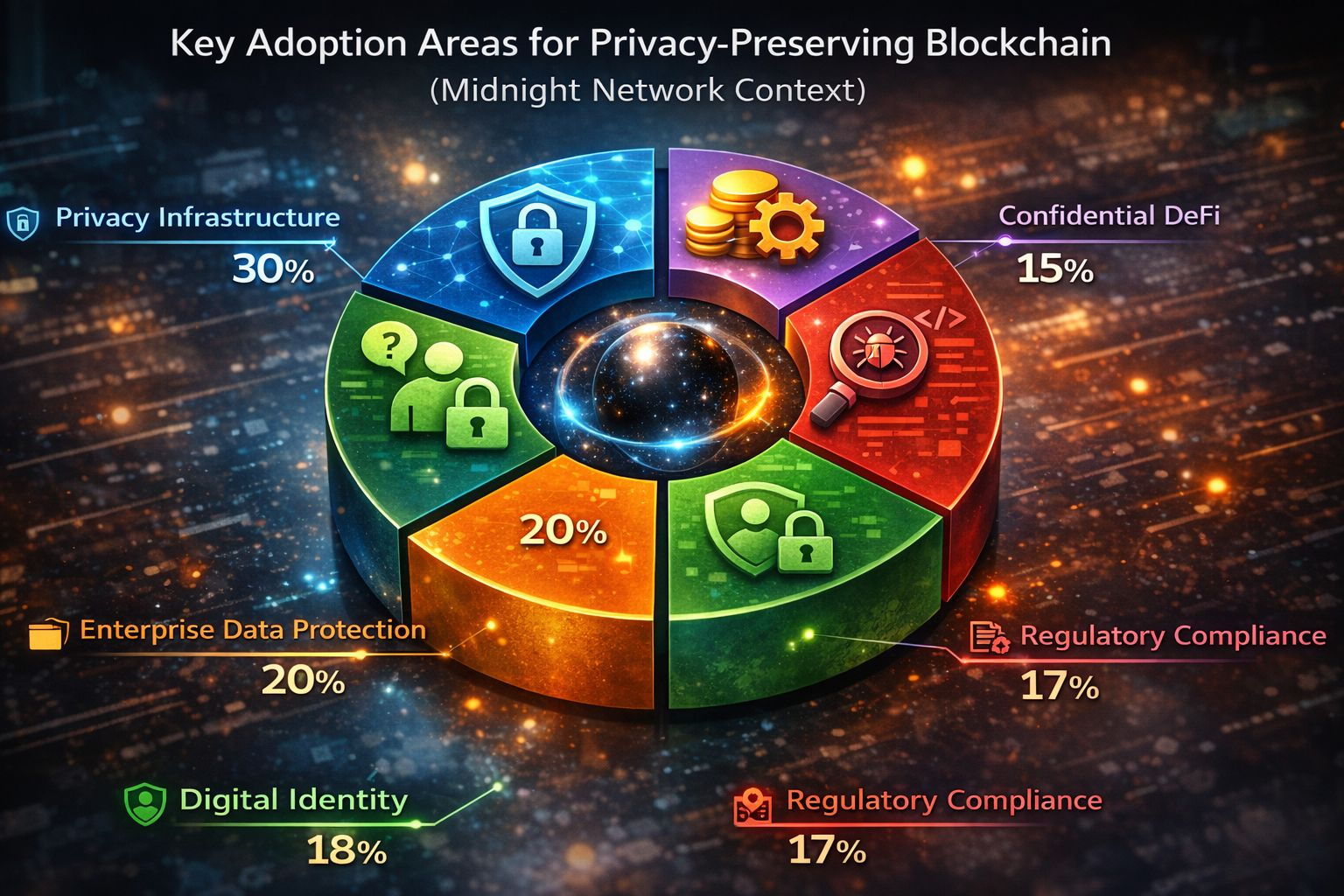
Security is another critical factor. Without the benefit of widespread visibility—the “many eyes” principle—errors in proof systems could potentially go unnoticed, which could have serious consequences. Then there’s the issue of adoption. Even if the technology functions flawlessly, it must address real-world needs that users genuinely care about, such as financial privacy, protection of sensitive business data, or confidentiality in healthcare systems.
That said, the idea itself is compelling. Midnight Network is addressing a meaningful challenge: how to verify information without exposing it. It may not be a headline-grabbing concept, but if executed effectively, it could quietly reshape how trust is established in blockchain systems. Personally, I remain cautiously optimistic and interested to see how the technology performs beyond theory.
And honestly, despite the uncertainties, there’s something undeniably exciting about it. A system that preserves confidentiality while still proving its integrity feels almost like a refined technological illusion. If it works, it could fundamentally redefine how we think about trust, privacy, and verification. And if it doesn’t, it will still offer valuable insight into the limitations of even the most sophisticated ideas.
Either way, following its progress feels like standing at the edge of something new—uncertain whether the next step will hold or give way. For me, that balance of risk and possibility is exactly what makes Midnight Network worth watching.