One of the most overlooked problems in blockchain design isn’t technical — it’s economic.
For years, most crypto projects have followed the same pattern: one token does everything. It handles governance, pays transaction fees, and becomes the main object of speculation. At first, this seems efficient. In reality, it creates friction.
When speculation increases, fees rise. When fees rise, real users suffer. Over time, networks meant for utility slowly turn into trading arenas.
This is where Midnight takes a more deliberate approach.
A Clear Separation of Roles
Instead of forcing everything into a single token, Midnight separates responsibilities.
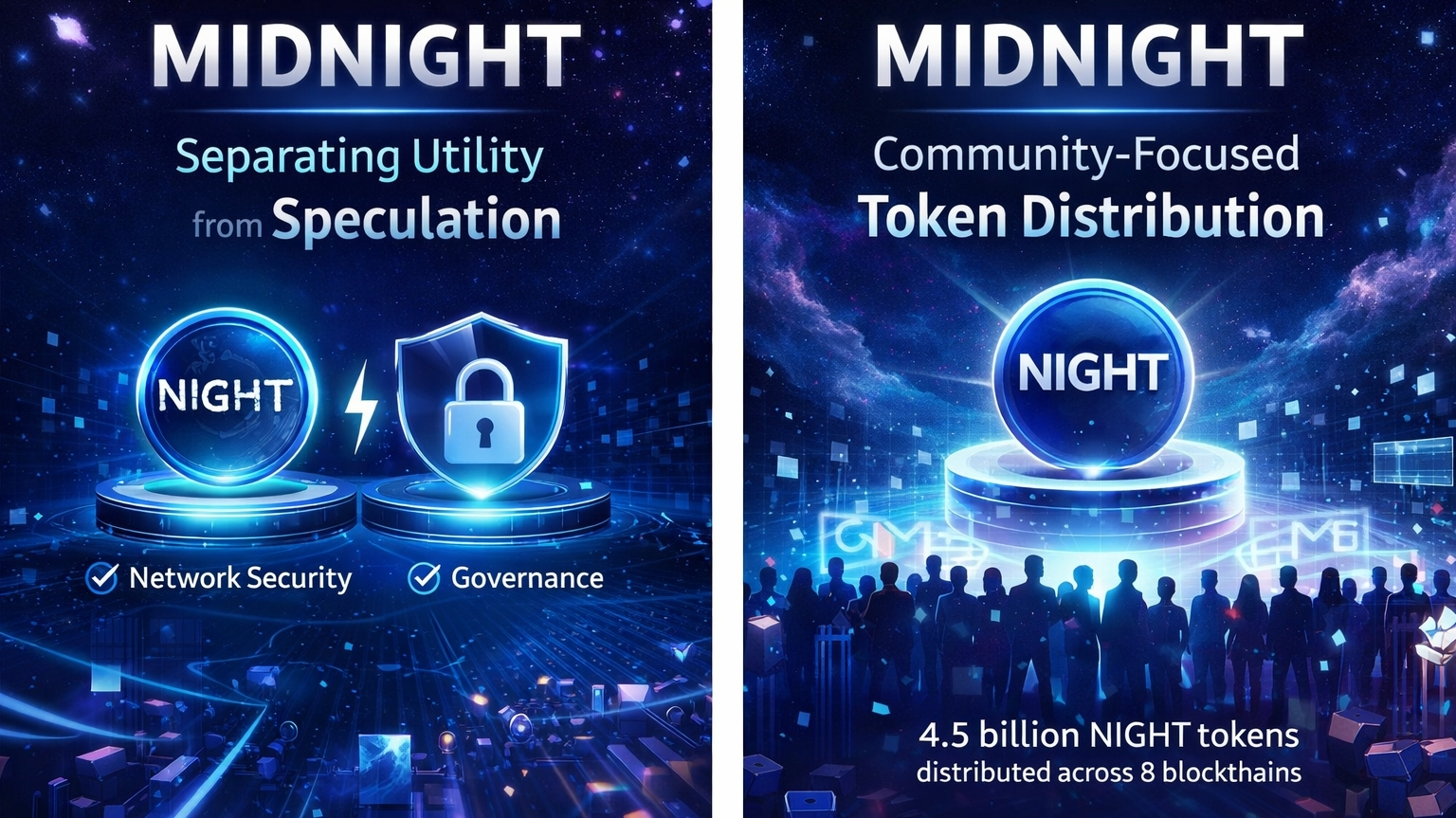
The primary token, NIGHT, is used for:
Securing the network
Governance and decision-making
But when it comes to actually using the network — especially private transactions — users don’t rely on NIGHT directly.
This distinction matters.
By separating utility from speculation, Midnight reduces the risk of fee volatility. It also protects the user experience from being affected by market hype. In simple terms, the network is designed for usage first, not trading.
A Distribution Model Focused on Participation
Token distribution is often where projects reveal their priorities.
Many ecosystems allocate large portions of supply to insiders or early investors. Midnight takes a different path.
Through initiatives like Glacier Drop and Scavenger Mine, approximately 4.5 billion NIGHT tokens were distributed across users from multiple blockchain ecosystems.
What makes this approach notable is not just the scale — but the structure.
Scavenger Mine, in particular, required users to actively participate and complete tasks. This wasn’t passive farming. It encouraged engagement, learning, and involvement in the ecosystem.
That kind of design builds stronger communities compared to simple airdrops.
Long-Term Thinking in Token Unlocks
Another detail that reflects Midnight’s philosophy is its redemption schedule.
Instead of immediate token releases, allocations are spread over 450 days, with multiple unlock stages. There’s even a 90-day grace period for users who miss their claim window.
This approach does two important things:
Prevents sudden market dumping
Encourages long-term participation
In an industry known for short-term hype cycles, this kind of pacing shows restraint.
Lowering Barriers with Capacity Exchange
One of the more practical innovations in Midnight’s model is how users pay for services.
Rather than forcing users to acquire a specific token, Midnight introduces a capacity exchange mechanism. This allows users to pay using assets from other ecosystems.
The benefit is clear:
Users don’t need to abandon their existing assets
Entry into the ecosystem becomes easier
Adoption friction is reduced
This is a subtle but powerful shift. It aligns with real user behavior instead of forcing new habits.
Fair and Predictable Fee Structure
Another key focus is fee design.
Instead of unpredictable gas markets, Midnight aims to align costs with actual resource usage. Users pay based on what they consume — nothing more, nothing less.
This creates a more stable and transparent environment, especially important for applications that rely on consistent performance and cost predictability.
The Bigger Picture
When you step back, Midnight’s economic design reflects a clear philosophy.
It doesn’t treat privacy as a premium feature reserved for a few. Instead, it tries to make privacy infrastructure:
Accessible
Sustainable
Practical for everyday use
The separation of tokens, broad distribution, controlled unlocks, and flexible payment mechanisms all point in the same direction — long-term usability over short-term speculation.
Final Thoughts
Midnight’s model may not be the simplest, and it may require users and developers to adjust. But it addresses real problems that have held back blockchain adoption for years.
By separating utility from speculation, reducing entry barriers, and designing for long-term participation, Midnight offers a more balanced economic framework.
In a space often driven by hype and rapid token cycles, that kind of thoughtful design stands out.
Not because it promises more — but because it tries to fix what’s already broken.
#night $NIGHT @MidnightNetwork