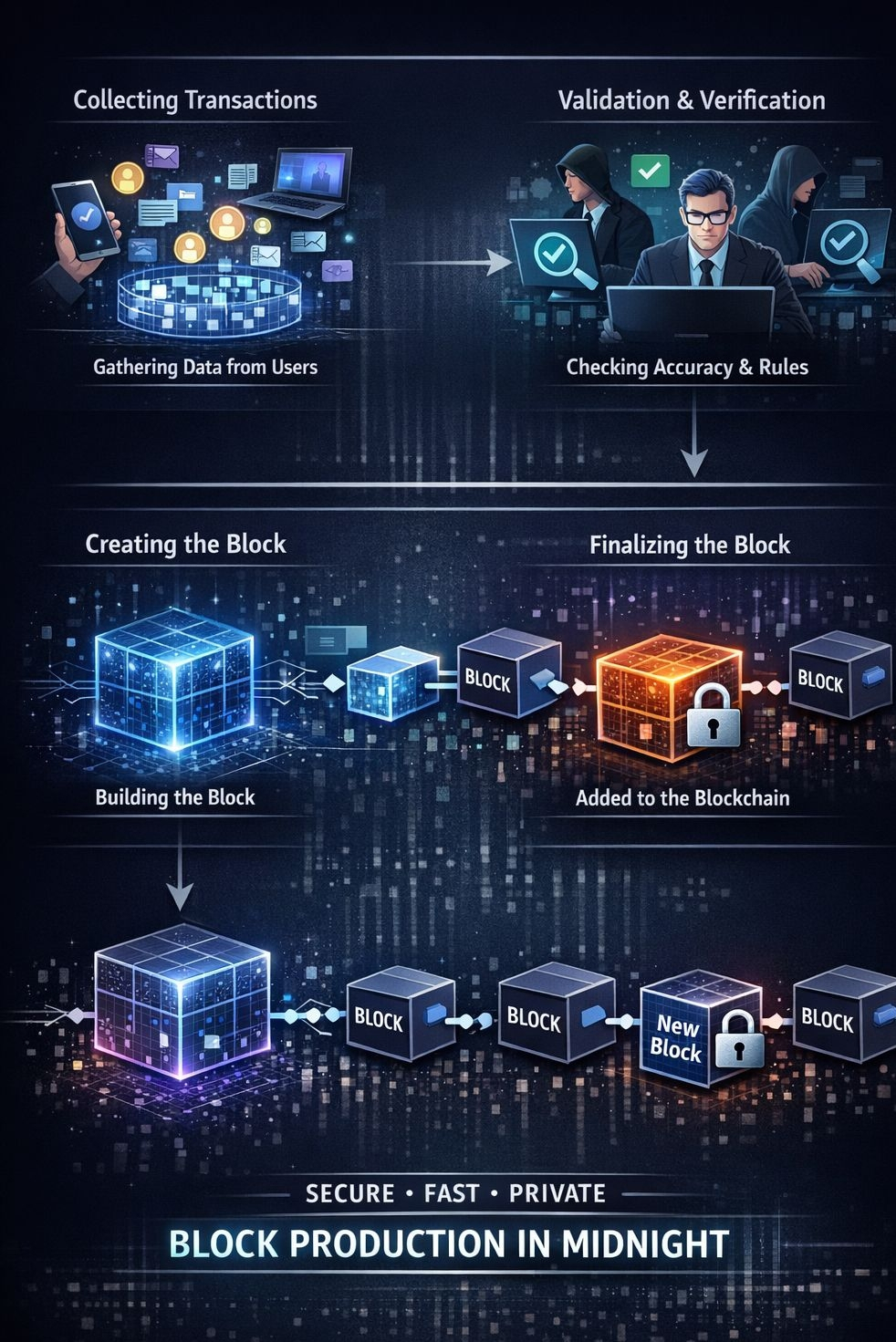
I spent some time trying to figure out how Midnight blocks are made, and to be honest, it got a lot easier when I broke it down into steps.
The network collects transactions from different users and puts them all together so they can be processed in an orderly manner.
It doesn't just do things at random; it follows a clear flow that makes the system feel smooth.
After the transactions are gathered, validators come in to check everything very carefully.
They are in charge of making sure that the data is correct, valid, and follows all the rules of the network.
This step is very important because it helps keep the system safe and stops mistakes from happening. The process builds trust because it doesn't move forward if something is wrong.
Once all the transactions are checked, they are put into a block. The chain then connects to that block, which becomes a permanent part of the network.
One of the main ideas behind blockchain systems is that the data can't be changed later.
I think it's interesting that Midnight isn't just trying to be fast. It also puts a lot of emphasis on privacy, which is something that a lot of projects still have trouble with.
The network can handle a lot of transactions at once without slowing down, so users can have a smooth experience even when there is a lot going on.
In short, block production in Midnight is about gathering information, making sure it is correct, and then keeping it safe and for good.
It seems like a fair system where speed, trust, and privacy all work together. This makes Midnight seem more useful to me and more like what real users need in Web3 now and in the future.
#night @MidnightNetwork $NIGHT