
In a landmark shift that effectively ends over a decade of "regulation by enforcement," the U.S. Securities and Exchange Commission (SEC) and the Commodity Futures Trading Commission (CFTC) released a joint 68-page interpretive guidance on March 17, 2026. This historic document clarifies the long-contested boundary between digital securities and commodities, providing the industry with the "clear lines in clear terms" that SEC Chairman Paul Atkins and CFTC Chairman Michael Selig have championed.
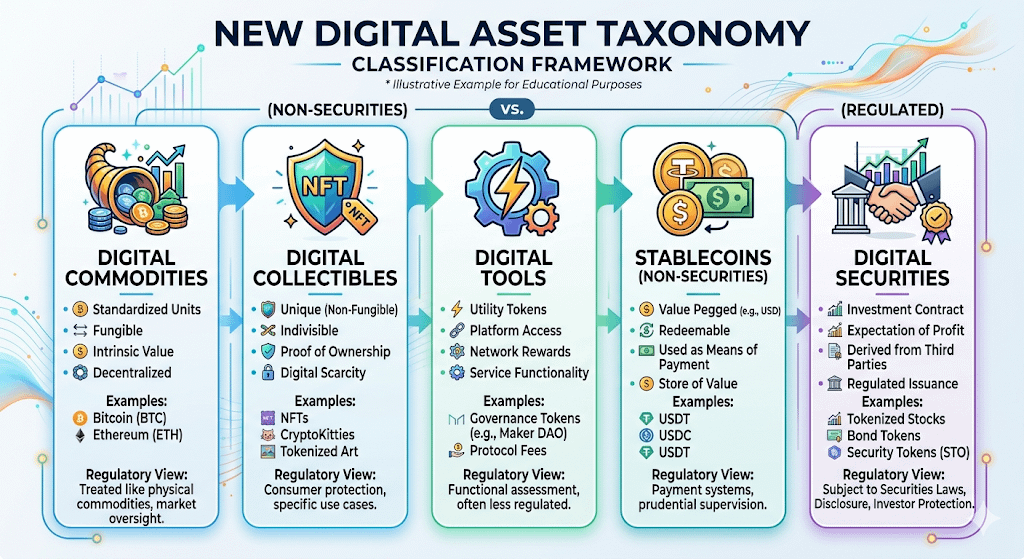
A New "Token Taxonomy" Framework
The guidance introduces a robust Token Taxonomy that categorizes digital assets into five distinct buckets. Under this framework, the vast majority of mainstream assets—including Bitcoin, Ether, Solana, XRP, and 12 others—have been explicitly classified as Digital Commodities.
Programmatic Value: Assets that derive their value from the "programmatic operation of a crypto system" and market supply-and-demand dynamics are no longer treated as investment contracts.
The "Attach-and-Detach" Principle: In a revolutionary move, the agencies acknowledged that while a token might be sold as a security during an initial fundraising phase, it can "detach" from that status once the network is decentralized and functional.
Safe Zones for Builders: Staking, Mining, and Airdrops
The guidance significantly lowers the legal risk for network participants. Protocol mining and staking are now categorized as administrative or ministerial activities rather than securities transactions. Furthermore, airdrops are generally excluded from securities law because they lack the "investment of money" required by the Howey Test, provided no goods or services are exchanged.
The Phantom No-Action Letter: Empowering Web3 Interfaces
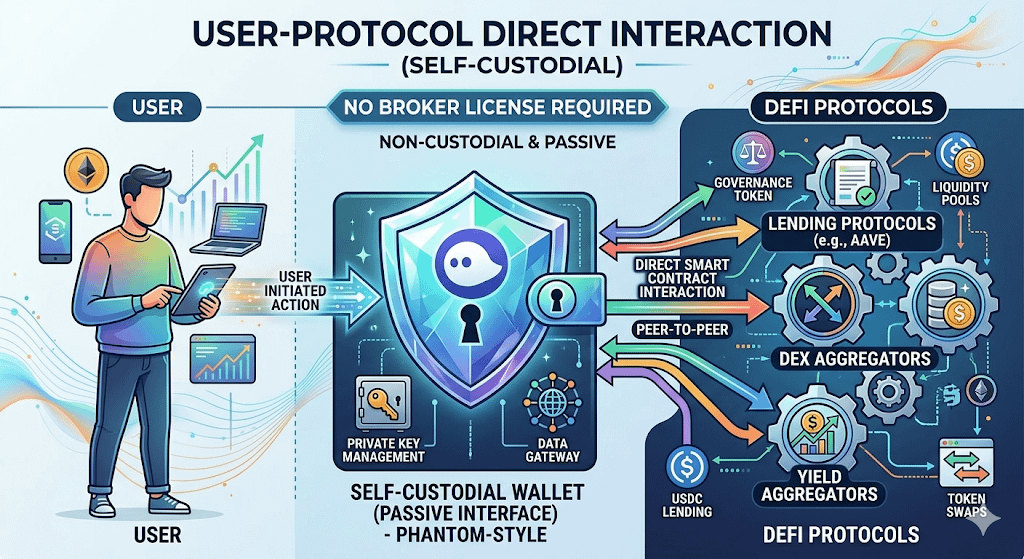
In a parallel win for decentralized software, the CFTC issued a no-action letter to Phantom wallet on the same day. The agency recognized that self-custodial software interfaces do not act as traditional brokers or intermediaries. By clarifying that "passive software" does not require a broker license, the CFTC has cleared the path for Web3 developers to innovate without the crushing weight of legacy financial compliance.
Analyst’s Outlook: Institutional Revaluation and Integration
This move is expected to trigger a massive asset revaluation. By removing the "securities overhang," these assets are now eligible for easier integration into traditional financial (TradFi) systems, including pension funds and institutional portfolios. While the CLARITY Act of 2025 remains stalled in the Senate, this joint guidance delivers roughly 80% of the bill's intended benefits through administrative action. As we move toward the March 18 Federal Reserve meeting, this regulatory clarity provides a stable foundation for the "digital gold" narrative, even as macro risks like energy-driven inflation linger.