
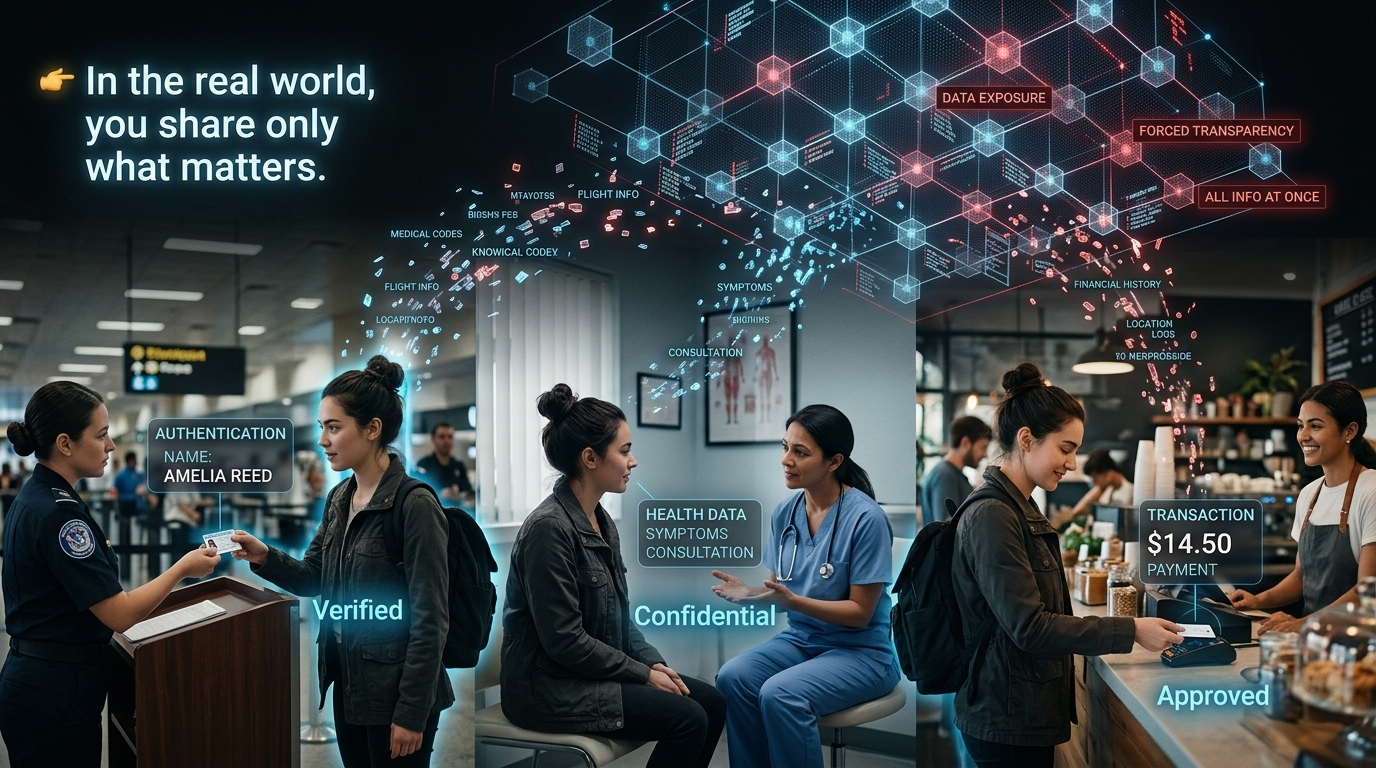
Every day, without thinking about it, you decide what to share and what to keep to yourself.
You show your passport at the airport but not to the coffee shop. You tell your doctor things you'd never say to your employer. You prove your age to buy something without handing over your full address and ID number. You share just enough for the situation, and nothing more. That's not deception. That's just how trust works in the real world. You give people what they need to verify something, not everything you know about yourself.
This is so normal that we don't even notice it. Until you try to do it on a blockchain.
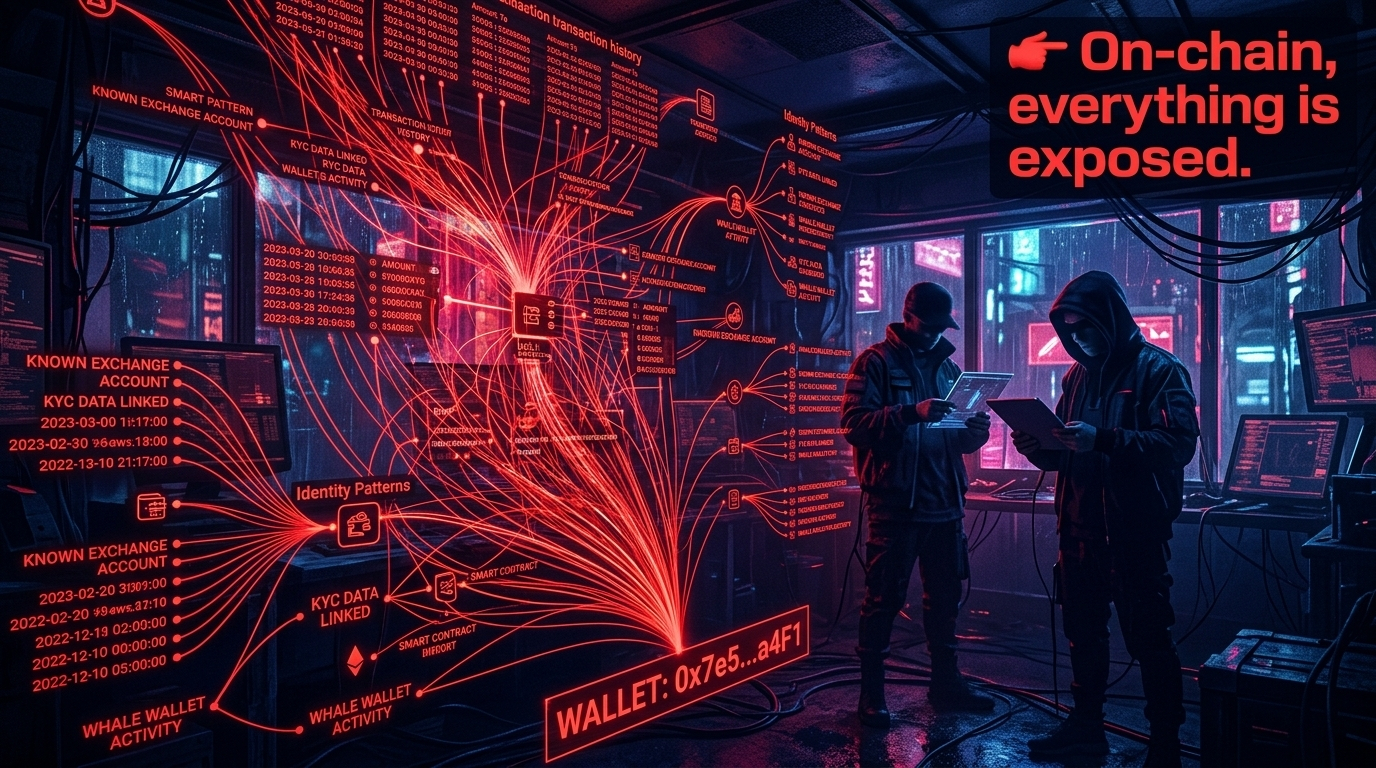
On most public chains, the logic flips. Everything is visible by default. Your wallet address, your transaction history, your activity patterns all of it is sitting there, readable by anyone who cares to look. For speculation and token trading, that was fine. The whole game was public anyway. But the moment you try to use blockchain for anything more sensitive a business contract, a medical record, a financial arrangement between two companies that openness becomes a real problem.
Nobody runs a business by putting all their information on a public board. That's not how trust is built. That's how you get exploited.
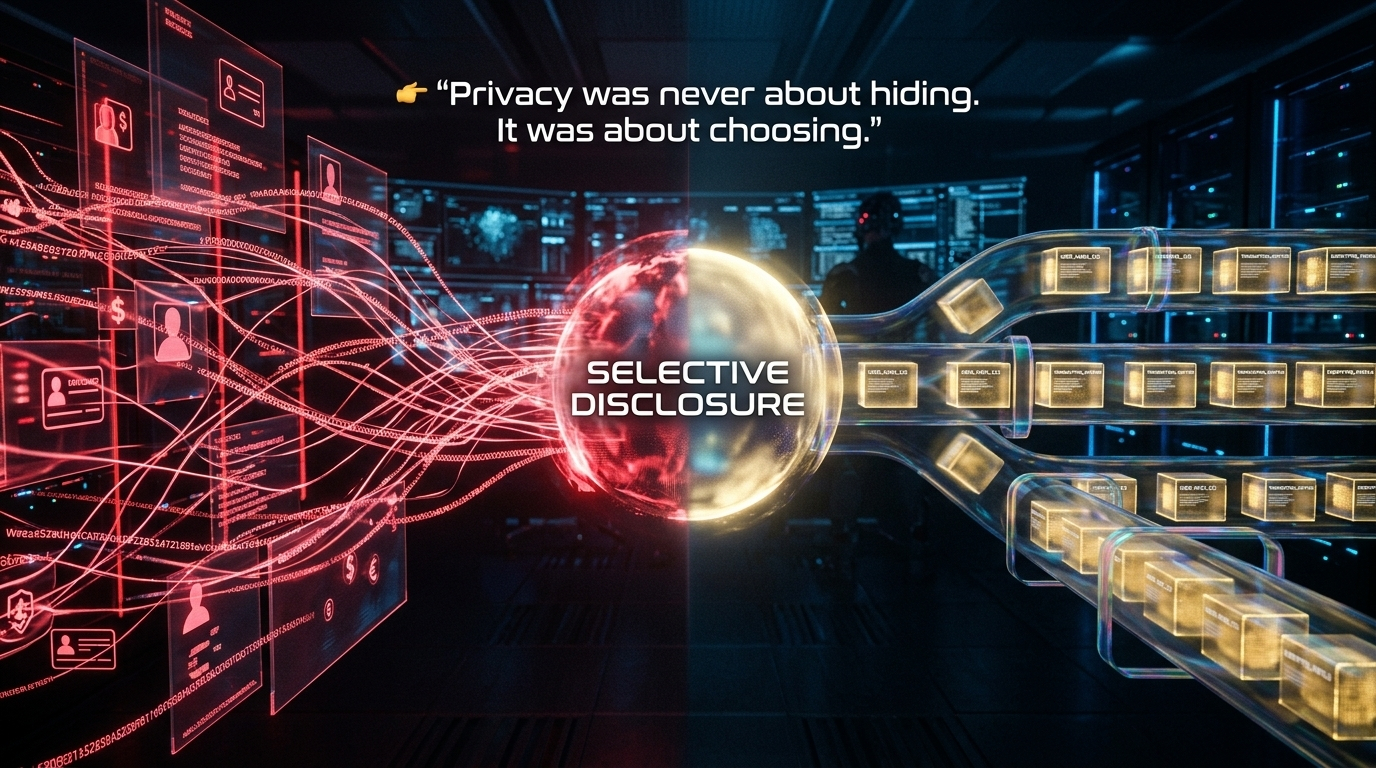
This is the gap that Midnight is trying to close. Not by hiding everything that creates a different problem, where nobody can verify anything and trust collapses from the other side. But by making selective disclosure a native feature of how the network operates. The idea is that you prove what needs to be proven, and nothing else moves.
Think about what that actually unlocks. A company could verify a supplier's compliance record without seeing their pricing. A person could prove they meet an eligibility requirement without revealing their identity. Two parties could settle an agreement on-chain without exposing the terms to the rest of the world. None of these are exotic use cases. These are things that happen in normal business life every single day, just not on-chain, because the tools for doing them privately haven't existed until now.
I think the reason this idea resonates with me is that it's not asking people to behave differently. It's building infrastructure that matches how people already behave. We've always shared selectively. We've always drawn lines around what's appropriate to disclose in a given context. The technology is finally catching up to that reality instead of asking everyone to abandon it.
Whether Midnight fully delivers on this is still an open question. Building the infrastructure is one thing. Getting real applications built on top of it is another. The distance between a good design and a widely used system is usually longer and harder than anyone expects.
But the direction feels right. And honestly, for a space that spent years treating full transparency as some kind of virtue, that's already a meaningful shift.
Privacy was never about hiding. It was always about choosing.