
Human behavior rarely develops in isolation; it is shaped quietly and continuously by the environment in which a person grows. A simple visual scene of one child mocking another while an adult stands behind him reveals a powerful truth about how actions are learned and repeated. What appears to be a moment of childish teasing is, in reality, a reflection of something deepen inherited pattern of behavior that originates from influence rather than instinct. The child who is bullying is not acting independently; he is echoing what he has absorbed from a figure of authority, demonstrating how easily attitudes, tone, and habits can transfer from one individual to another.
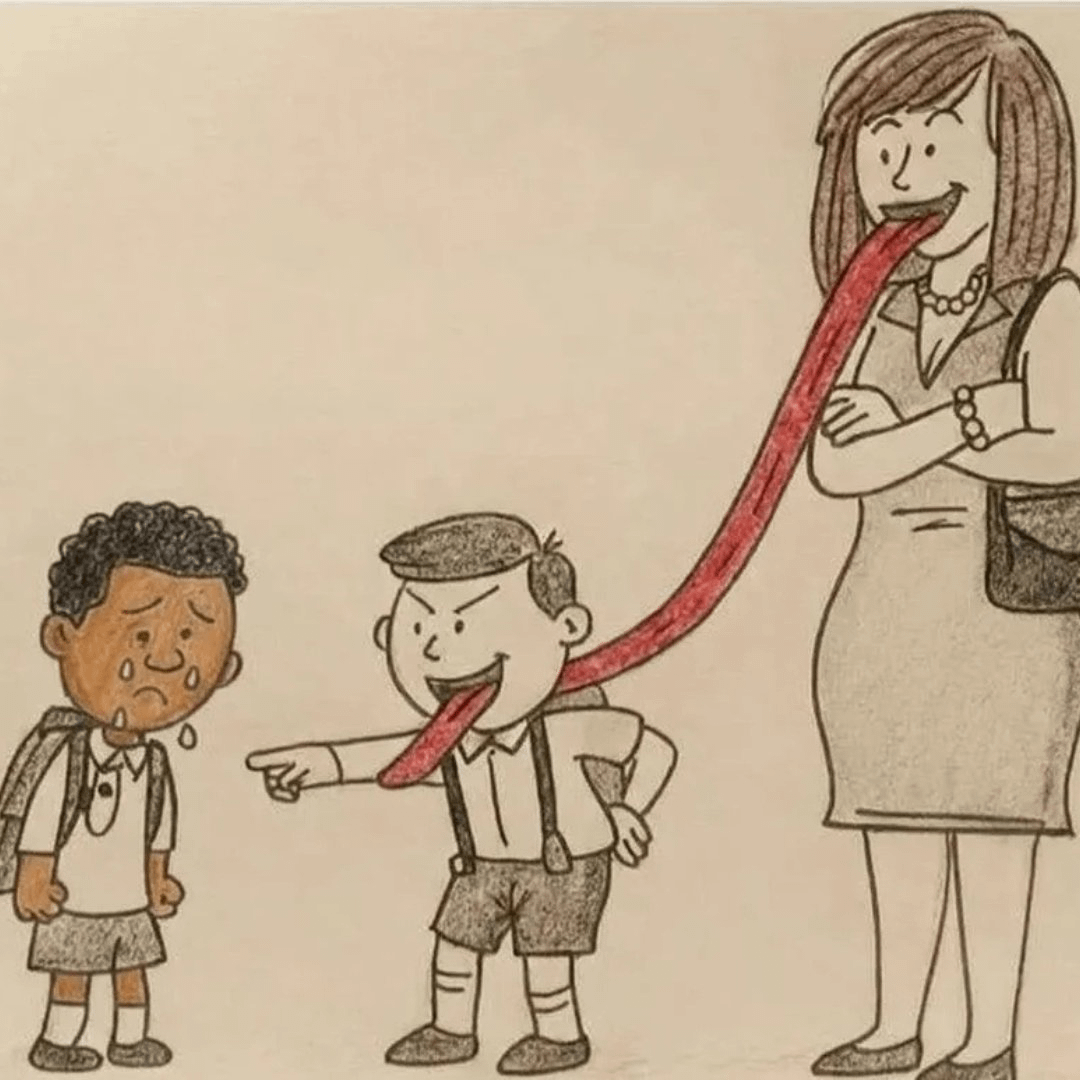
This dynamic aligns closely with the concept of observational learning, where individuals, especially children, imitate what they see rather than what they are told. A child exposed to harsh language, criticism, or dismissive attitudes often internalizes those behaviors without conscious awareness. Over time, these internalized patterns manifest externally in the form of aggression, mockery, or a lack of empathy. The result is not merely a single act of bullying but the continuation of a cycle where negative behavior is passed forward, creating new victims while reinforcing the original pattern.
The significance of this cycle extends beyond individual interactions and reflects a broader social structure. Just as systems in technology or finance rely on consistent and predictable inputs, human society is built upon repeated behaviors. When negative inputs dominate whether in the form of disrespect, anger, or emotional neglect they produce equally negative outputs. This creates an environment where harmful actions become normalized, making it difficult to distinguish between what is learned and what is acceptable. In such a system, responsibility cannot be placed solely on the individual exhibiting the behavior; it must also be traced back to the source of influence.
Breaking this cycle requires a conscious shift at its origin. Positive reinforcement, respectful communication, and emotional awareness can significantly alter the trajectory of learned behavior. When authority figures model empathy and understanding, they create a contrasting pattern that children are equally likely to adopt. Over time, this shift can disrupt the chain of negative influence, replacing it with a more constructive and balanced form of interaction. The transformation does not happen instantly, but it begins with awareness and consistent effort.
The broader implication is clear: behavior is not an isolated phenomenon but part of an interconnected system where actions ripple outward. Each interaction contributes to a larger pattern, influencing not only individuals but entire communities. Recognizing this interconnectedness allows for a more informed approach to addressing issues like bullying, shifting the focus from punishment to prevention and from reaction to understanding. By addressing the root cause rather than the visible outcome, it becomes possible to create lasting change.
Ultimately, the scene serves as a reminder that individuals are shaped long before they act. The words they hear, the attitudes they observe, and the environment they experience all combine to form the behaviors they later express. If the goal is to foster a more respectful and empathetic society, the starting point must be the environment itself. Change at the source leads to change in the outcome, and by reshaping the influences that guide behavior, it becomes possible to transform not only individual actions but the system as a whole.
$IDEX $CFG $DEGO
#BinanceKOLIntroductionProgram #FTXCreditorPayouts #MarchFedMeeting #SECApprovesNasdaqTokenizedStocksPilot #USFebruaryPPISurgedSurprisingly