
I’ve been thinking about this a lot lately. Most blockchain projects pick one lane: payments, identity, or compliance and go deep. Sign Protocol feels different. It’s trying to build the thin but critical layer underneath all three at once.
The core idea is simple but powerful: create a universal cryptographic evidence layer so that different national systems can actually talk to each other without duplicating work or breaking privacy. A CBDC payment, a citizen credential check, and an RWA distribution should all generate the same type of verifiable record that any authorized party can audit without exposing everything.
That’s exactly what Sign’s S.I.G.N. framework is aiming for. At the technical heart is the Sign Protocol itself: schemas define structured data templates, and attestations are cryptographically signed proofs. The magic is selective disclosure and optional zero knowledge mode. You can prove “this person is eligible” or “this asset is real” without revealing full personal or financial details. Everything stays private by default but remains verifiable when needed.
What makes this infrastructure level is how it connects the three big systems:
• New Money System: Runs dual rails a high-speed private CBDC mode (targeting 100,000+ TPS with instant finality) alongside a public stablecoin layer on sovereign L2s. A bridge enforces atomic conversion and policy controls.
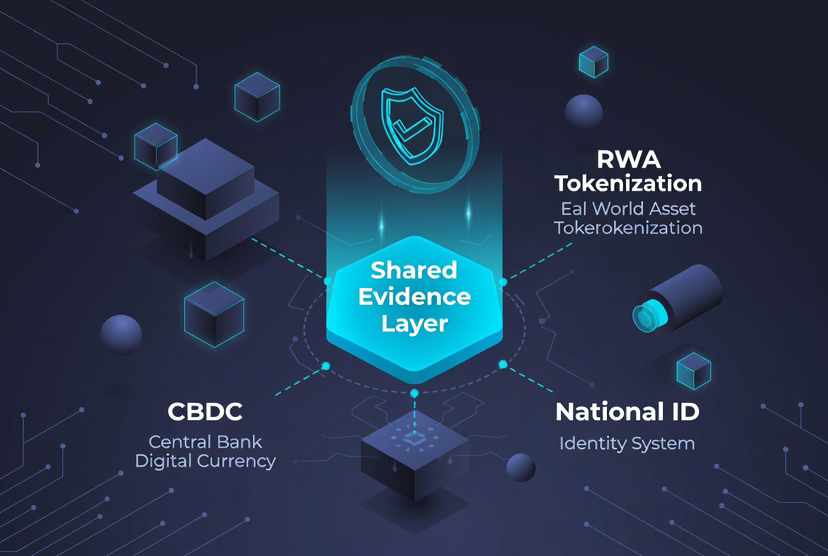
• New ID System: Built on W3C Verifiable Credentials with selective disclosure baked in. Citizens share only the minimum required data, and offline verification is supported for real world use.
• New Capital System: Powered by TokenTable for large scale, deterministic token distributions, vesting, and compliance ready reporting.
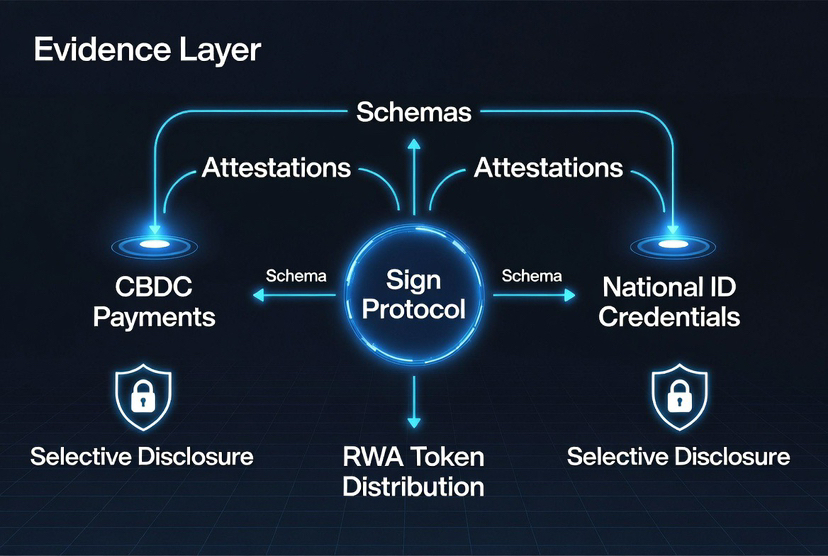
All three systems generate attestations that feed into the same shared evidence layer. One unified audit trail. No more silos. No more duplicated KYC. No more broken reporting between on chain execution and off-chain regulators.
The crypto impact here could be massive. In a world where CBDC pilots are running in over 130 countries, RWA tokenization is heading toward $16 trillion by 2030, and over a billion people still lack formal identity, having a common verifiable layer changes everything. DeFi platforms get compliant credentials without storing sensitive data. RWA issuers get inspection-ready proofs. Governments get sovereign control without losing interoperability.
Of course, real questions remain. Getting governments to standardize on shared schemas and attestation formats is never easy. Migration from legacy systems will be messy. The multi chain security surface is real. But the framing feels unusually coherent. Instead of starting from one domain and bolting on everything else, Sign starts from the shared evidence layer first — which might be the right architectural choice for this next phase of institutional adoption.
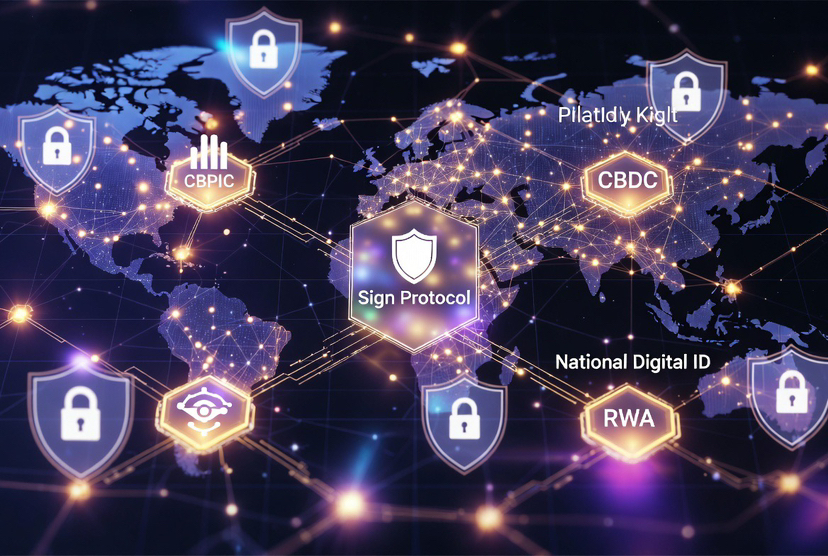
I’m not saying it’s guaranteed to work at national scale. It’s still early. But in a market flooded with hype, a project focused on solving the actual coordination problem between money, identity, and capital systems stands out. If even a few major jurisdictions adopt this evidence layer, the utility of $SIGN could shift from speculative to structural.
That’s the kind of asymmetry worth watching closely.