
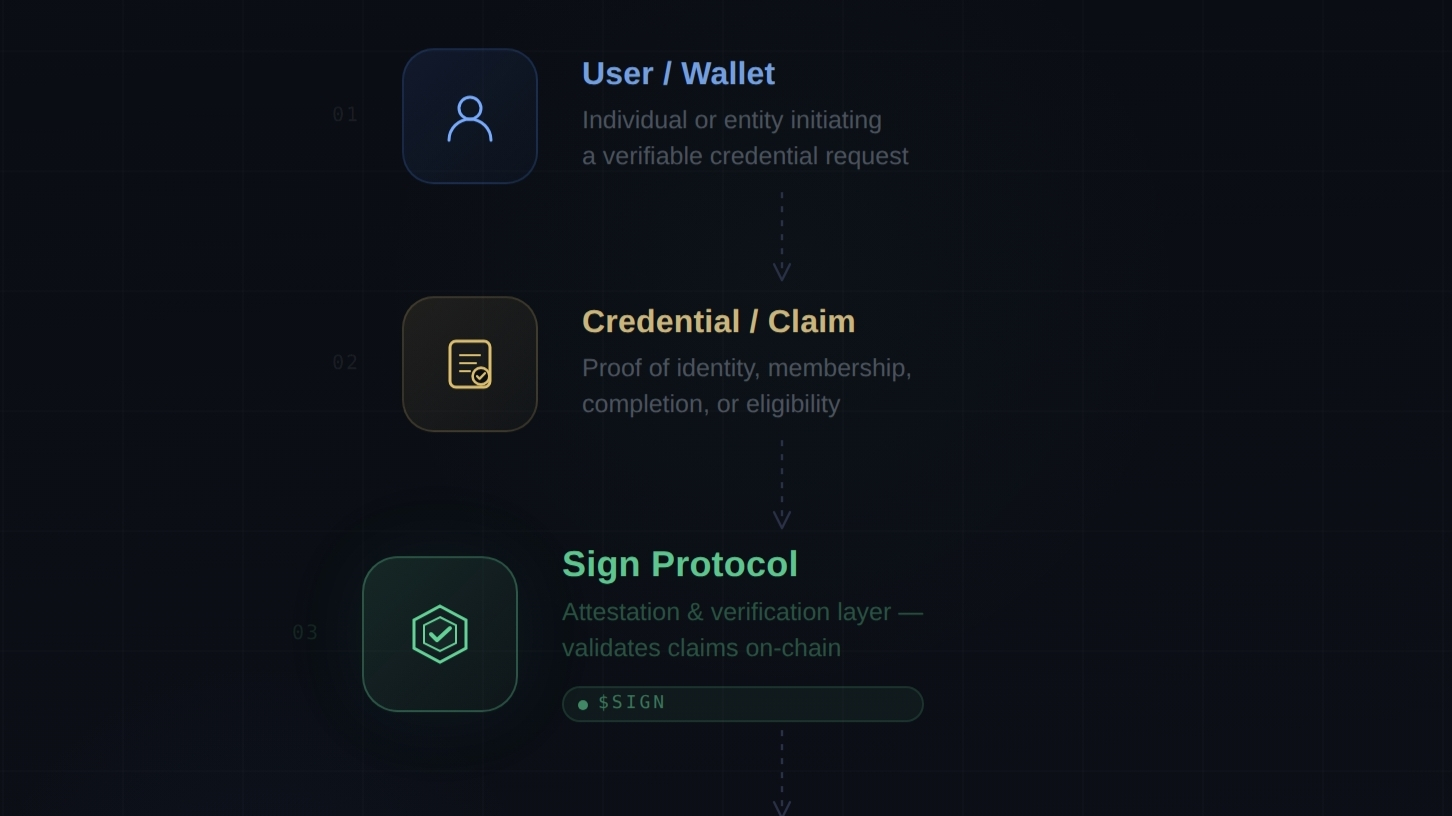
I keep coming back to one simple thought, Web3 does not just need faster apps, it needs better proof. In crypto, people are always asked to show they’re eligible, trusted, verified, or allowed to do something. The problem is that this proof is still scattered across wallets, apps, and communities, which makes trust harder to carry from one place to another.
To me, credential verification feels like one of the most practical next steps for Web3. As more onchain activity connects with identity, access, compliance, and distribution, users need records that are not just stored, but easy to verify.
Sign Official’s docs describe its New ID System around verifiable credentials, offline verification, and revocation, which tells me this is not a small side feature. It’s part of a bigger move toward reusable digital proof.
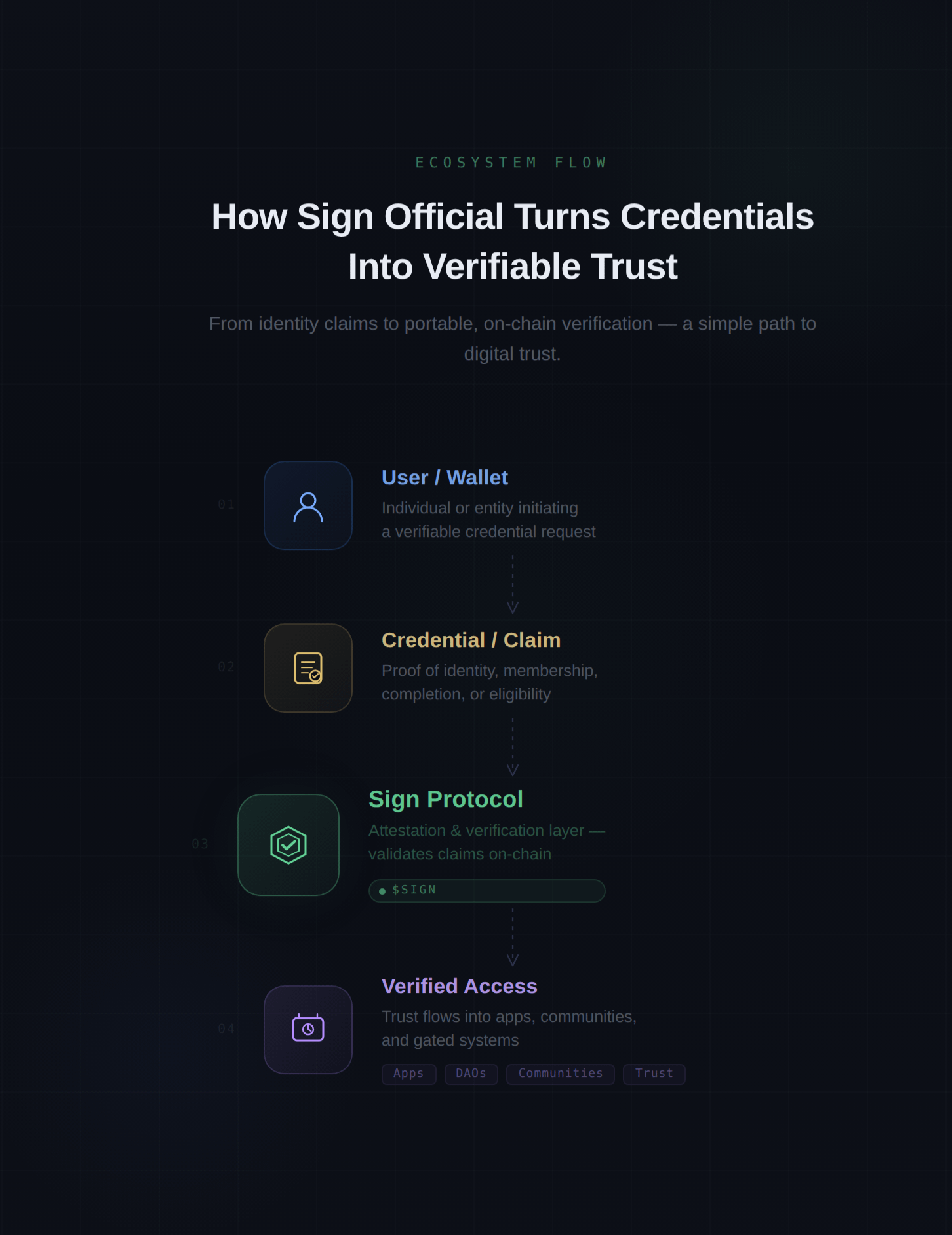
This is where Sign Official becomes interesting to me. Binance Research describes Sign Official as infrastructure for credential verification and token distribution, while Sign Protocol is described in the docs as the cryptographic evidence layer of the stack. In plain words, it gives systems a way to define structured records, issue attestations, and verify them across chains and environments. I don’t see that as a hype story. I see it as a trust layer.
What makes me take sign more seriously is the usage behind the idea. Binance Research says that in 2024, Sign Protocol schema adoption grew from 4,000 to 400,000, while attestations rose from 685,000 to more than 6 million. The same report says TokenTable distributed over $4 billion to more than 40 million wallets. For me, those numbers suggest Sign Official is not just talking about verifiable trust, it is already operating at meaningful scale.
If Web3 keeps moving toward portable proof, Sign Official could be in one of the most important lanes.