
What keeps my attention on Midnight Network is how quietly it exists compared to so many other projects that seem to arrive already demanding belief. There is no feeling of urgency around it, no sense that it needs to prove itself through noise. Instead, it feels like something developing in its own rhythm, almost aware that trust is not created by speaking loudly but by remaining consistent long enough for people to notice what is actually there.
The deeper I look at it, the more I feel that its real weight is not in the technology people usually mention first, but in the question it seems to carry underneath everything else. So much of the digital world has taught people to accept exposure as normal. Information moves constantly, identities become fragments stored across systems, and ownership often feels temporary even when people think something belongs to them. Midnight seems to come from a different instinct, one that quietly asks whether usefulness should really require that kind of surrender.
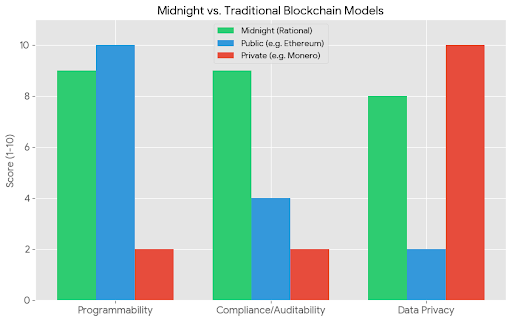
That question feels personal in a way many technical conversations do not. Maybe because people rarely notice how much of themselves they have already handed over until they begin thinking about what cannot be taken back. Privacy often sounds abstract until someone realizes how deeply digital systems remember everything. In that sense, Midnight does not feel like it is trying to introduce something entirely new. It feels more like it is responding to a discomfort that has been growing for a long time, even if most people have learned to live with it without naming it.
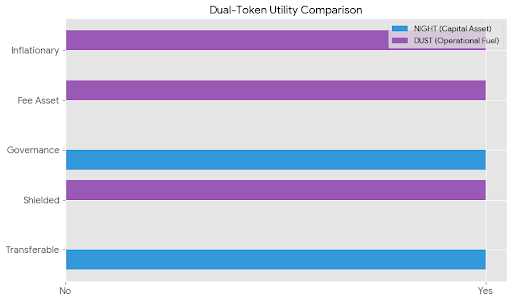
What I find most interesting is that it does not seem eager to turn that idea into a dramatic promise. There is ambition there, but it feels restrained, almost careful. A blockchain built around zero knowledge proof technology could easily present itself as revolutionary, yet Midnight gives a quieter impression, as if it understands that strong ideas become fragile when they are pushed too quickly into certainty.
That restraint matters because projects like this eventually face the same difficult moment. A thoughtful concept is one thing, but real systems are tested by compromise. Privacy sounds powerful until convenience demands shortcuts. Ownership sounds important until practical pressure begins to reshape what people are willing to protect. Midnight still has to move through that tension, and maybe that is why it feels more honest to watch it with patience rather than immediate admiration.
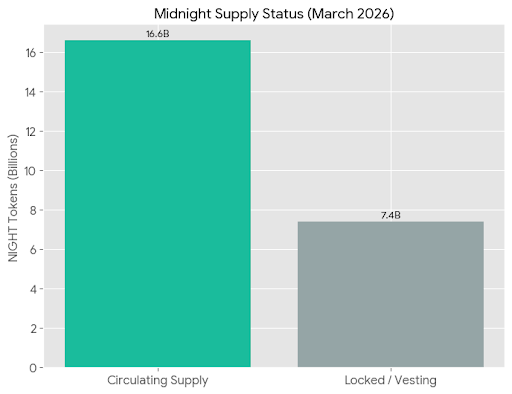
There is something deeply human in seeing a project remain unfinished while still holding onto its direction. Not every meaningful thing appears fully formed. Some ideas need time before their character becomes visible. Midnight feels like one of those cases where the slower pace says more than quick declarations ever could.
What stays with me most is not certainty about where it will go, but the feeling that it is asking a question many systems have ignored for too long. If utility can exist without forcing people to expose more than necessary, then perhaps digital trust does not have to be built the way we have accepted until now. And maybe that is why something quiet can sometimes stay in the mind longer than something designed to be impossible to ignore.