
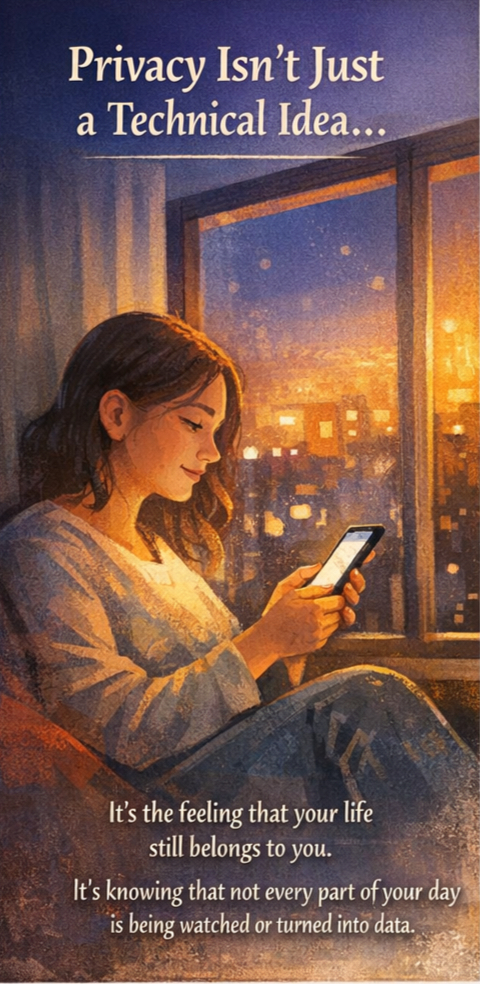
Privacy is not just a technical idea. For most people, it is something much more personal than that.
It is the feeling that your life still belongs to you.
It is the comfort of knowing that not every message, every search, every payment, every habit, and every quiet part of your day is being watched, stored, or turned into data for someone else to use. Privacy gives people a sense of space. A sense of dignity. A sense that there is still something personal left in a world that keeps asking for more access.
And yet, even when people care about privacy, most do not choose privacy-first tools in everyday life.
Not because they are careless.
Not because they do not understand the risks.
But because life is already demanding enough.
People are tired. They are busy. They are trying to get through work, family responsibilities, money pressures, endless notifications, and the constant speed of modern digital life. In the middle of all that, most people are not looking for more steps, more settings, more things to learn, or more friction. They are looking for what feels simple. What feels familiar. What works without making life harder.
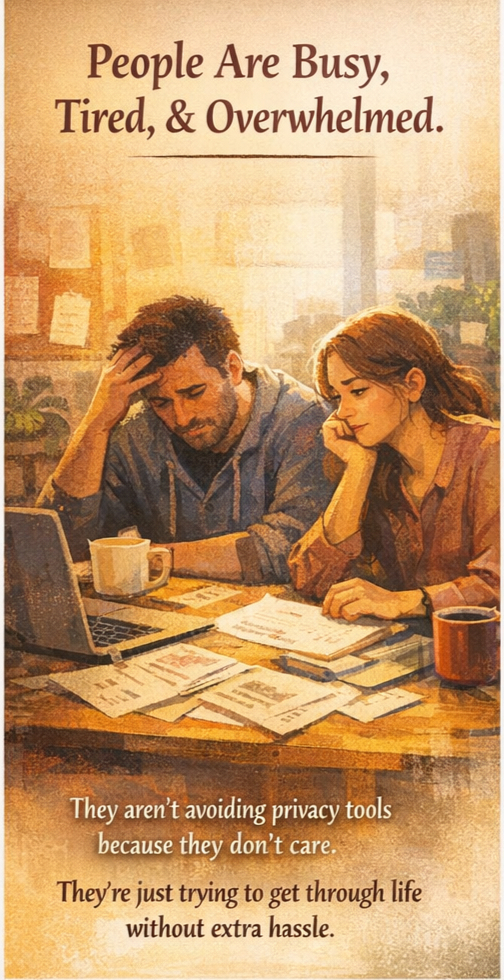
That is why privacy infrastructure only works if it blends into everyday usage.
Because no matter how strong a privacy system is technically, it will always struggle if it asks too much from the people it is meant to protect. If privacy feels complicated, people delay it. If it feels unfamiliar, people avoid it. If it slows things down or interrupts everyday habits, most people eventually return to whatever feels easier.
That is not a failure of people. That is a failure of design.
Too often, privacy has been built like it belongs to experts. It has been treated as something for people who already understand security models, digital surveillance, encryption, and online risk. The tools may be powerful, but the experience often feels distant from ordinary life. It expects users to adapt themselves to the system, instead of asking the system to adapt to real human behavior.
But most people do not want to become privacy specialists just to exist online.
They do not want to read long explanations before sending a message.
They do not want to manage complicated settings before making a payment.
They do not want to feel like protecting themselves online is another full-time responsibility.
What they want is much more human than that.
They want to feel safe without having to struggle for it.
They want to trust the tools they use.
They want protection that feels built in, not bolted on.
They want privacy to exist quietly in the background, doing its job without constantly demanding attention.
That is what real infrastructure should do.
The strongest systems in the world usually become invisible in daily life. People do not think about the deeper architecture behind the apps they use. They do not think about servers when they send messages. They do not think about protocols when they browse websites. They do not think about payment networks when they transfer money. They simply expect things to work. Privacy has to reach that same point. It has to become part of the natural flow of digital life.
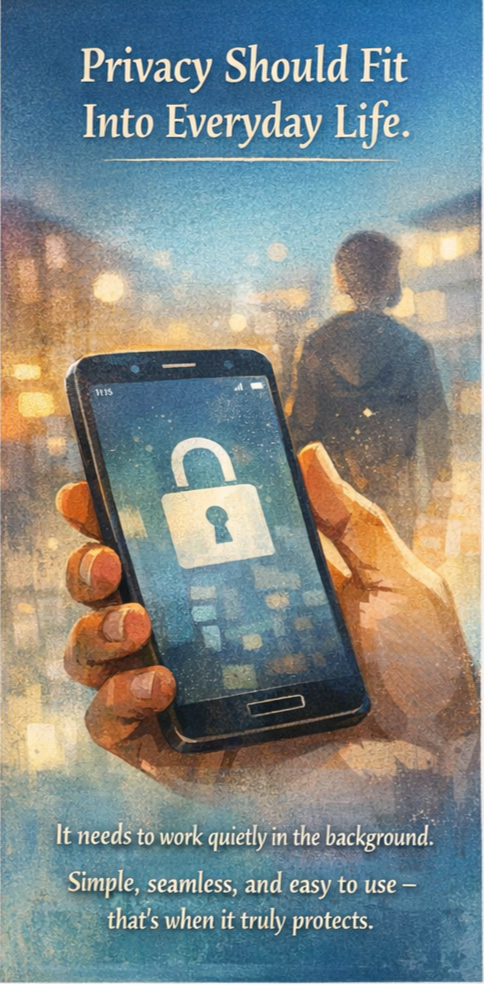
When that happens, privacy stops feeling like a special feature for a small group of informed users. It starts becoming a normal part of everyday experience.
And that is where its real power begins.
Because a privacy tool is not powerful just because it is advanced on paper. It is powerful when real people can actually use it, stay with it, and trust it over time. A simpler system that fits naturally into people’s habits can protect far more lives than a technically perfect system that feels difficult, cold, or inaccessible.
That truth matters now more than ever.
Today, almost everything we do leaves a trace. Our searches, our conversations, our purchases, our locations, our interests, our routines, and even our quietest preferences can all become data. Piece by piece, human life is being translated into information that can be tracked, analyzed, stored, and monetized. In that kind of world, privacy is not just about secrecy. It is about freedom. It is about having some part of yourself that is not constantly exposed to systems that want to measure everything.
But freedom only matters when people can actually access the tools that protect it.
That is why privacy cannot remain something difficult, intimidating, or reserved for the few. If it is going to matter in the real world, it has to meet people where they are. It has to understand their habits, their limits, their stress, and the reality of how they move through life. It has to respect the fact that people are already carrying enough.
The best privacy infrastructure does not place the burden on the user and call that empowerment. It carries the burden itself. It does the hard work behind the scenes so people can simply live, communicate, buy, share, and exist online with a little more safety and a little less fear.
That is what makes it truly meaningful.
In the end, privacy infrastructure only works when it feels natural enough to become part of ordinary life. Not loud. Not overwhelming. Not something people have to fight to maintain every day. Just steady, thoughtful, and quietly present in the background.
Because privacy will never become universal by asking exhausted people to work harder for it.
It will become universal when it protects them in ways that feel simple, seamless, and deeply human.
#night @MidnightNetwork $NIGHT
