
Midnight caught my attention for one reason: it is at least trying to solve a problem that most of this industry keeps pretending is not a problem.
I have watched crypto spend years worshipping transparency like it is some sacred good, even when it clearly turns users, businesses, and anyone with remotely sensitive activity into open exhibits. That model was always going to hit a wall. Midnight seems built around that discomfort. Not everything belongs on display. Simple point. Somehow still rare.
What makes that first impression worth holding onto is that Midnight does not appear trapped in the usual privacy extremes that this sector has repeated for years. The old pattern has always been predictable: either radical exposure disguised as trustlessness, or radical concealment disguised as freedom. Both models eventually create their own kind of fatigue. Complete visibility pushes ordinary participants into permanent vulnerability, while complete opacity often produces systems that even serious users hesitate to rely on because too much disappears behind technical promises few people can independently verify.
Midnight seems aware that neither side solves the deeper tension. A functioning network cannot demand that every participant surrender practical confidentiality, but it also cannot survive if accountability becomes impossible whenever questions arise. That middle ground is where most projects lose coherence because balancing those two forces is harder than presenting either one as ideology.
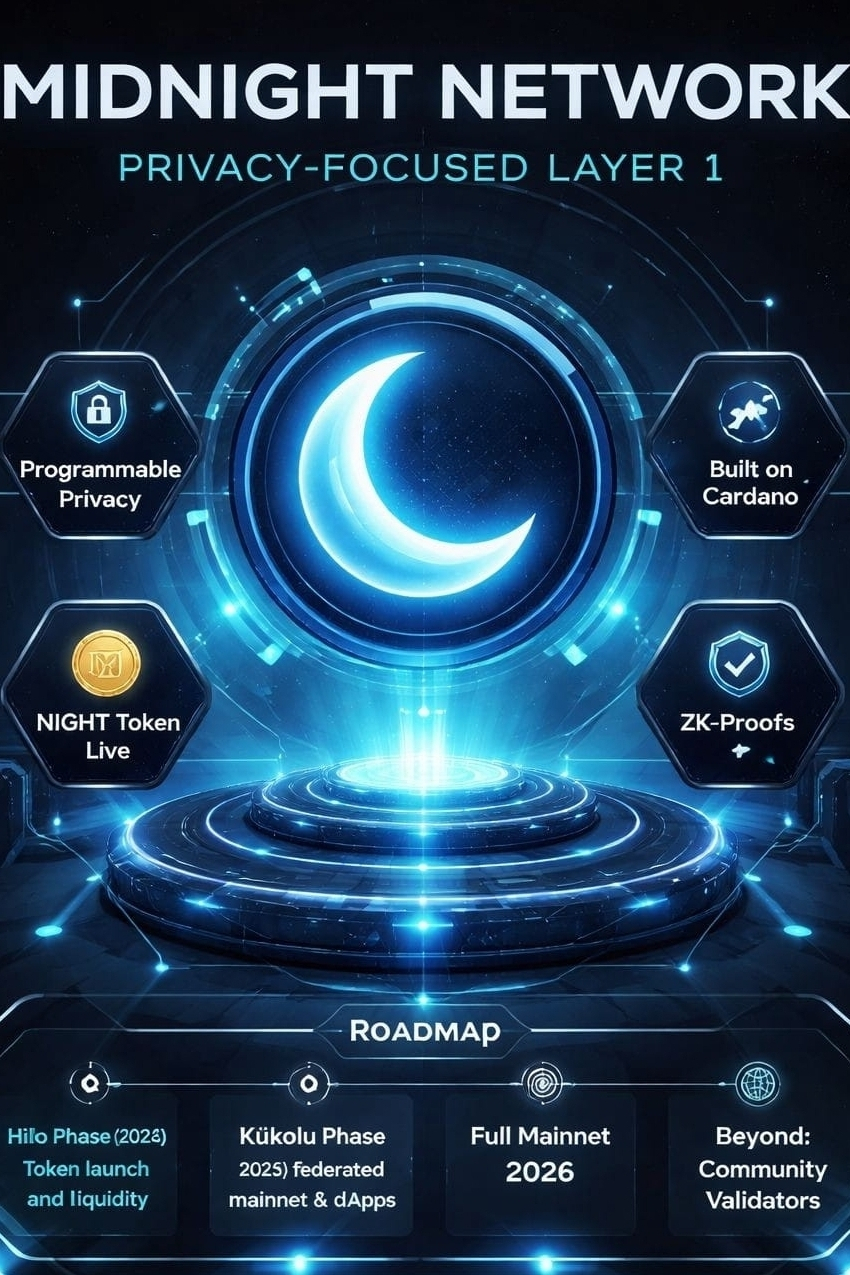
That difficulty is exactly why it deserves attention now, before market excitement starts flattening everything into slogans. The interesting part is not the promise of privacy itself. The interesting part is whether that promise remains understandable once developers begin interacting with it under ordinary conditions rather than ideal assumptions.
Because this is where elegant architecture usually starts facing uncomfortable reality. Documentation may describe how selective disclosure works, how private execution interacts with visible settlement, how protected logic can still exist inside a broader public environment. But once builders begin deploying contracts, once unexpected edge cases appear, once integrations touch external systems, theory starts losing control over the experience.
That is usually when hidden complexity begins showing itself indirectly. Users may not understand why transactions behave differently under certain conditions. Developers may discover that what looked conceptually clean becomes difficult when debugging is no longer straightforward. Infrastructure teams may suddenly realize that privacy introduces operational blind spots that require entirely new habits of monitoring and support.
And none of those problems are dramatic enough to trend loudly. That is exactly why they matter more.
Most projects do not collapse because their vision sounds foolish. They weaken because ordinary friction accumulates quietly: support questions nobody anticipated, onboarding flows nobody simplified, delays nobody explained clearly enough, assumptions nobody revisited after actual usage exposed weak points. Crypto repeatedly underestimates how destructive boring friction becomes over time.
Midnight’s design suggests an attempt to separate what must remain public from what should remain protected without forcing every interaction into unnecessary obscurity. That is a serious design decision because it implies discipline. It means privacy is being treated as infrastructure logic rather than branding language.
But serious design also means serious burden. Every protected layer increases the cost of clarity somewhere else. Every privacy guarantee creates pressure on usability, auditability, and trust during moments when something fails unexpectedly.
And systems are always judged hardest when they fail.
That is why I do not read Midnight mainly through its narrative about privacy rights or confidentiality principles. I read it through pressure. Through the moment when many users arrive with different expectations, when builders push tools further than intended, when support questions multiply faster than explanations.
Can the system remain legible when multiple hidden mechanisms interact at once? Can troubleshooting stay practical when visibility is intentionally limited? Can users trust what they cannot fully observe without feeling locked out of understanding?
Those questions decide whether privacy infrastructure becomes durable or simply admired from distance.

To its credit, Midnight at least appears to understand that privacy cannot survive as abstract philosophy alone. It must survive ordinary operational life: delayed responses, imperfect interfaces, human mistakes, uneven adoption, incomplete understanding. Those are the places where technical conviction is either strengthened or exposed.
The market has already shown how often ambitious infrastructure collapses under that weight. Complexity is often mistaken for sophistication until actual load reveals that complexity was only expensive fragility wearing intelligent language.
So the real test is still ahead.
If Midnight proves anything meaningful, it will not be because privacy sounds intelligent in theory. It will be because privacy survives contact with builders, users, failures, revisions, and the exhausting daily pressure that strips away presentation and leaves only whether the system continues functioning with confidence when nobody is admiring the architecture anymore.
That is where projects stop being ideas and start becoming real. And that is where Midnight now becomes worth watching more carefully than most.
@MidnightNetwork $NIGHT #night #Web3metaverse #PrivacyDebate #ZeroKnowledgeFuture #MidnightNetwork