
I wasn’t looking for anything that day. I was just scrolling, half-bored, when a single line stopped me: something about verifying credentials globally and giving tokens based on proof, not promises. At first, I ignored it. It sounded like one of those flashy ideas that ends up being all talk. But it wouldn’t leave my head.@SignOfficial
Later, curiosity got the better of me. I clicked. And the more I read, the more I started to see what was different. We all know what credentials are—degrees, certificates, IDs. But have you noticed how fragile they are? You get a degree in one place, and suddenly, in another city or country, it’s like it doesn’t exist. Every new employer, platform, or service asks you to prove yourself again. Over and over. The past you worked hard to build stays stuck somewhere else, and you’re left starting over.
This project isn’t about creating more credentials. It’s about letting the ones you already have travel with you, safely and instantly verifiable wherever you go. These aren’t just documents—they’re proofs you own. And once you have them, anyone can check they’re real without contacting the original issuer. That part felt small at first, but then it hit me: this changes everything about how we carry our lives digitally.
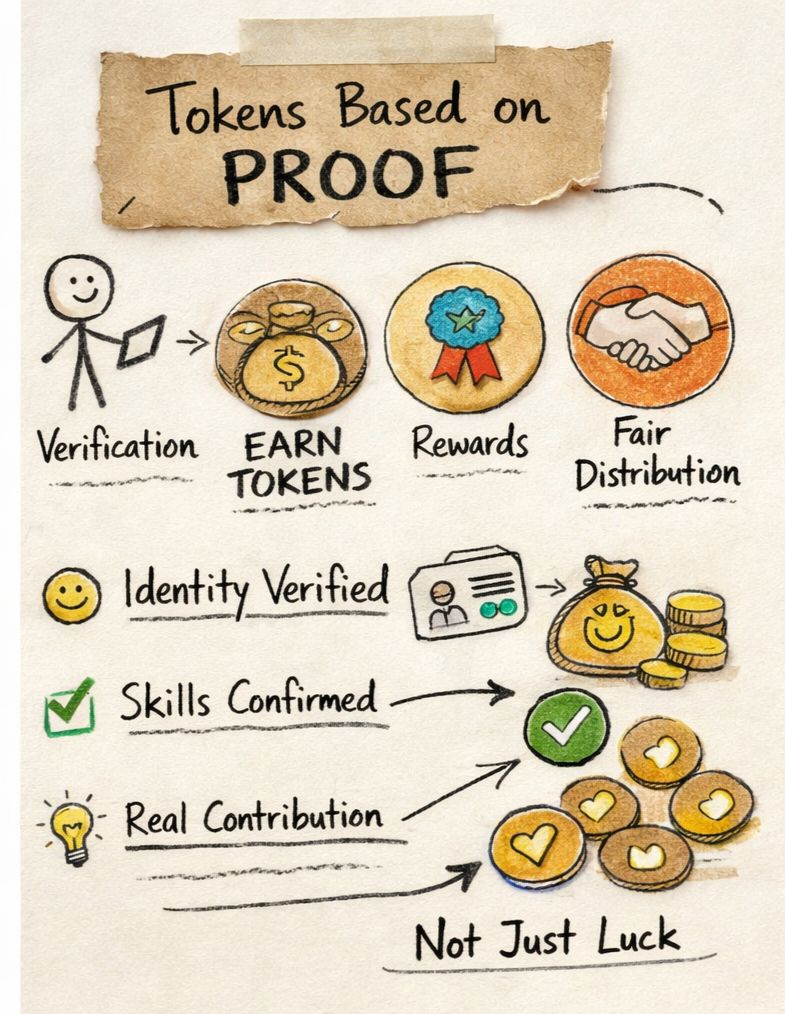
And then there were the tokens. I’d always thought tokens were just money, speculation, charts that go up and down. But here, they felt different. They weren’t random. They were tied to real proof. If the system knows something about you is true—like your identity, your skills, your achievements—then it can reward you accurately. No guesses, no favoritism, no “who showed up first.” Just truth translating directly into access and value.
I started exploring the developer tools behind it, mostly out of curiosity. At first, I honestly had no idea what I was looking at. At first, the tools honestly felt overwhelming, like they were made for people who live in code all day. But as I started experimenting and just poking around, it hit me—they weren’t really about the coding at all. They were about trust, about figuring out what’s real and making sure it actually matters. They let you figure out what actually counts as proof, how it should be checked, and what happens after, like earning tokens or unlocking opportunities. Using them felt surprisingly human, like the digital world was finally learning to recognize honesty without making you prove the same thing over and over.
By the end of the day, I wasn’t thinking about tech jargon anymore. I was thinking about all the times I’ve had to prove myself unnecessarily, how much time and energy it wastes, and how it could feel to carry your truth with you effortlessly. This system doesn’t shout. It doesn’t try to impress. It quietly makes life smoother, fairer, more precise.
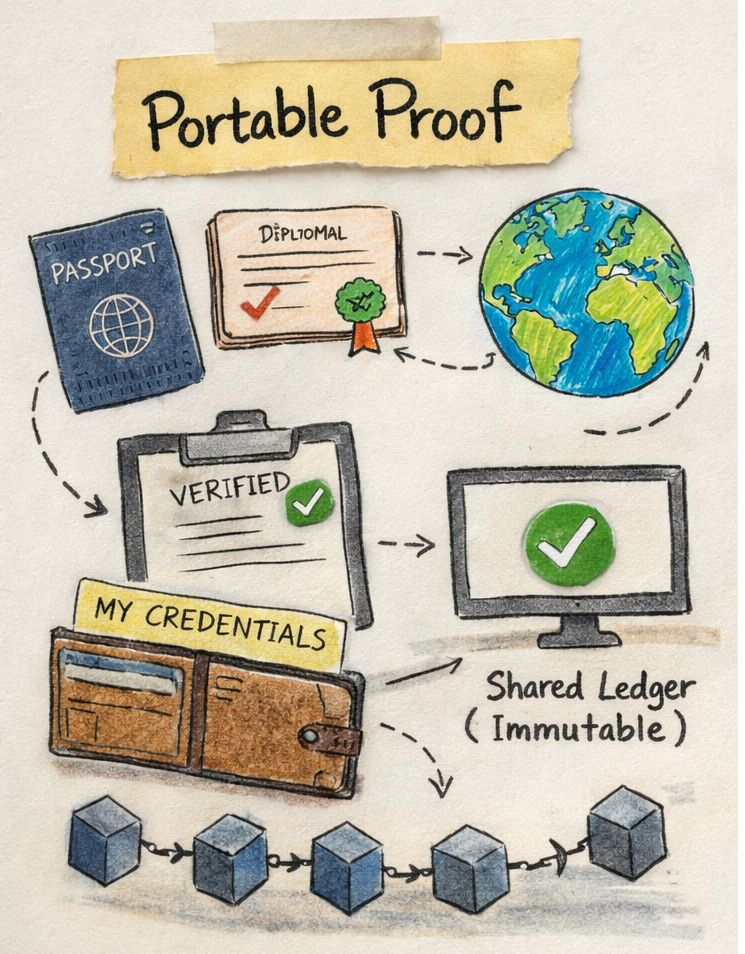
And that’s the thing: it’s not about the credentials or the tokens themselves. It’s about removing the friction, the repeated checks, the endless proofs we shouldn’t have to give. It’s about making sure your proof travels with you, and the world finally recognizes it.
Your truth should never have to wait.
