I used to think most identity layers in crypto were just wallets with extra steps, but the deeper I dug into @SignOfficial , the more it began to feel like a real digital trust layer.
If I had to explain the story behind $SIGN from my perspective, I would say it’s not just about signing information; it’s about control.
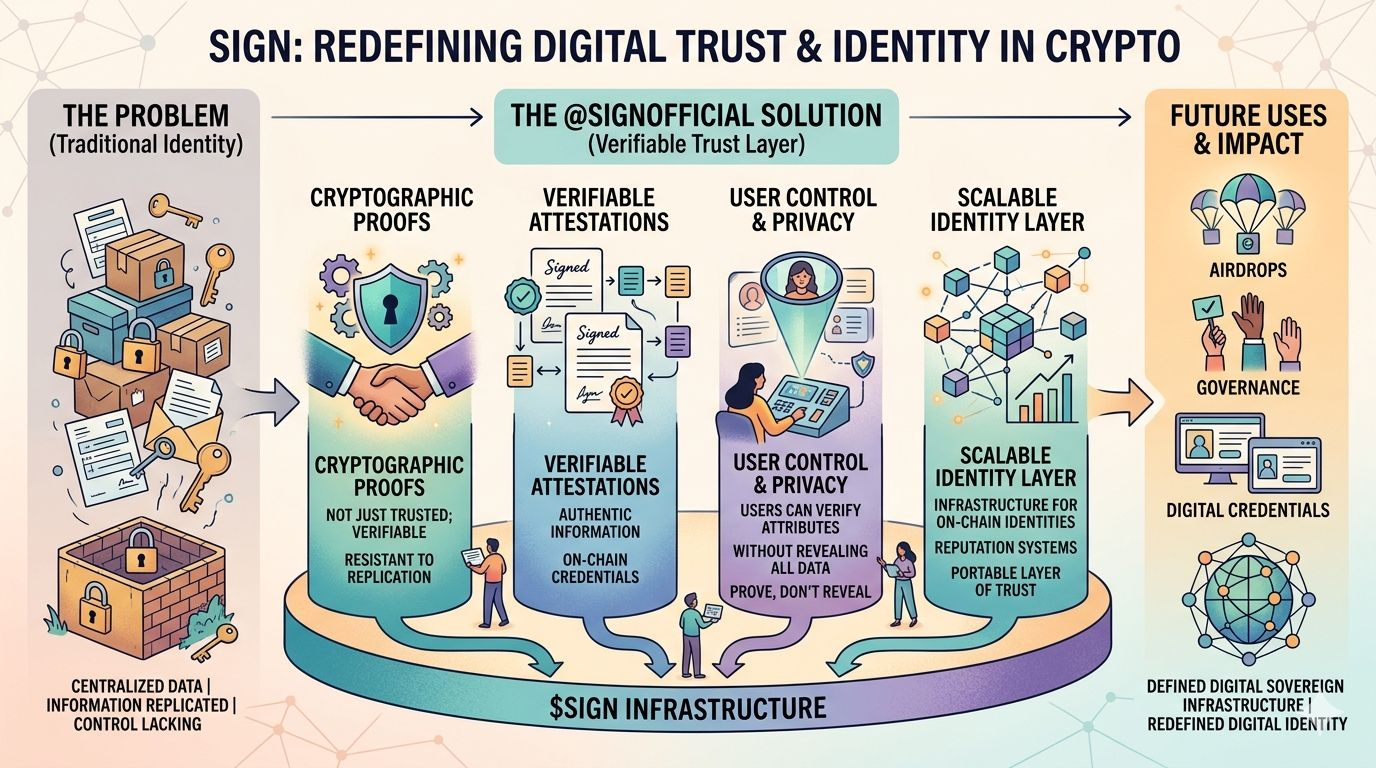
What I noticed first is the security model. Instead of centralized models, Sign uses cryptographic proofs and verifiable attestations.
What this means is that information isn’t just trusted; it’s actually verifiable. In a world where information is so easily replicated, this feels like a big deal to me.
And then there is the issue of privacy. This is where things get really interesting. I noticed that users can verify something about themselves without having to reveal all their data. This is something traditional systems still struggle with.
Of course, the reason all this makes sense is when you think about it on a larger scale. @SignOfficial is working on building out the infrastructure for on-chain credentials, reputation, and identity. It’s not just about wallets; it’s about creating a portable layer of trust.
This can have all sorts of interesting uses in airdrops, governance, digital credentials, and more. But I also noticed a growing trend towards “prove, don’t reveal,” and Sign aligns well with that.
If this model can scale, sign might not only help with privacy; it might also redefine digital identity and trust in the entire crypto space.