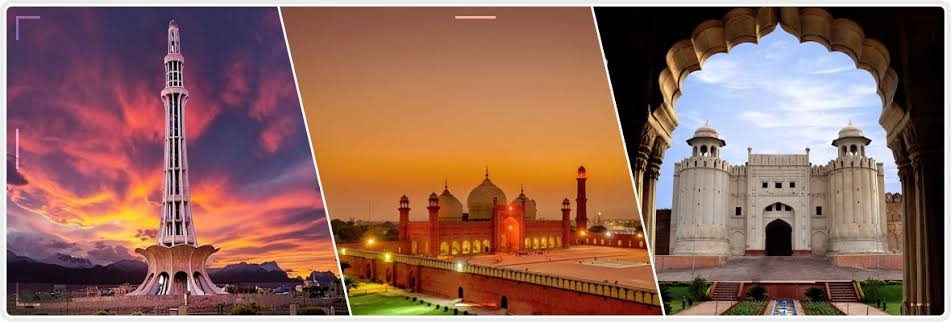
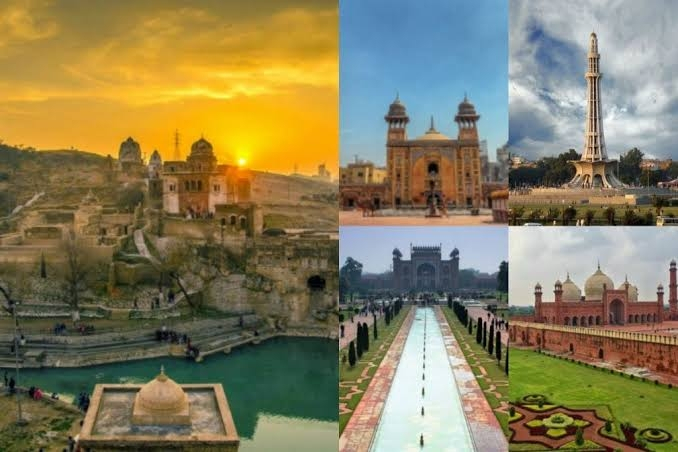
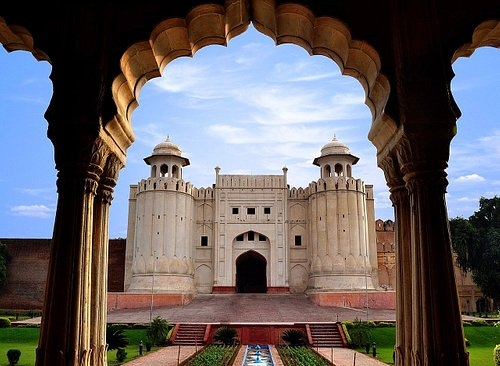
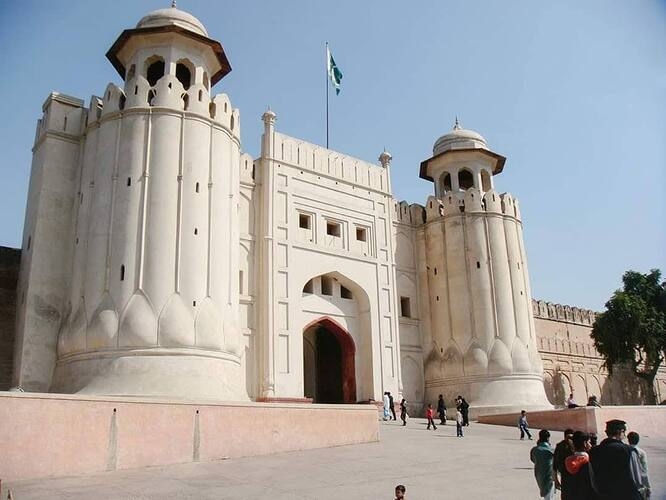
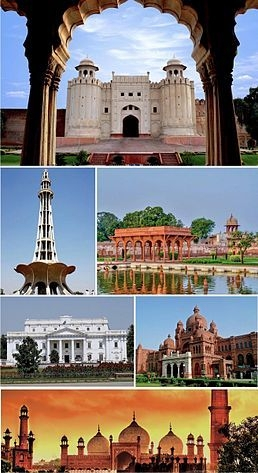
The area you are visiting in Lahore, Punjab, is the heart of Pakistan's Mughal history. Here is the history of the most famous places within walking distance of the gate in your photo:
1. Lahore Fort (Shahi Qila)
History: Originally built on an ancient site, the current structure was largely constructed by Emperor Akbar in 1566 and expanded by subsequent Mughal emperors.
Key Spot: Sheesh Mahal (The Palace of Mirrors). Built by Shah Jahan in 1631, it features thousands of tiny mirror pieces and was the private residence for the royal family.
2. Badshahi Mosque (The Royal Mosque)
History: Completed in 1673 by Emperor Aurangzeb (the same ruler who built the Alamgiri Gate).
Significance: It was the largest mosque in the world for over 300 years. Its red sandstone and white marble domes are a masterpiece of Mughal symmetry.
3. Minar-e-Pakistan
History: Located in Greater Iqbal Park, this tower was built between 1960 and 1968.
Significance: It marks the exact spot where the Lahore Resolution was passed on March 23, 1940, which eventually led to the creation of Pakistan.
4. Hazuri Bagh
History: A small, beautiful garden located between the Lahore Fort and the Badshahi Mosque.
Key Spot: The Baradari (pavilion) in the center was built by Maharaja Ranjit Singh in 1818 to celebrate the capture of the Koh-i-Noor diamond.
5. Wazir Khan Mosque
History: Located slightly further into the "Walled City," this mosque was built in 1634 during the reign of Shah Jahan.
Significance: It is famous for its incredibly detailed "Kashi-kari" (tile mosaic) work, which is considered some of the finest in the world.
If you are walking through these sites today, the Food Street Fort Road is also nearby, offering a great view of the Badshahi Mosque at night