$NIGHT #night @MidnightNetwork

been looking at how Midnight handles data and honestly one thing keeps standing out
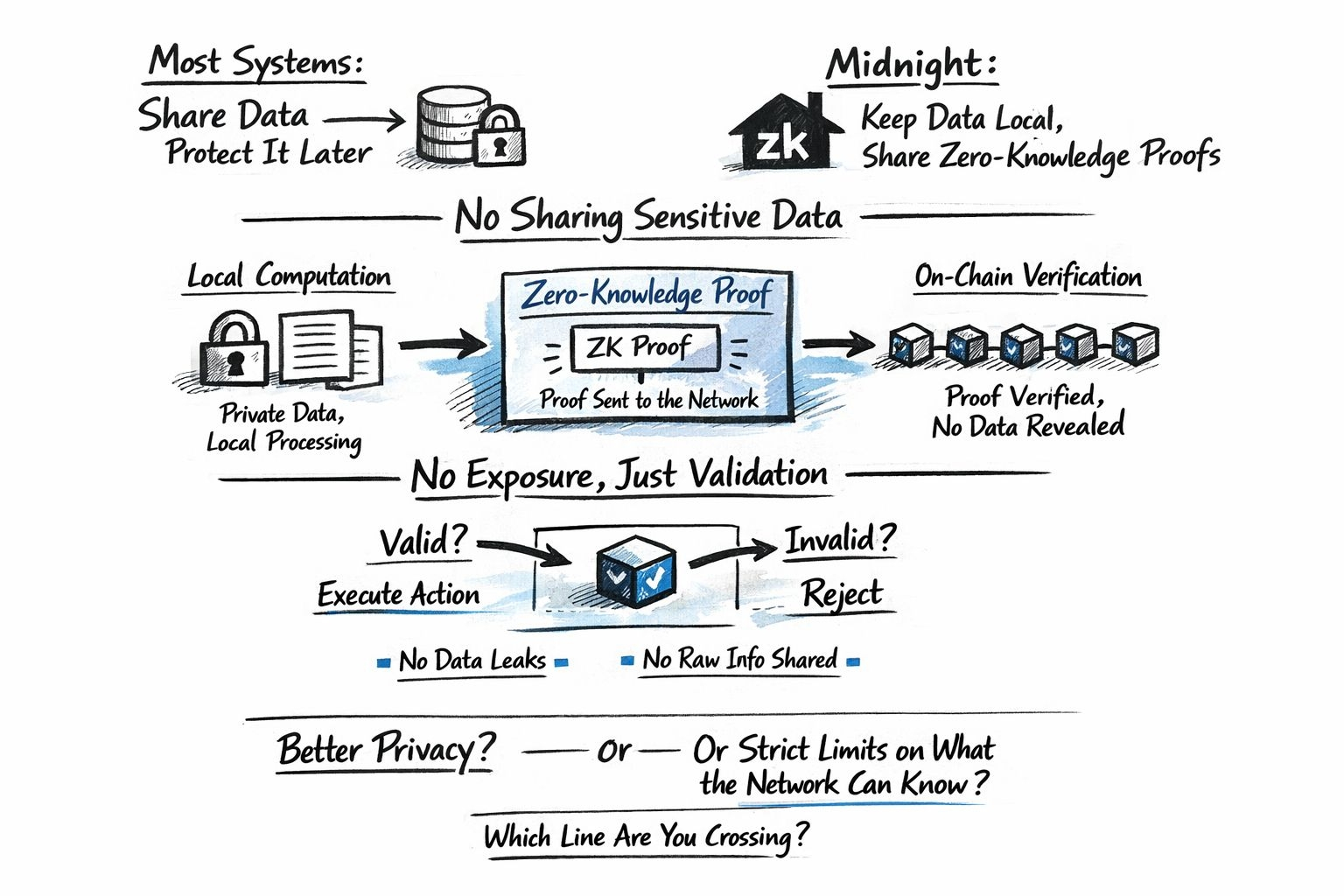
most systems say they protect your data
but they still require you to share it first
that’s the part that feels off
because once data leaves your control,
you’re relying on the system to handle it correctly
encrypt it
store it safely
not leak it
privacy becomes a responsibility of the network
Midnight doesn’t approach it that way
it reduces how much data the network ever sees
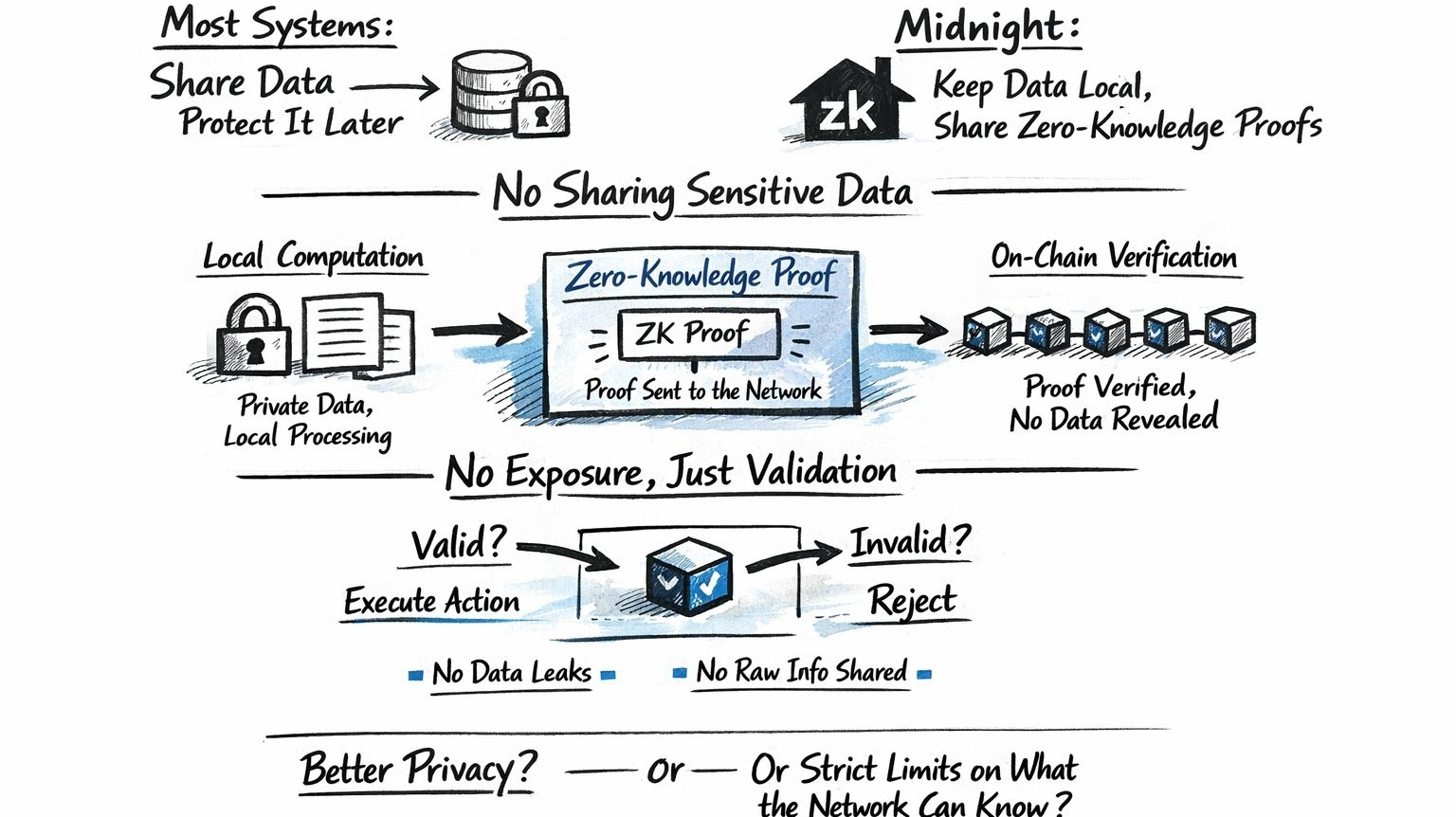
sensitive data stays local
computation happens locally
and what gets sent to the network is a zero-knowledge proof
not the data itself
so the chain doesn’t learn your inputs
it only verifies that the computation was done correctly
that’s a very different model
this isn’t protecting data
it’s avoiding exposure entirely
and that difference shows up at execution
the network doesn’t ask for full information
it verifies a proof
was the condition satisfied
does this action meet the required logic
is the proof valid under the circuit
if yes, it executes
if not, nothing happens
the data behind it never leaves the user environment
that’s how Midnight actually enforces privacy
local execution
zk proof generation
on-chain verification without disclosure
and once you see it like that, it’s not just a design choice
it’s a constraint on what the network is allowed to know
but that also means the system depends heavily on how those proofs are defined
what gets computed locally
what is exposed in the proof
what conditions are encoded in the circuit
if the circuit is too broad, you leak more than needed
if it’s too strict, valid actions fail
the system doesn’t adjust after
it executes exactly what the proof allows
and that’s where Midnight becomes very specific
it’s not trying to be a general-purpose chain that handles data
it’s designed so sensitive data never becomes part of the shared state in the first place
only proofs and outcomes do
so privacy is not something added on top
it’s enforced at the boundary between local computation and network verification
and that raises a different question
is this just better privacy…
or a system where the network is deliberately limited in what it can ever know?