
Mentre studiavo l'ecosistema SIGN, ho iniziato a notare qualcosa di più profondo di una semplice campagna Web3. All'inizio sembrava un'iniziativa cripto normale, ma quando ho collegato le idee attorno alla struttura del capitale globale, SWIFT, i sistemi finanziari RMB e gli ecosistemi cross-chain, ha cominciato a rivelare un quadro molto più ampio.
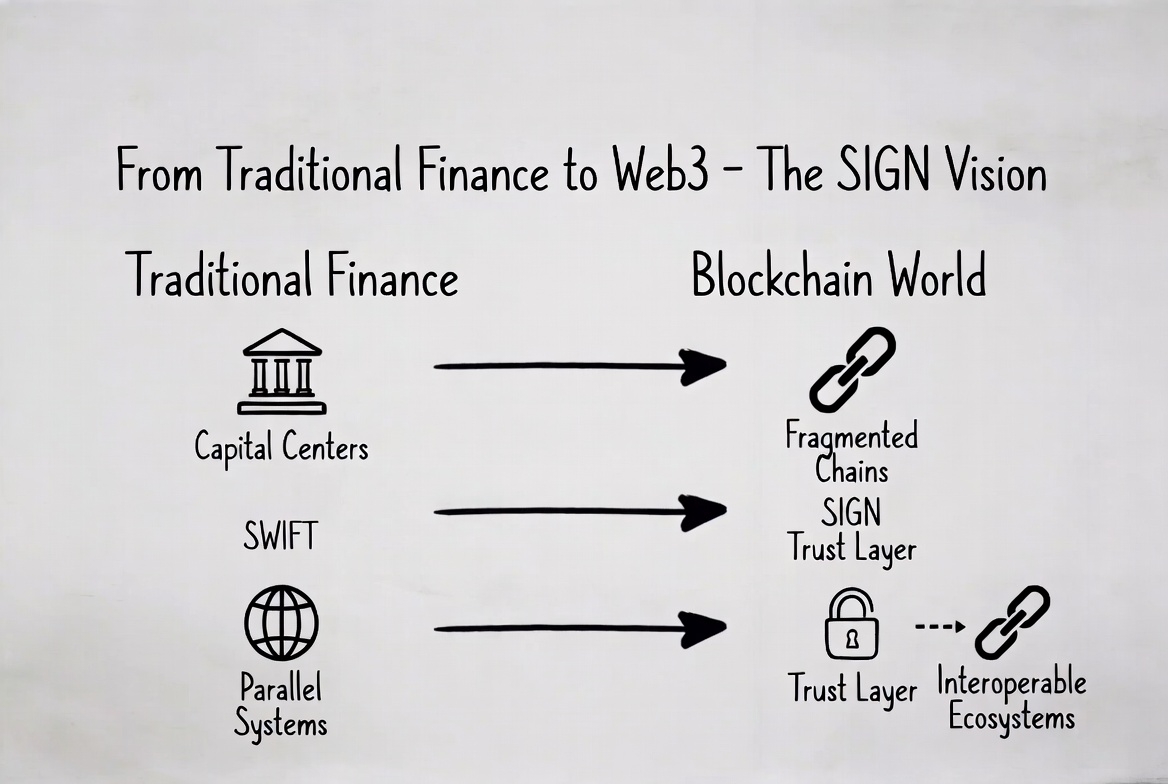
Oggi il sistema finanziario globale non è una struttura unica e unificata. Invece, funziona attraverso centri di capitale connessi da infrastrutture. Ad esempio, la rete SWIFT opera come la spina dorsale della comunicazione che connette banche e istituzioni finanziarie in tutto il mondo. Nel frattempo, i sistemi connessi ai mercati di capitale statunitensi, alla finanza europea e alla struttura finanziaria emergente del RMB operano in parallelo. Interagiscono tra loro, ma competono anche. Questo crea un mondo in cui i flussi di capitale si spostano tra molteplici hub finanziari piuttosto che in un sistema centralizzato.
Mentre pensavo a questo, mi sono reso conto che il mondo della blockchain si sta evolvendo in modo molto simile. Diverse catene stanno diventando i propri ecosistemi. Liquidità, utenti e pool di capitali si stanno formando in ambienti separati. Senza una corretta interoperabilità cross-chain, l'intera struttura rischia di diventare frammentata.
È qui che il concetto dietro l'infrastruttura SIGN ha iniziato a emergere durante la mia ricerca.
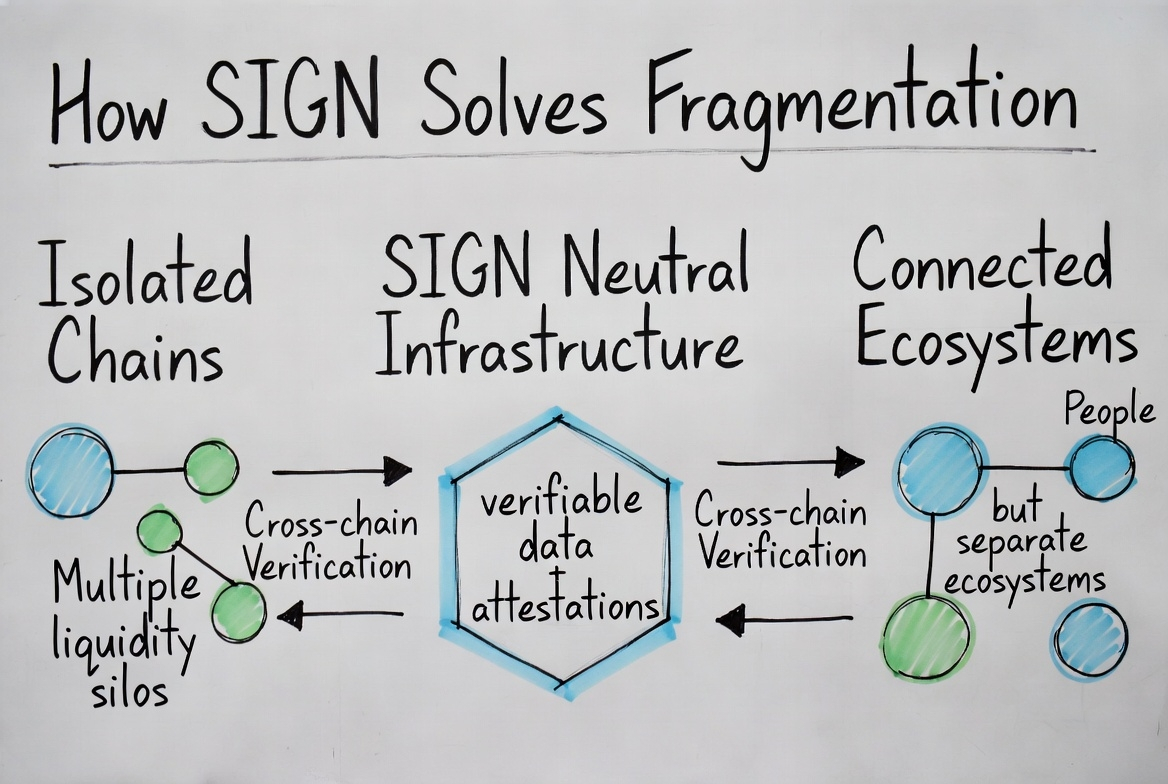
Da quello che ho capito, SIGN sta cercando di costruire un livello di verifica e fiducia che può operare attraverso diversi sistemi. Invece di concentrarsi solo su token o speculazioni, il protocollo enfatizza dati verificabili, credenziali e attestazioni. Queste attestazioni consentono di dimostrare le informazioni on-chain in modo trasparente e resistente alle manomissioni.
In un certo senso, l'idea mi ha ricordato come SWIFT funzioni come un livello di messaggistica per la finanza globale. Non sposta direttamente il capitale, ma consente alle istituzioni di comunicare e verificare le transazioni. SIGN sembra esplorare un'idea simile per l'infrastruttura Web3, dove diversi sistemi blockchain possono fare affidamento su meccanismi di verifica condivisi.
Un'altra questione importante evidenziata durante la mia ricerca è la frammentazione. Man mano che compaiono più blockchain, gli ecosistemi diventano isolati. Ogni catena sviluppa la propria liquidità, modelli di governance e quadri tecnici. Senza una forte infrastruttura che li colleghi, la cooperazione diventa difficile.
SIGN sembra affrontare questo problema attraverso l'interoperabilità e livelli di informazione verificabili. Invece di forzare i sistemi a fondersi, crea un'infrastruttura neutrale in cui la verifica può esistere attraverso le reti. Questo potrebbe consentire agli ecosistemi di mantenere l'indipendenza pur interagendo tramite dati e credenziali fidate.
Guardandola da una prospettiva più ampia, questa discussione connette concetti finanziari globali tradizionali con l'architettura blockchain. Le stesse sfide che esistono nella finanza internazionale — flussi di capitale, reti di messaggistica, interoperabilità dei sistemi e coordinamento delle infrastrutture — stanno ora apparendo negli ambienti Web3.
Ecco perché la campagna SIGN ha iniziato ad attirare l'attenzione tra le persone che guardano oltre l'hype a breve termine. I progetti infrastrutturali spesso si muovono silenziosamente all'inizio, ma a volte finiscono per plasmare il funzionamento degli interi ecosistemi in seguito.

Dopo aver trascorso del tempo a leggere queste idee, ha iniziato a sembrare che SIGN sia meno una semplice campagna e più un'esplorazione di come fiducia, verifica e coordinamento possano funzionare nei futuri sistemi finanziari digitali.
E se la storia ha insegnato qualcosa sia nella finanza che nella crittografia, è che il livello infrastrutturale spesso diventa la parte più potente del sistema.
Forse è per questo che l'ecosistema SIGN sta iniziando ad apparire su sempre più radar.