

I remember the first time I sent money back home while working abroad. I expected speed and reliability. Instead, delays, unclear fees, and repeated verification turned a simple transfer into a slow, uncertain process. At the time, it felt normal. Later, it felt broken.😂
After experiencing this more than once, the pattern became clear. The issue wasn’t bad luck. It was infrastructure. Cross-border payments rely heavily on intermediaries that don’t share a unified, verifiable system of identity and transaction proof. Every step introduces friction.
That shift in perspective changed how I evaluate blockchain projects. I stopped looking at narratives and started looking at whether something solves a real operational problem.
That’s where $SIGN caught my attention.
Not because it’s loud. Not because it’s trending. But because it directly targets a core inefficiency: how identity and transaction validity are proven across systems without adding more friction.
At its core, Sign introduces a digital sovereign layer. Each participant has a cryptographically anchored identity. Transactions are paired with verifiable proofs, allowing validation without exposing sensitive data.
Think of it like sending a sealed document with a trusted stamp. The receiver doesn’t need to open it to trust it. They just need to verify the seal.
In remittance flows, this matters. Instead of re-verifying identity at every step, institutions can rely on proofs. That reduces delays and removes redundant checks without sacrificing compliance.
The $SIGN token supports this system. Validators process and verify proofs, and staking aligns incentives toward uptime and accuracy. If validators fail, they face penalties. This creates accountability at the infrastructure level.
And that’s important, because delays in cross-border payments often come from slow verification, not just liquidity constraints.
As of now, $SIGN sits in an early but active phase. Liquidity is present, and participation is growing, but adoption is still forming. This isn’t a fully mature network yet—it’s a system being tested in real conditions.
Which leads to the real question: does it actually get used?
Because infrastructure only matters if people rely on it. If workers and institutions consistently use Sign for real transactions, the network strengthens. More usage improves verification speed, trust, and reliability. That’s where network effects begin.
But if adoption stalls, the system remains theoretical. Validators lose incentive, activity drops, and the value proposition weakens.
There are also practical barriers. Banks and payment providers must integrate these systems into existing rails. That requires both technical effort and regulatory alignment. Without that, even strong technology struggles to reach real users.
So the signals to watch are clear.
Growth in real transaction throughput.
Retention of users beyond initial trials.
Reliable validator performance over time.
And on the risk side:
Stagnant adoption.
Validator centralization.
Inconsistent verification performance.
These factors matter more than short-term price movement.
Because in remittances, value isn’t defined by speculation. It’s defined by whether a system reduces friction that people are willing to pay to avoid.
That’s why I’m watching $SIGN.
Not for hype. Not for quick moves. But to see whether it quietly becomes something people depend on when moving value across borders.🤔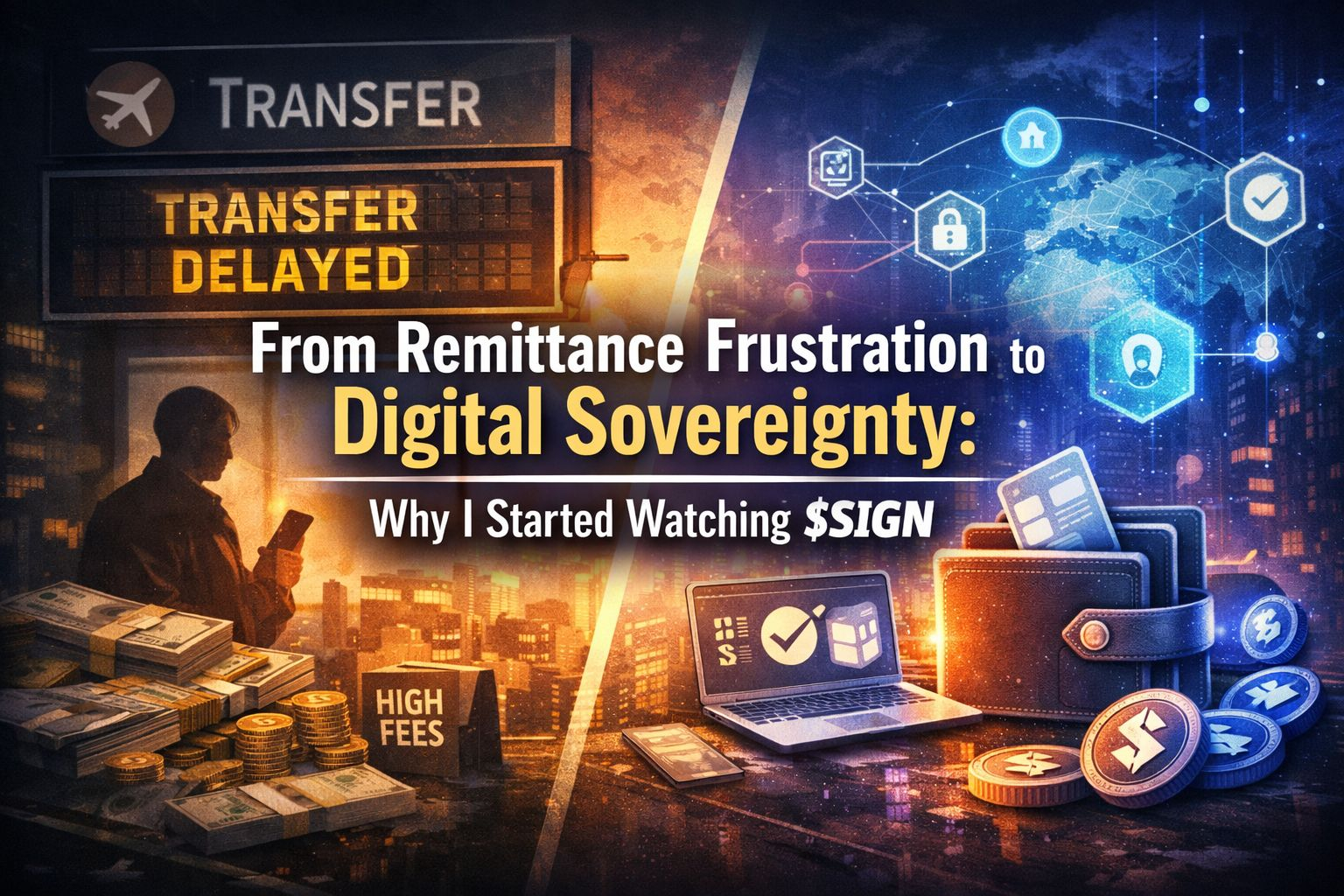
#SignDigitalSovereignInfra @SignOfficial
