
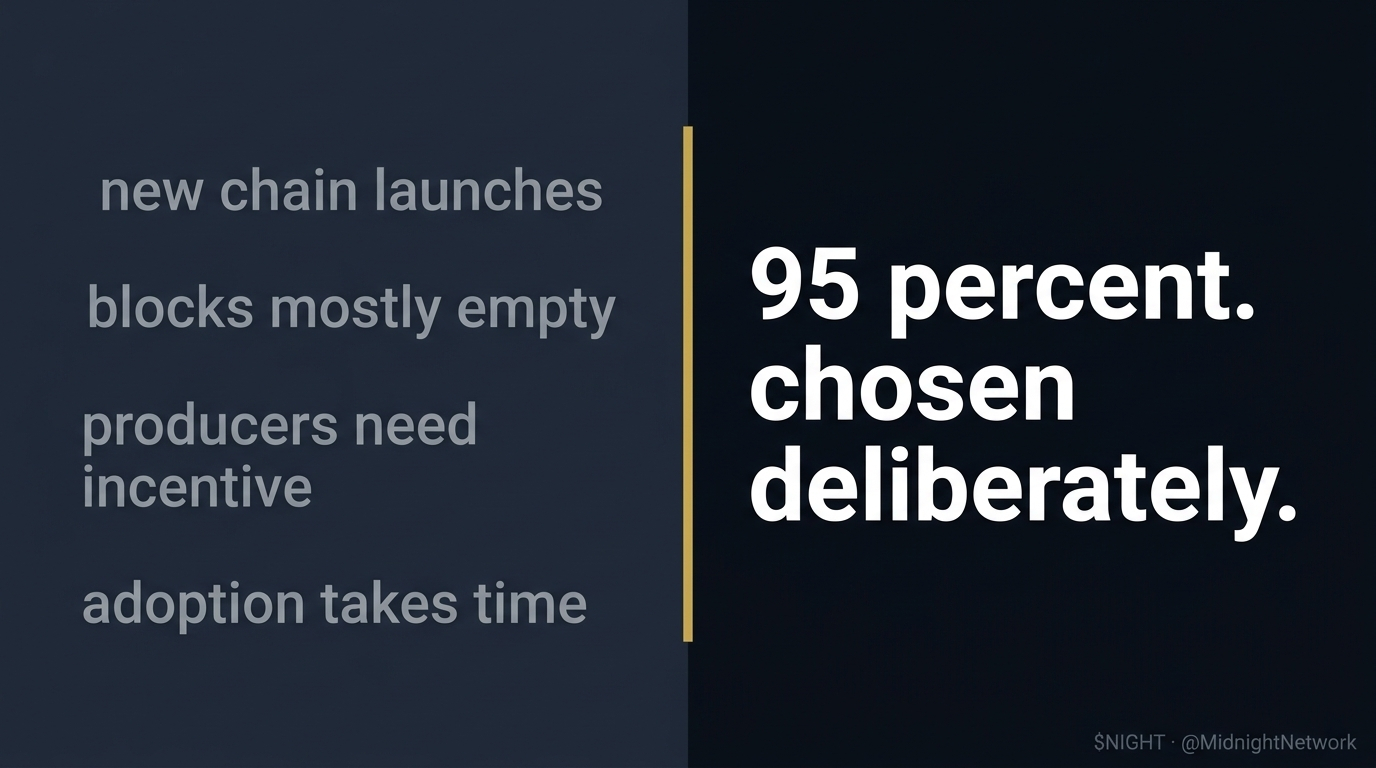
When a new blockchain launches, it faces a specific problem. the network needs block producers to secure it. block producers need incentive to show up. but the incentive — block rewards — only becomes meaningful once there's enough adoption and demand on the network to make participation worthwhile. in the early days, blocks may be mostly empty. if a block producer only gets paid based on how full their blocks are, they might not bother.
Midnight solves this with the subsidy rate. and the initial value — 95% — was set deliberately with this exact problem in mind.
The subsidy rate is a system parameter that determines what percentage of the base reward a block producer receives regardless of how full their block is. at 95%, a block producer gets 95% of the base reward even if they produce a completely empty block. only the remaining 5% is variable — split between the block producer and the Treasury based on how much block space actually gets used.
The whitepaper is explicit about why this number was chosen. it ensures that early block producers are incentivized to participate, while accounting for the fact that reaching peak adoption and demand for block space may take time. a new chain shouldnt penalize validators for low early traffic that was never their fault. the 95% subsidy absorbs that risk.
There is a second reason the whitepaper gives. a very high subsidy rate also minimizes the incentive for block producers to stuff blocks with their own transactions to inflate utilization. if 95% of your reward is already guaranteed, there is little marginal benefit to gaming the variable component. the subsidy rate, by being high, reduces a specific type of manipulation.
But 95% isnt the target forever. the whitepaper states clearly that in the future it is expected to be adjusted towards 50% via governance action. at 50%, the split between fixed and variable reward becomes equal. block producers have a much stronger incentive to include as many real transactions as possible because half their reward now depends on block fullness. the shift from 95% to 50% is a shift from protecting early validators to incentivizing maximum efficiency.
The formula for the fixed block subsidy is simple — Nf = Nb × S, where Nb is the base reward and S is the subsidy rate. at 95%, Nf is 95% of Nb. at 50%, its half. the variable component Nv = U × (Nb - Nf) — where U is the block utilization ratio — captures the rest.
What i find interesting about this design is that the governance mechanism is the mechanism for this transition. the subsidy rate isnt hardcoded to change automatically at a certain block height or after a certain time. it changes when governance decides it should. the community — through on-chain governance — gets to decide when the network is mature enough to reduce the safety net for block producers.
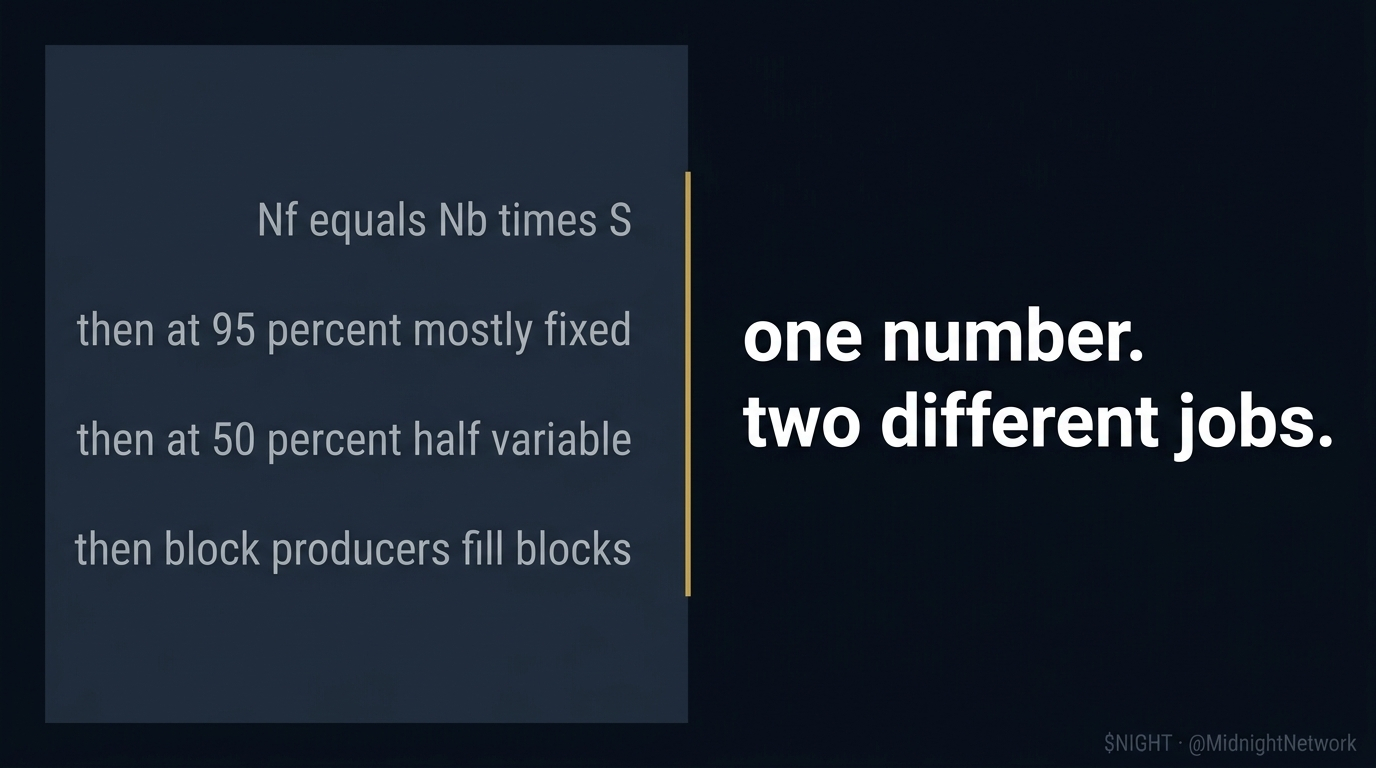
95% at launch. 50% when the network is ready. one number, two different jobs.
If you were a block producer deciding whether to join Midnight at launch — how much would the 95% subsidy rate influence that decision?
#night #NIGHT $NIGHT @MidnightNetwork
