🐲📊 Wars in the Last 20 Years and Their Impact on the Cryptocurrency Market
🧭 Introduction
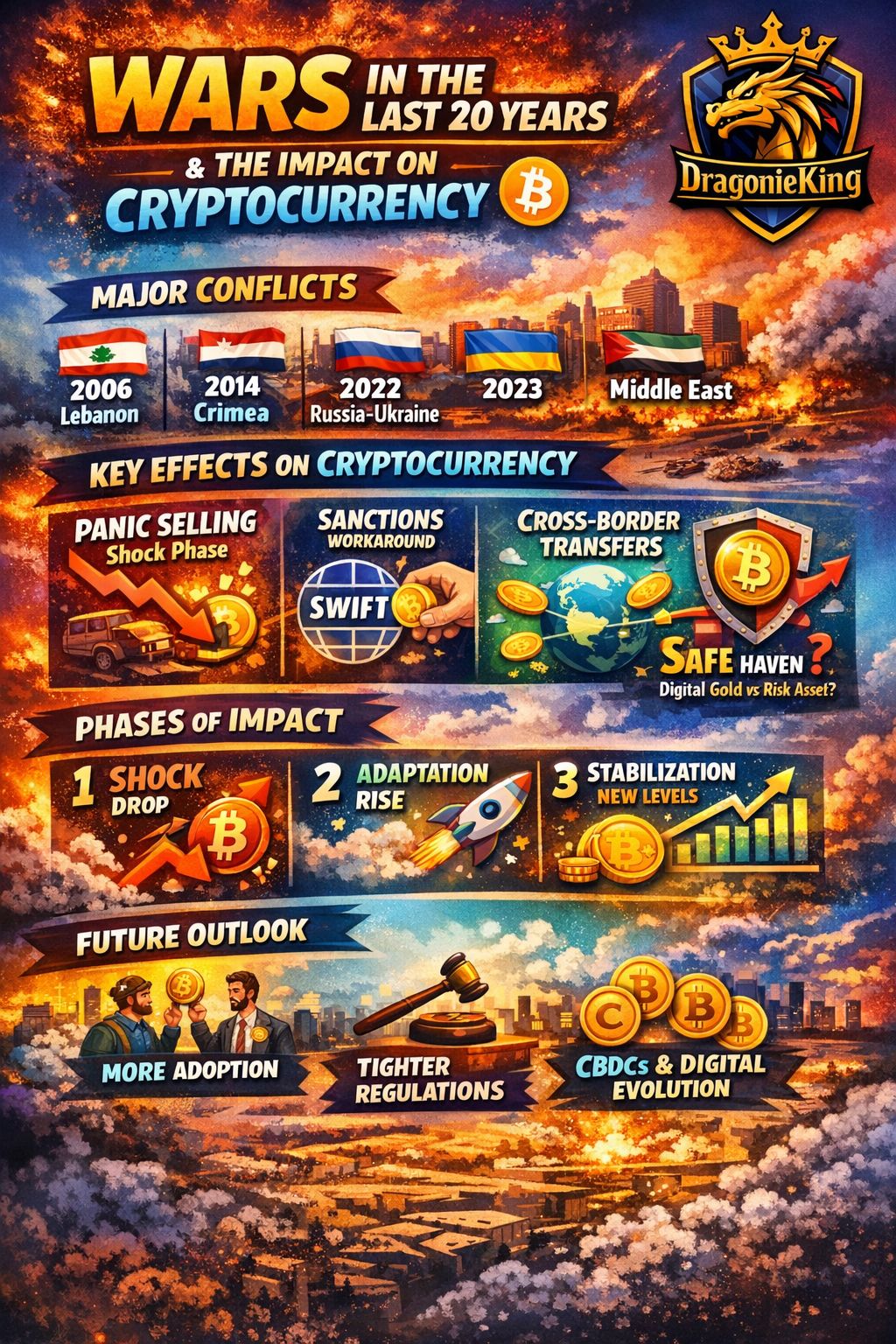
Over the past two decades, the world has witnessed numerous wars and geopolitical conflicts that have reshaped global dynamics. Alongside these events, the financial system has undergone a significant transformation. With the emergence of Bitcoin in 2009, cryptocurrencies have evolved into more than just digital assets—they have become alternative financial tools, especially during times of crisis.
This article analyzes major conflicts of the last 20 years and their direct and indirect impact on the cryptocurrency ecosystem.
🌍 1. Major Conflicts in the Last 20 Years
🔥 2006 – Lebanon War
The conflict between Israel and Hezbollah increased regional instability.
At the time, cryptocurrencies did not yet exist, but such crises contributed to the growing distrust in traditional financial systems.
⚔️ 2008 – Russia–Georgia War
Russia’s military intervention in Georgia further highlighted geopolitical risks and financial uncertainty.
💣 2011 – Arab Spring & Civil Wars
Conflicts in countries like Syria and Libya led to:
Banking system failures
Currency instability
These conditions created a need for alternative financial solutions, paving the way for future crypto adoption.
🪖 2014 – Crimea Crisis (Russia–Ukraine)
Russia’s annexation of Crimea triggered international sanctions, limiting access to global financial systems.
⚡ 2020 – Nagorno-Karabakh War
The conflict between Azerbaijan and Armenia caused regional economic fluctuations, particularly affecting energy markets.
🚨 2022 – Russia–Ukraine War
One of the most critical conflicts in recent history.
Russia was excluded from the SWIFT system
Alternative financial channels became necessary
👉 Cryptocurrencies gained attention as a potential workaround for financial restrictions.
🔥 2023–2026 – Middle East Conflicts (Israel–Hamas)
Ongoing tensions in the region caused:
📉 Initial crypto market drops
📈 Followed by rapid recovery and increased volatility.
🐲The article continues, the second article is on the next page. The article continues, the second article is on the next page ⚡