

I’ll be honest. I did not initially put much weight on Sign sovereign infrastructure angle. It impressed me as one of those bloated crypto expressions that attempts to accomplish too much too soon. I have witnessed projects that have leaped to the level of government without having the credibility. It was not my first response of excitement. It was hesitation. 🤔
But the deeper I looked into it the more something changed. I was not interested in the branding, but in how the system is being offered currently. It does not feel like a product that is striving to look significant. It is like something being modeled to actual administration. And signal that is far otherwise.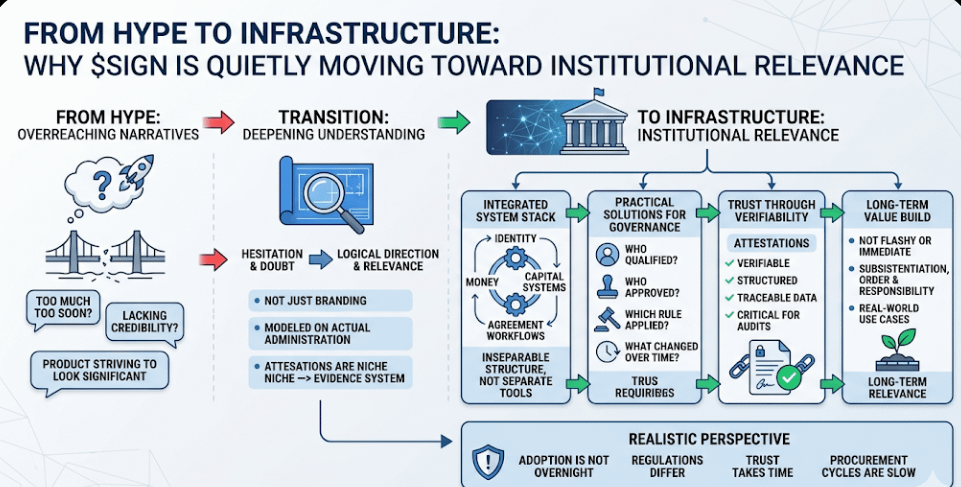
I believe it was the point when I understood that Sign does not position itself as a tool any longer. It is positioning itself as an identity, money and capital systems stack. When you think of it like that, then the government angle does not look like a stretch any more but it feels like an unnatural direction. Not guaranteed, but logical. 🔍
Even more it made sense is that the problems are practical. Governments do not simply archive information. They need proof. Who qualified. Who approved. Which rule applied. What changed over time. They are not theories, but real-life administrative facts. And Sign appears to be bending right into that layer.
It began to make more sense to me regarding the idea of attestations. They do not remain a niche feature but are incorporated in a larger evidence system. Verifiable, structured and traceable. That is what institutions really require, particularly where audit of decisions will be required in future. It is not a thrilling superficially but it is important. ✅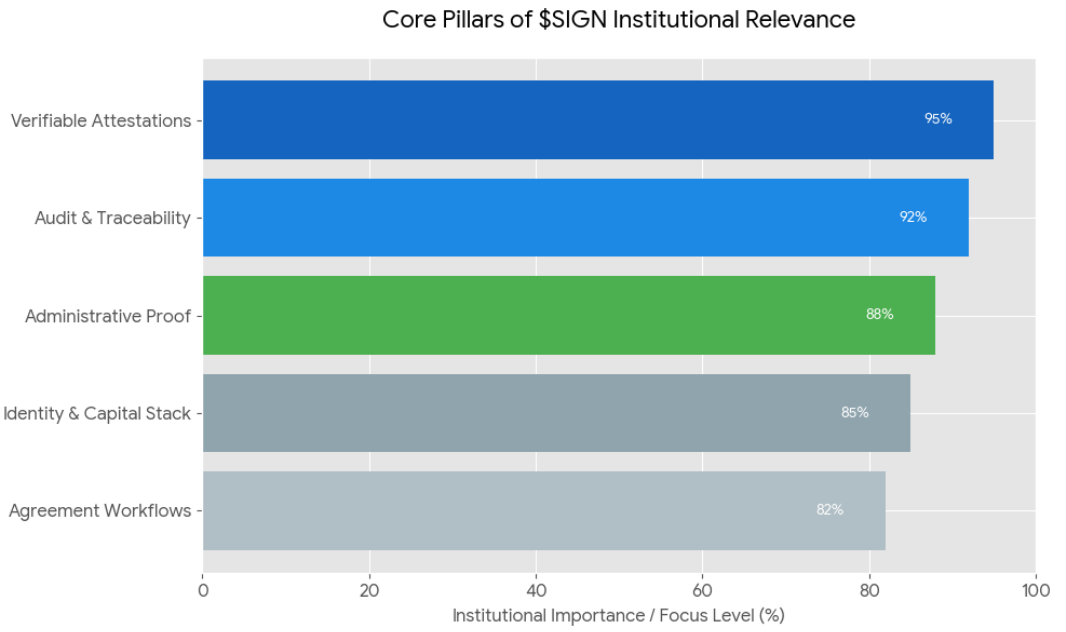
The manner in which various components of the ecosystem are interconnected even seems to be deliberate. The identity systems, the distribution mechanisms, and the agreement workflows are being considered as an inseparable part of a structure instead of being considered as separate tools. I think that’s important. Since the real system does not exist in isolation, it is dependent on the communication of two or more layers that collaborate.🙂
Meanwhile, I do not consider this as a sure way of acceptance by government. That part is always complex. Regulations differ. Trust takes time. Procurement cycles are slow. It is not simply that things fit in to be adopted overnight just because they fit structurally. I believe it is important to remain realistic of that.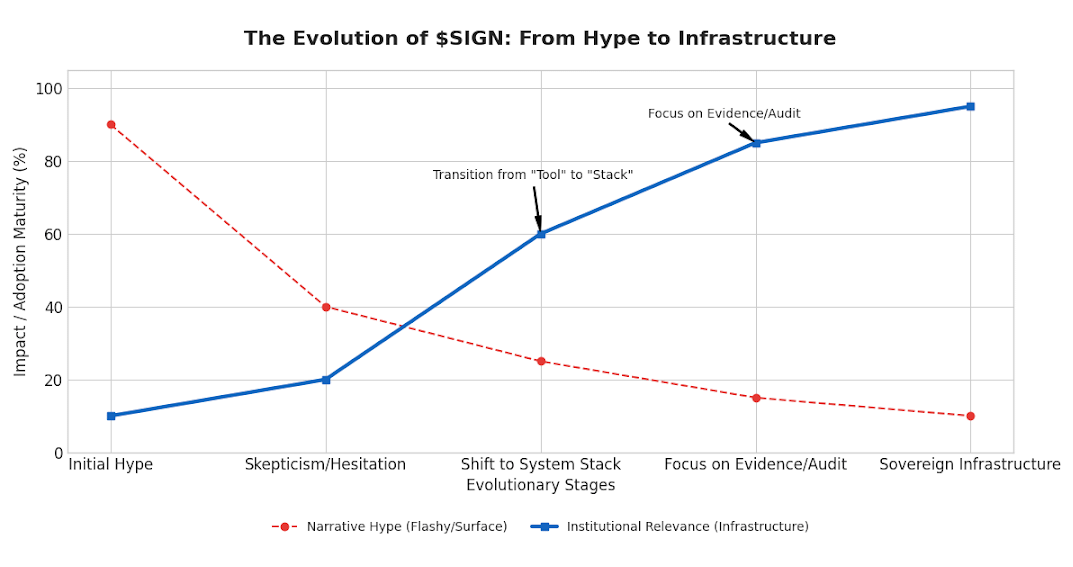
What is quite interesting to me is the direction. Sign is beginning to feel that it is not a normal crypto project that is going on a narrative hunt, but a project that is on a long term relevance build. Not flashy. Not immediate. However, in line with the real world systems that demand substantiation, order and responsibility.
In my case, it is straightforward. I am not considering Sign as the next hyping project. I am viewing it as something that could silently come in handy where it is really needed in systems that have to demonstrate what occurred, not merely assume that it did.😎
@SignOfficial #SignDigitalSovereignInfra $SIGN $SIREN
