

I am observing
$BTC and $ETH right now market showing chills today but I am Observing the blockchain landscape reveals a fascinating shift in how networks handle data.
Sign Protocol is building something fundamentally different from traditional ledgers.
They are moving entirely away from simple transaction counting.
The focus on the Evidence Layer is technically brilliant.
They are standardizing the reason behind a transaction rather than just recording the movement of funds.
This creates a verifiable framework for digital actions.
The initial launch secured massive distribution.
Securing a listing on Binance Alpha placed the protocol directly in front of the largest retail user base in the industry.
The foundational technology is undeniably impressive.
The architecture relies heavily on zero knowledge proofs for selective disclosure.
This allows a user to prove a specific qualification without revealing their entire identity payload. 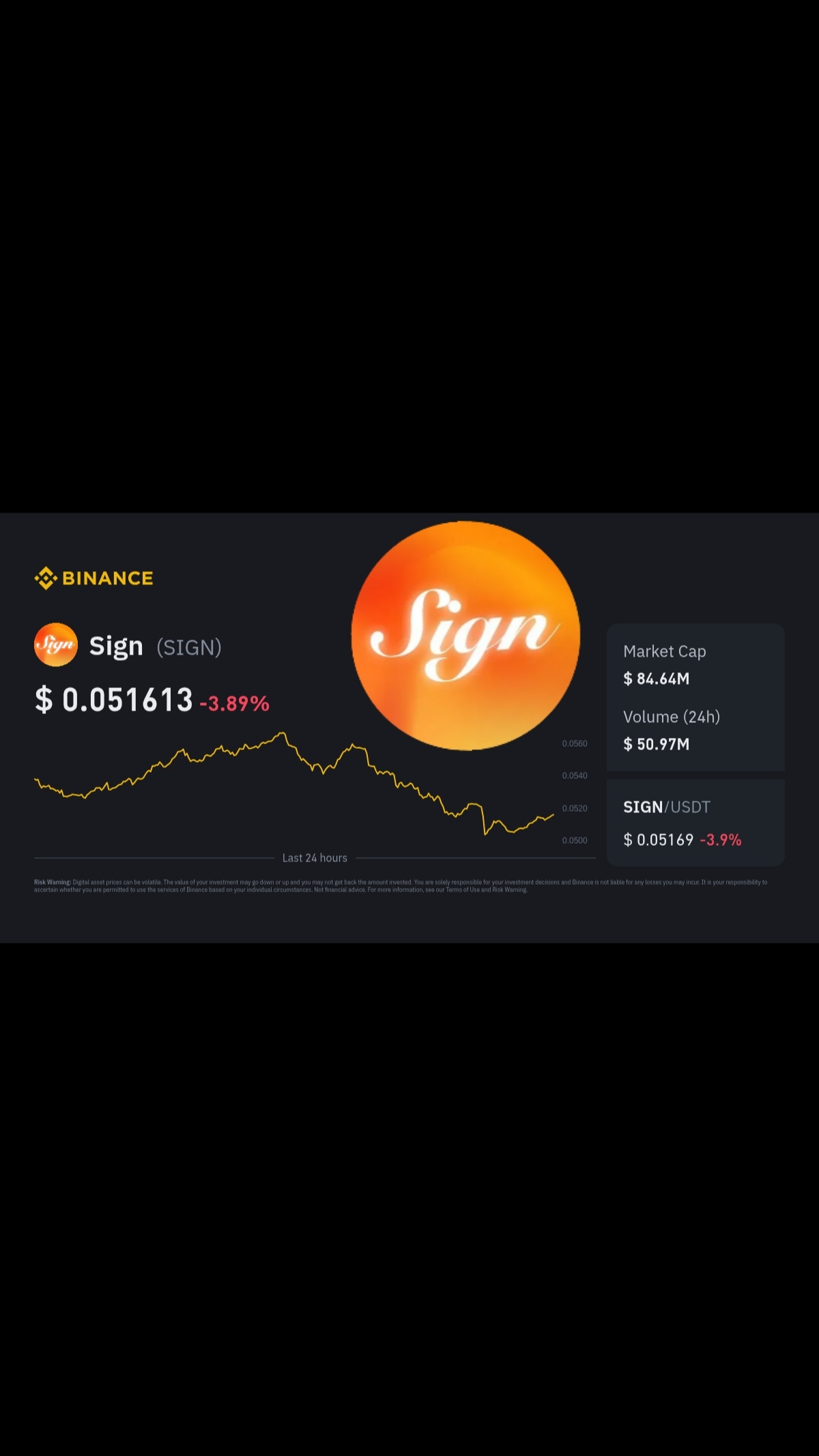
It solves a massive privacy issue for institutional finance.
Users frequently migrate to new networks solely to capture the low fees of Layer 2 scaling solutions.
Sign Protocol deploying across multiple chains reflects this exact demand for fast transaction confirmations.
There is a profound tension hiding beneath this elegant cryptography.
The core problem is the vast chasm between technological trust mechanisms and geopolitical reality.
Technology alone cannot solve deeply ingrained political friction.
Consider the aggressive digitalization efforts currently underway in the Middle East.
Gulf states are rapidly advancing digital identity frameworks for cross border settlements.
Sign Protocol positions its Schema as the perfect standardized toolbox for these sovereign entities.
The pitch is that unified formatting will smooth out bureaucratic inefficiencies.
A user can prove their residential status using a verifiable credential without exposing sensitive metadata.
This sounds like a perfect solution for privacy centric machine commerce.
Yet sovereign wealth funds demand much more than elegant open standards.
Institutional capital moves based on strategic geopolitical relationships.
These entities rely on state guarantees over distributed validator nodes.
If a zero knowledge circuit verifies a trade document perfectly, that verification is only as strong as the legal framework backing it.
A local customs authority can simply refuse to acknowledge the cryptographic proof.
The smart contract might execute flawlessly on the backend.
The real world shipment will still sit frozen at the port.
The friction in international trade is rarely a cryptographic failure.
The friction is almost always political or legal in nature.
Tracking institutional flows often reveals that major financial entities prefer permissioned environments.
They need a centralized authority to hold accountable when a dispute arises.
Decentralized verification removes that single point of accountability.
This creates a severe bottleneck for real world adoption.
The concept of selective disclosure is technically robust.
The operational reality of getting sovereign governments to adopt a permissionless evidence layer is incredibly complex.
A purely technical solution cannot force mutual recognition between rival nations.
The moment regulatory power demands oversight, technology must inevitably yield.
So the ultimate test for this architecture remains unanswered.
Can @SignOfficial convince sovereign states to trust open cryptographic standards over their own legacy legal frameworks?