
There’s something kinda funny in crypto. Everyone asks “how much can it go up”, but almost no one asks “how much can it withstand”. When I looked into schema — how Gulf enterprises standardize on-chain data — it felt like a completely different mindset. They’re not starting with making money fast, they’re starting with reducing system risk. Sounds boring… but that’s exactly what preserves value long term, and honestly, it’s the same lane SIGN seems to be quietly taking.
Schema isn’t some flashy concept. It’s just how data is structured so different parties can interpret it the same way. But without it, every system speaks its own language. And when that happens… trust becomes fragmented. Markets hate that. They price in uncertainty, always. So even if something looks valuable, it trades lower because risk is unclear.
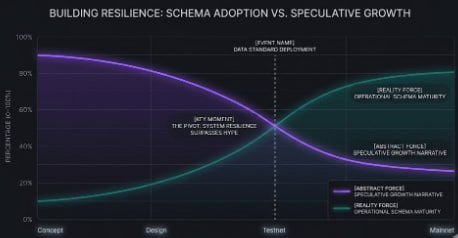
What’s interesting is Gulf businesses seem to get this early. They’re not chasing hype cycles as much. They’re building data infrastructure first. Before thinking about token appreciation, they think about whether data can be verified, whether systems can interoperate cleanly. It’s not exciting, but it’s shock absorption. And if you look closely, SIGN is kind of playing that same game… less noise, more depth.
Schema acts like an immune system layer. Once data is standardized, fraud becomes harder, inconsistencies shrink, and more importantly, when stress hits, the system doesn’t collapse all at once. It bends instead of breaks. Like a healthy body… not immune to viruses, but resilient against them.
I feel like this is where a lot of crypto projects miss the point. They build fast, launch fast, tell great stories… but the underlying data layer is messy. When things are going up, nobody cares. But one real stress test, and everything shows. And that’s when value isn’t protected anymore. The token might still exist, but trust is already gone.
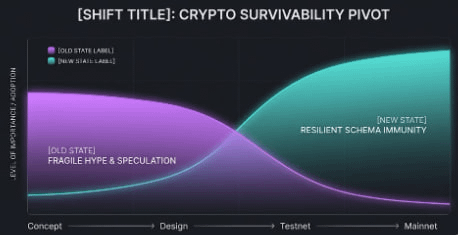
With schema-driven approaches, value doesn’t come from hype, it comes from risk resistance. It won’t make you rich overnight, but it reduces how much you lose when things go wrong. Not sexy, but very real.
Another thing… once data is standardized, systems connect more naturally. You don’t need full trust between parties, just trust in how data is defined and verified. That’s a different level of scaling. Trust shifts from people to structure.
From an investment perspective, this kinda forces a rethink. Maybe we’ve been too focused on growth narratives, and not enough on survivability. Because in the end, markets reward what doesn’t break.
Schema sounds technical, but it’s actually the foundation of stability. And in a market that moves this fast, stability becomes rare. The systems that survive long term aren’t the ones that looked strongest early on, but the ones that could take hits without falling apart.
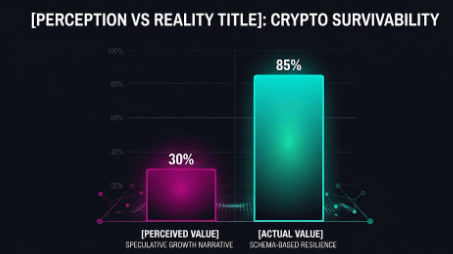
So yeah, between a project promising aggressive growth and one quietly building risk protection layers… I’m starting to lean toward the second. Not because it’s exciting, but because it’s realistic. At some point, crypto matures. And when it does, things like schema — and what SIGN is building around it — won’t be optional anymore. @SignOfficial $SIGN #SignDigitalSovereignInfra