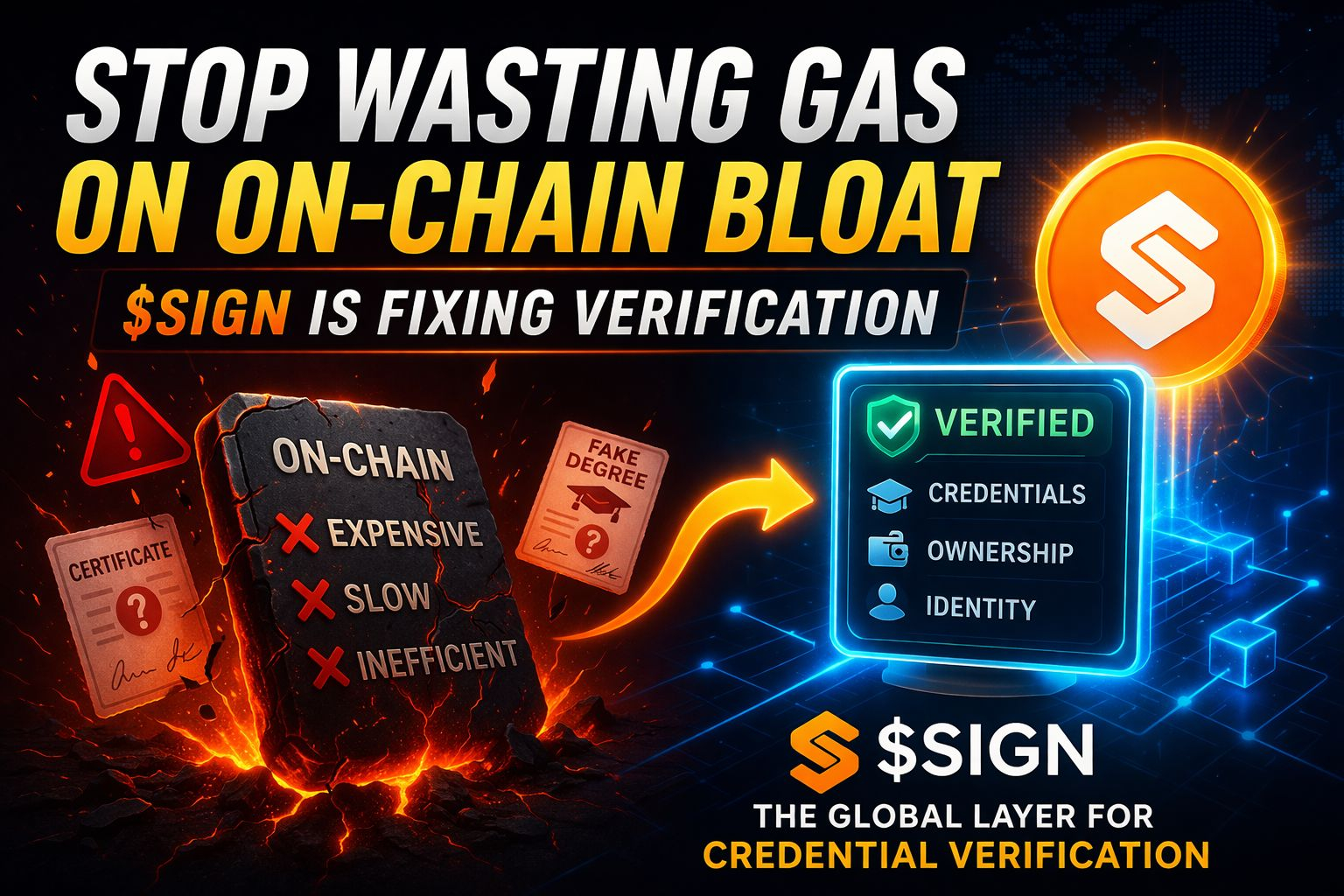
“Ho pensato molto a questo problema ultimamente… e onestamente, sta iniziando a sembrare più grande di quanto la maggior parte della gente realizzi.
Viviamo in un mondo dove la prova è tutto—prova di identità, prova di istruzione, prova di proprietà. Ma ecco la verità scomoda: la maggior parte di quella prova è o centralizzata, facile da falsificare, o dolorosamente inefficiente da verificare.
E sì, la blockchain doveva risolvere questo, giusto?
“Mettilo sulla catena.”
Sembra semplice. Sembra perfetto.
Fino a quando non lo provi davvero.
Le commissioni di transazione aumentano. I dati diventano gonfi. Le transazioni rallentano. E all'improvviso qualcosa che avrebbe dovuto essere leggero e istantaneo diventa costoso e impraticabile.
È allora che mi è venuto in mente—forse il problema non è la verifica stessa... forse è come stiamo cercando di farlo.
Non tutto appartiene completamente on-chain.
E questo è esattamente dove entra in gioco.🌍 L'INFRASTRUTTURA GLOBALE PER LA VERIFICA DELLE CREDENZIALI E LA DISTRIBUZIONE DEI TOKEN
Ciò che si sta costruendo non è solo un altro protocollo. È qualcosa di più profondo.
È infrastruttura.
Il tipo che non noti all'inizio… ma una volta che è lì, tutto inizia a funzionare meglio.
Alla sua base, sta risolvendo un problema molto specifico ma enorme:
👉 Come verifichi qualsiasi cosa—in modo sicuro, economico e globale—senza sovraccaricare la blockchain?
E la risposta è sorprendentemente elegante.
Invece di costringere tutti i dati sulla blockchain, introduce un modello più intelligente:
Mantieni le prove critiche on-chain 🔗
Memorizza dati pesanti off-chain 📦
Collegare entrambi attraverso attestazioni verificabili ✅
Questo approccio ibrido cambia tutto.
💸 PERCHÉ LA BLOCKCHAIN DA SOLA NON È SUFFICIENTE
Diamo un'occhiata per un secondo.
La blockchain è potente—ma non è costruita per tutto.
Cercare di memorizzare grandi quantità di dati on-chain è come cercare di far funzionare un intero sistema operativo su una calcolatrice.
Funziona... ma a quale costo?
Le commissioni di transazione diventano imprevedibili 💰
Lo stoccaggio diventa inefficiente 📉
La scalabilità colpisce un muro 🚧
E quando hai a che fare con credenziali—cose come certificati, ID, traguardi—i dati possono diventare pesanti rapidamente.
È qui che la maggior parte dei sistemi si interrompe.
Ma non lo fa.
Perché non cerca di costringere la blockchain a fare ciò per cui non è destinata.
🧩 L'APPROCCIO: SEMPLICE, MA POTENTE
Ecco il cambiamento:
Invece di memorizzare tutto on-chain, $SIGN si concentra sulle attestazioni.
Un'attestazione è fondamentalmente:
👉 Una rivendicazione verificata che qualcosa è vero.
Ad esempio:
“Questa persona ha completato questo corso” 🎓
“Questo portafoglio possiede questo bene” 💼
“Questo utente è verificato” ✔️
Ora invece di memorizzare i dati completi, memorizza:
Una prova crittografica on-chain 🔐
I dati effettivi off-chain 📂
Questo crea un sistema che è:
Leggero ⚡
Efficiente in termini di costi 💸
Scalabile 🌍
Ancora completamente verificabile 🔍
🔗 DISTRIBUZIONE DEI TOKEN: L'ALTRA METÀ DELLA STORIA
Ora ecco dove diventa ancora più interessante.
non riguarda solo la verifica.
Si tratta anche di distribuzione.
Pensa a come i token vengono solitamente distribuiti:
Airdrops 🎁
Ricompense 🏆
Incentivi 💡
Il problema?
👉 La maggior parte dei sistemi non verifica l'idoneità correttamente.
Le persone imbrogliano il sistema. I bot lo sfruttano. Gli utenti reali ci perdono.
Con $SIGN:
L'idoneità diventa verificabile ✅
La distribuzione diventa mirata 🎯
L'abuso diventa più difficile 🚫
Non stai più indovinando chi merita cosa.
Lo sai.
🌍 CASI D'USO NEL MONDO REALE
Questo non è teorico.
Questo è già applicabile in più settori:
🎓 Istruzione
Le università possono rilasciare diplomi verificabili che non possono essere falsificati.
💼 Occupazione
Le aziende possono verificare istantaneamente le credenziali senza controlli dei precedenti.
🌐 Identità Web3
Gli utenti possono costruire reputazioni portatili e senza fiducia attraverso le piattaforme.
🎁 Airdrops & Ricompense
I progetti possono distribuire token basati su contributi reali—non speculazione.
⚡ PERCHÉ QUESTO CAMBIA TUTTO
La maggior parte delle persone sta ancora pensando alla blockchain in termini di transazioni.
Ma il vero cambiamento sta avvenendo altrove:
👉 Verifica come infrastruttura
Perché una volta che puoi verificare qualsiasi cosa istantaneamente:
La fiducia diventa programmabile 🧠
I sistemi diventano più efficienti ⚙️
Le frodi diventano più difficili 🚫
E all'improvviso, interi settori iniziano a cambiare.
non sta solo risolvendo un problema tecnico.
Sta ridefinendo come funziona la fiducia su Internet.
🔮 IL FUTURO DELLA VERIFICA
Se questo funziona su larga scala—e sembra che lo farà—allora stiamo andando verso un mondo in cui:
Le credenziali sono verificabili a livello globale 🌍
L'identità è portatile 🔄
La fiducia è decentralizzata 🔗
I sistemi sono più giusti ⚖️
E cosa più importante…
👉 Non dovrai più “fidarti” di nulla ciecamente.
Sarai in grado di verificarlo istantaneamente.
📢 PENSIERO FINALE
Sarò onesto.
All'inizio, non sembrava qualcosa di rivoluzionario.
Sembra... sottile.
Ma più guardavo dentro, più mi rendevo conto:
👉 Questa non è un'innovazione rumorosa.
👉 Questa è innovazione fondamentale.
Il tipo che diventa silenziosamente essenziale.
E un giorno ti svegli e ti rendi conto...
Tutto è costruito su di esso. E se tutto ciò di cui ti fidavi online—titoli, certificati, identità—potesse essere verificato istantaneamente senza dubbi? 🤯
Questo articolo analizza come sta silenziosamente costruendo le fondamenta della fiducia in un mondo digitale rotto. Dall'eliminazione delle credenziali false 🚫 all'abilitazione della distribuzione globale dei token 🌍, questa infrastruttura potrebbe rimodellare il modo in cui dimostriamo qualsiasi cosa online. Se ti interessa l'autenticità, la scalabilità e il futuro di Web3—questo è qualcosa che non vuoi ignorare. ⚡
#SignDigitalSovereignInfra $SIGN @SignOfficial