

#signdigitalsovereigninfra $SIGN

When I first started poking at how NFT credentials move—if they even move—between platforms, I thought I had it mapped out in my head. Clean. Deterministic. Mint it on-chain and you’re done. Proof exists. Case closed.
Yeah… not even close.
What I always assumed was a single step turned out to be this layered, slightly chaotic stack where “verification,” “recognition,” and “trust” don’t just differ—they barely talk to each other. And that’s the point where I hit a wall, because nothing was actually failing in isolation, yet the system as a whole felt like it couldn’t agree on what “proof” even meant. Kind of wild, actually.
Then I started noticing projects like $SIGN—not because they were louder, but because they were poking at a different layer entirely. Not the asset. Not the minting. The interpretation layer. Which, honestly, is where things quietly break.
Step back for a second and the trajectory is obvious, even if we don’t like admitting it: more of our identity surface area is drifting online—credentials, memberships, course completions, affiliations, reputation signals—and whether we call them NFTs or something else almost doesn’t matter anymore. It’s all just structured claims about who you are and what you’ve done.
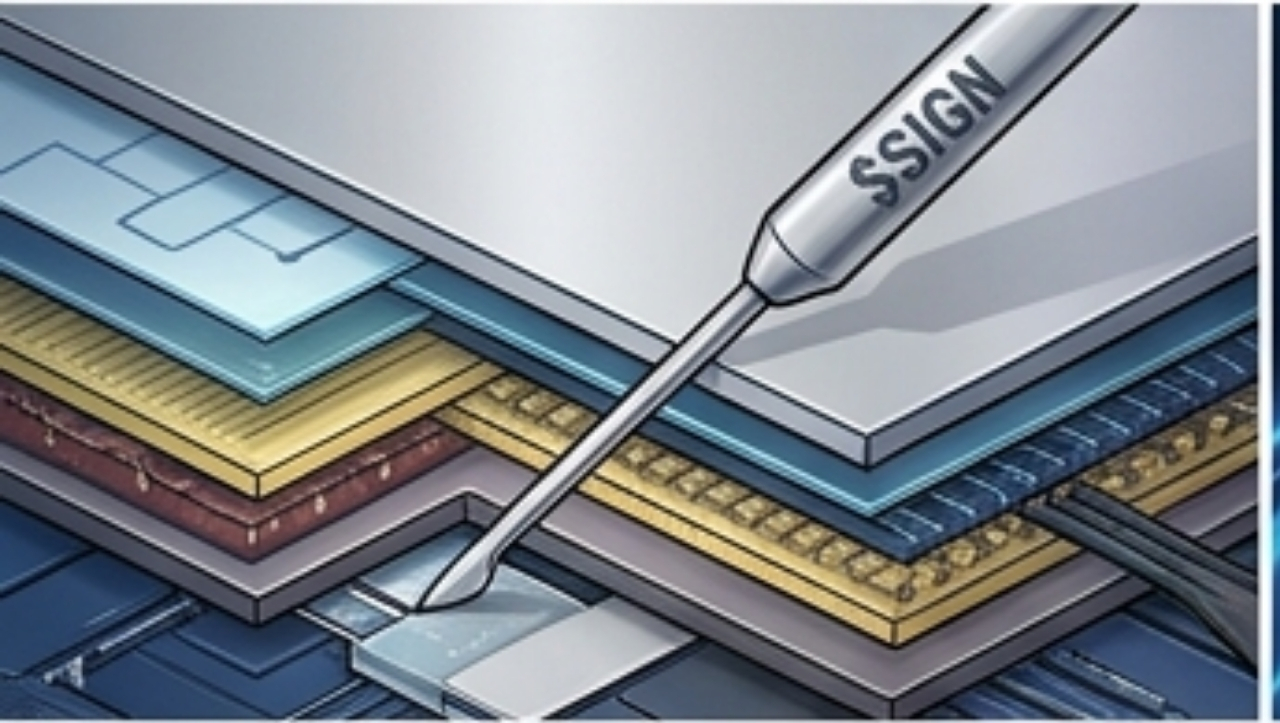
But here’s the part that kept bothering me. Issuance is trivial. Almost insultingly easy. Spin up a contract, mint a token, attach metadata—done.
Trust? Completely different game.
I remember trying—just once—to carry a token-gated membership from one ecosystem into another. Simple idea. Should’ve worked. Instead, it unraveled fast. Standards didn’t line up, metadata felt… interpretive, not authoritative, and in some cases the asset was visible but functionally meaningless. Like showing a passport that no one recognizes. Total mess.
And that’s when the realization clicked, slowly, not all at once: NFTs don’t fail at representing credentials—they fail at being understood consistently. There’s no shared agreement layer. No default “this is valid, and here’s why” mechanism that travels with the asset.
From what I can piece together, $SIGN is leaning into that exact gap—less about creating more credentials, more about building a system where credentials can actually be verified in context without every platform rebuilding the same brittle logic over and over again. A kind of connective tissue. Or at least that’s the intention. Hard to tell how cleanly it plays out.
What stood out to me—subtly, but enough to pause—was that the token doesn’t feel like the centerpiece. It’s there, sure, probably doing coordination work under the hood—staking, incentives, maybe governance—but it doesn’t scream “product.” And in this space, that’s… unusual. Almost suspicious, if I’m being honest. We’ve all seen how often tokens come first and purpose shows up later, if at all.
Still, I wouldn’t get too comfortable. Systems like this live or die on adoption, and adoption is messy. Slow. Political, even. If only a handful of platforms integrate, then it doesn’t become infrastructure—it just becomes another tool sitting off to the side, technically sound and practically ignored. I keep coming back to that risk. It’s a big one.
And then there’s the stuff people don’t like to talk about much—privacy trade-offs, regulatory pressure, whether users actually want their credentials stitched together across contexts. We say we want portability, but do we really want permanence? Not sure. Feels unresolved.
But zooming out again—and this is the part I can’t quite shake—if work, learning, and social coordination keep moving online (and all signals say they will), then the question of who gets trusted, and why doesn’t go away. It gets sharper. More structural.
Not flashy. Not hype-driven.
Just… necessary.
So I don’t really look at things like $SIGN as NFT infrastructure anymore. That framing feels outdated. What I see—maybe prematurely, maybe not—is a set of early experiments trying to define how trust itself gets standardized on the internet.
And honestly, that layer?
That’s where things either quietly work… or completely fall apart.