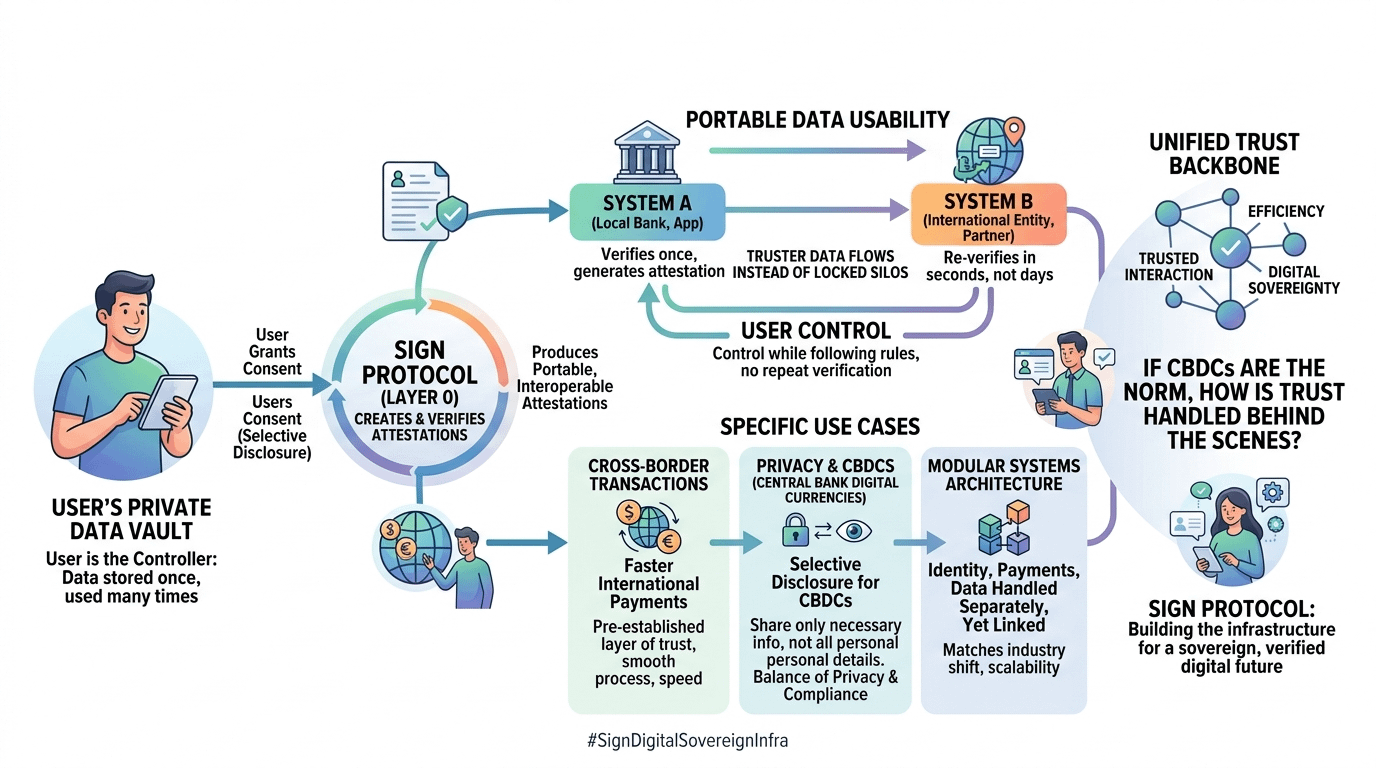
Governments are starting to think differently about money, and I can tell that the real problem isn't just making digital currencies; it's getting people to trust them.
People often think of CBDCs (Central Bank Digital Currencies) as a digital form of cash.
But from my point of view, the bigger problem is what lies behind them: identity, verification, and how different systems talk to each other. If this isn't fixed, CBDCs could easily become closed systems that don't work well with each other.
This is where @SignOfficial start to make sense in real life.
Sign Protocol doesn't want to be a currency or replace other systems. It's making something more basic: an attestation layer.
In short, it lets you check things like identity or permissions on-chain in a safe and portable way. I saw that this little idea really does fix a big problem.
A CBDC system needs more than just moving money around. It has to check who users are, follow the rules, and sometimes even control how money is spent.
A lot of CBDC tests still use centralized databases for this, which makes it hard to be flexible and creates silos.
Sign Protocol gives you a different way to go.
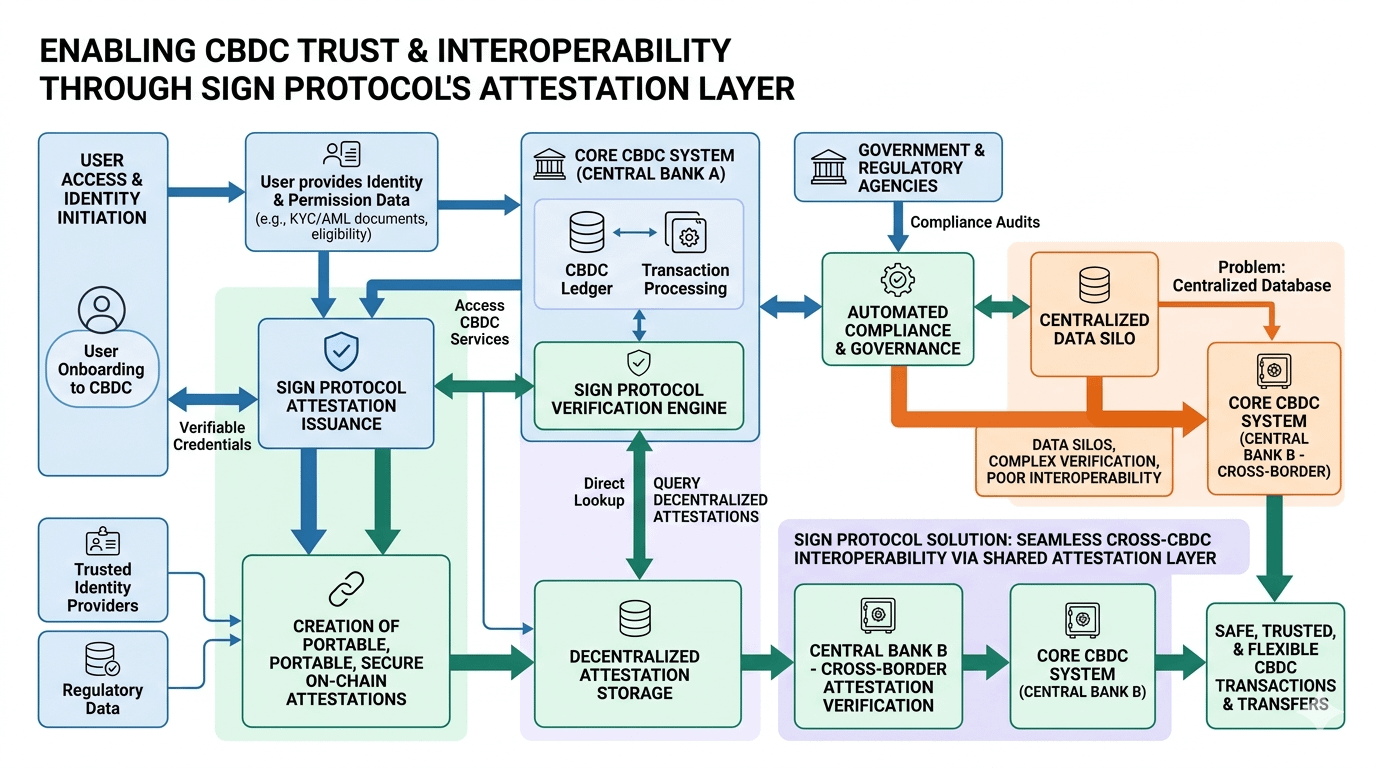
It lets verified data move between systems instead of being stuck in one place.
What stands out to me is how this could give users more control while still following the rules. You don't have to verify the same data over and over again; you can use it again.
The use case for cross-border transactions is also interesting to me. Today, it takes a long time to make international payments because systems need to learn to trust each other again.
With portable attestations, that layer of trust could already be there, which would make things go more smoothly and quickly.
Another thing to think about is privacy. Users don't want to share everything, but governments need to keep an eye on things.
Attestations only let you share the information you need to, not all of your personal information. If CBDCs are going to be widely accepted, that balance is important.
From what I've seen, the industry is slowly moving toward modular systems, which handle identity, payments, and data separately but keep them linked. The $SIGN fits right in with this direction.
If CBDCs become the norm around the world, the real question won't just be who issues them; it'll also be how trust is handled behind the scenes.
And to be honest, that's where Sign Protocol could have a much bigger impact than most people think.