
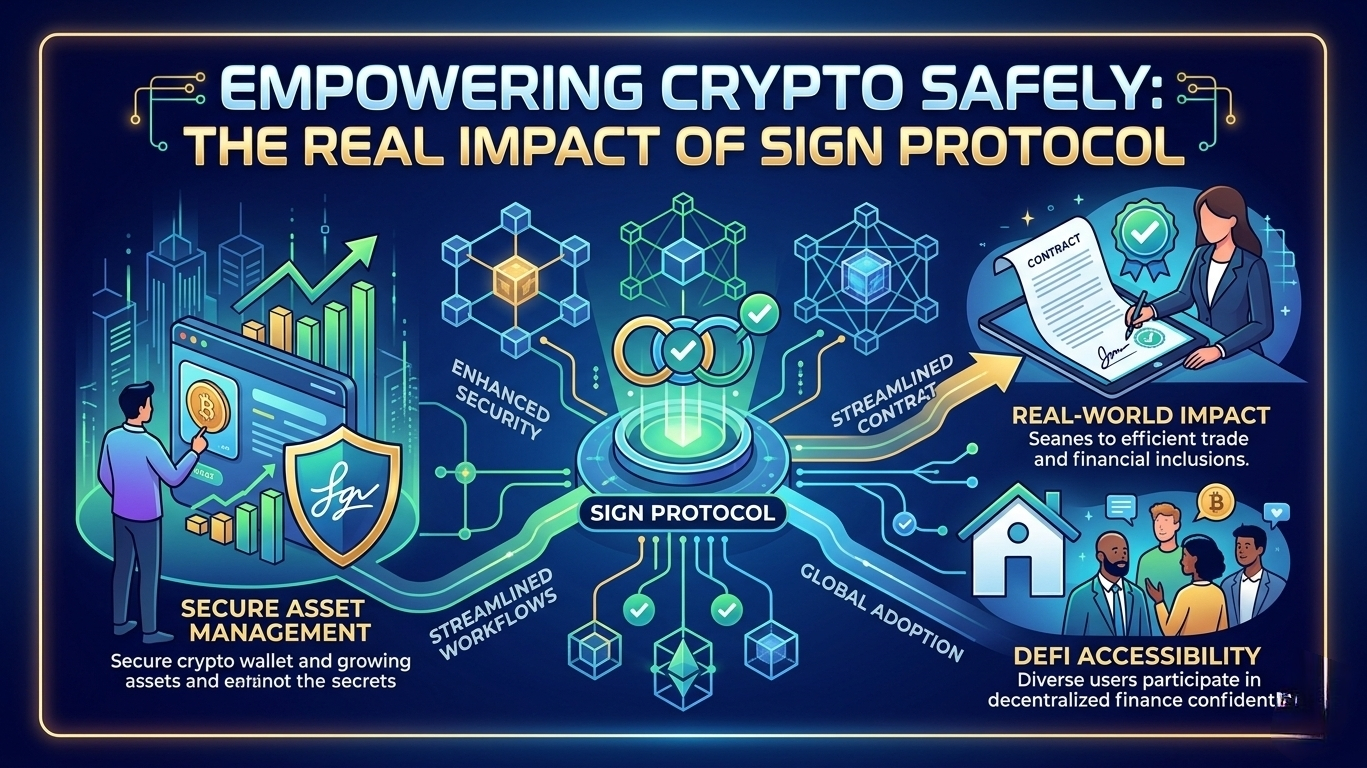

I remember the first time I tried to move a token and hit a wall because my credentials weren’t recognized. It was frustrating in a way that made me step back and think about how much we take for granted in crypto. We always talk about wallets blockchains and smart contracts but the quiet machinery that verifies who we are and how tokens reach us often goes unnoticed. That’s where systems like Sign Protocol quietly change the game.
From my perspective, the challenge isn’t just about security. It’s about reliability and sovereignty. You can have the most sophisticated smart contracts and decentralized exchanges, but if the infrastructure that confirms your identity or distributes your assets stumbles, trust evaporates fast. It feels like trying to drive a sports car on a muddy road. The car is amazing but without a solid foundation you’re going nowhere.
One thing that stood out to me is how Sign Protocol approaches credential verification differently. It’s not just a gatekeeper; it’s a global layer designed to ensure that identities are verifiable without handing over control. In practice, that means fewer lost keys, fewer failed transfers, and less friction when interacting with different protocols or services. For a trader, that reliability is subtle but transformative.
Token distribution is another piece that often goes under the radar. Airdrops staking rewards or even simple transfers rely on timing accuracy and trust in the system. I’ve noticed that delays or errors even small ones, erode user confidence quickly. Sign Protocol seems to tackle this head-on by creating a resilient backbone that keeps assets moving as intended even when the surrounding network is messy or unpredictable.
It feels like the broader lesson here is about decentralization in practice not just theory. We all love the idea of owning our digital assets, but without infrastructure that respects that ownership and keeps it operational under stress decentralization is fragile. Protocols that handle identity and distribution efficiently make the entire ecosystem feel more breathable more dependable.
There’s a subtle elegance in reducing friction. When credentials are verified quickly and assets arrive where they should, users can focus on participation rather than panic. It’s almost invisible, but I’ve found myself appreciating these systems more each time I interact with them. The absence of headaches becomes a feature in itself.
I’ve also been reflecting on the ripple effects for developers and builders. A reliable credential and token infrastructure means they can experiment without fearing catastrophic failure from the foundational layer. It encourages innovation because you know the base is sturdy enough to handle unexpected spikes or user mistakes.
It reminds me of classic internet infrastructure lessons. Email protocols DNS and early network architectures weren’t flashy but they set the stage for everything that followed. In crypto these credential and distribution layers are playing the same quiet but critical role. Observing this it feels like we’re in a maturation phase where reliability becomes as important as decentralization.
From my own experience, the trust factor is enormous. When I know that an interaction with a platform won’t end in lost tokens or mismanaged credentials I’m more willing to engage explore and stake. It’s a small psychological shift but one that fundamentally changes behavior. We often underestimate how infrastructure shapes user confidence.
Another observation is about global access. Crypto promises permissionless participation, but that promise is hollow without dependable verification. A system like Sign Protocol bridges the gap by making identity verification and token access smoother across borders and jurisdictions. That feels significant because it quietly supports inclusivity without making it a headline.
It’s also worth noting the resilience aspect. Networks are unpredictable. Nodes fail connections drop and sometimes chaos emerges. Infrastructure that can weather these disruptions ensures that users don’t experience the chaos firsthand. I’ve seen projects struggle not because the concept was bad, but because the verification or distribution layer failed. That’s a reminder that behind every smooth transaction is invisible labor and engineering.
For community members traders and casual users, this translates into peace of mind. We can focus on what we want to do rather than constantly checking if our keys accounts, or tokens are functioning correctly. That’s the kind of practical empowerment that often goes unsung in crypto discussions, but it shapes day-to-day behavior more than flashy features.
I also can’t help but think about long-term implications. Systems that handle credentials and distribution well make the space more approachable for newcomers. When onboarding is seamless adoption grows organically and the ecosystem becomes more diverse and resilient. From my perspective that’s where the real impact lies quietly building a stronger more reliable foundation for everyone.
At the end of the day Sign Protocol feels less like a tool and more like a supportive layer that allows the rest of crypto to shine. It doesn’t demand attention; it quietly ensures things just work. And for a space often obsessed with innovation at the expense of reliability that kind of foundational work is both refreshing and essential.
When I think about the broader direction of crypto systems like this signal a shift. The conversation is moving from hype and speculation to trust and usability. For anyone building trading or simply participating, having infrastructure that delivers on these basic but critical promises is empowering. It feels like we’re finally giving the community the tools to engage confidently safely and with greater freedom.
@SignOfficial #SignDigitalSovereignInfra $SIGN
