

Alright, here is the thing.
When I first looked at SIGN, I thought “okay… another identity project.” You know the type. Store some data, call it decentralized, move on.
But that’s not what this is. Not even close.
The more I dug in, the more I realized SIGN isn’t trying to just store identity. It’s doing something much more fundamental. It’s building a system where you don’t have to trust who issued the data in the first place.
And honestly, that’s where it gets interesting.
Because let’s be real, most identity solutions still rely on trust somewhere. A platform verifies you. An authority issues credentials. A system tells you something is valid. Even if it’s “decentralized,” there’s still a point where you’re expected to believe someone.
SIGN flips that.
Instead of trusting the source, you verify the proof.
Through its attestation infrastructure, SIGN allows any claim identity, credentials, ownership, participation to be recorded on chain and independently verified. Not accepted because someone said so, but because the proof exists.
That shift? People underestimate how big it is.
Now add this layer… SIGN isn’t limited to identity.
That’s the part most people miss.
It’s a verification layer. A system that can be used across multiple use cases token distributions, developer contributions, governance participation, access control. Anywhere you need to prove something is true, SIGN fits in.
It’s not building a single product.
It’s building infrastructure.
I like that.
I’ve seen too many projects lock themselves into one niche. If that niche slows down, the whole project struggles. SIGN doesn’t have that problem. Its relevance expands as more applications need verification.
The architecture itself is pretty straightforward in concept, but powerful in execution.
Instead of relying on off chain databases or centralized APIs, applications can anchor proofs directly on chain. That means the system doesn’t ask you to trust its internal logic. It shows you verifiable data.
The blockchain doesn’t just record activity.
It validates truth.
That’s a big shift.
Now let’s talk about the part most people overlook.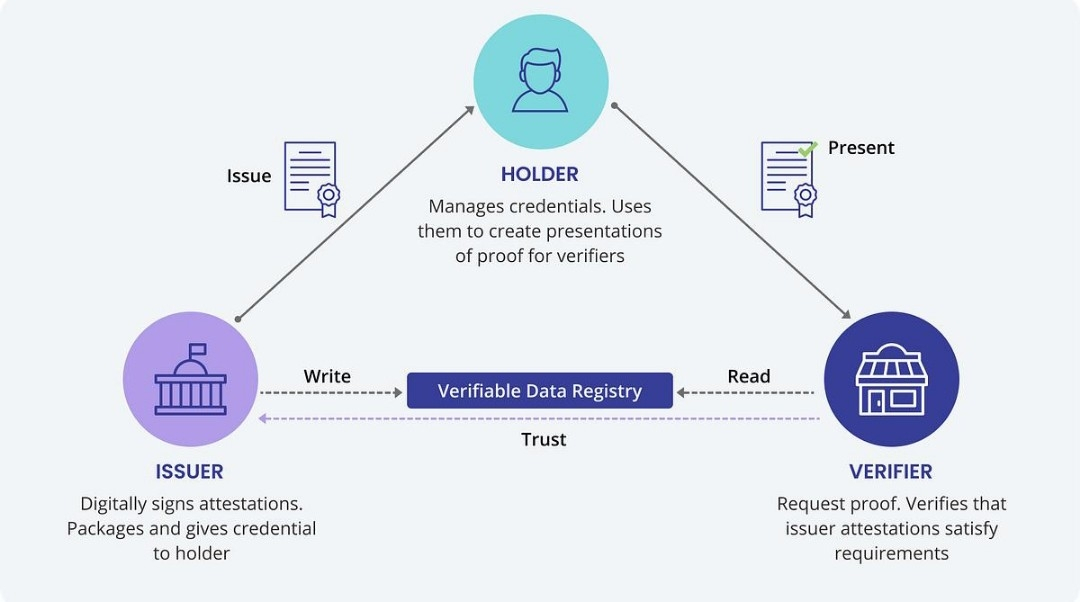
Adoption.
Because this is where most “good ideas” fail.
We’ve seen strong tech before that never became part of real workflows. Systems that worked perfectly but never got used at scale. Infrastructure only matters when people rely on it daily.
SIGN seems designed with that in mind.
It integrates directly into applications instead of sitting as a separate layer nobody uses. Projects can plug it into token distribution systems. Developers can use it to verify contributions. Apps can use it for access control and credentials.
It’s not theoretical.
It’s usable.
And that matters more than anything.
From an investment perspective, this is where the narrative gets stronger.
Most tokens are driven by hype cycles. Attention comes, price moves, then it fades. But infrastructure projects behave differently. Their value comes from usage. The more systems depend on them, the stronger they become.
SIGN sits in that category.
The token is tied to participation, protocol usage, and incentives within the ecosystem. That creates a connection between adoption and demand. Not perfect, but much more grounded than pure speculation.
Of course, I’m not ignoring the risks.
Adoption takes time. Developers need to build. Applications need to integrate. The identity and verification space is getting more competitive. And like most projects, token supply dynamics can impact price in the short term.
I’ve seen strong fundamentals struggle because of weak market conditions. It happens.
But when I step back, I keep coming to the same conclusion.
SIGN is not trying to win a narrative cycle.
It’s trying to solve a structural problem.
And those are the projects that usually matter in the long run.
Because if Web3 continues to evolve, verification doesn’t stay optional. It becomes required. Identity, permissions, reputation, access everything depends on it.
And if that happens, systems like SIGN don’t just participate in the ecosystem.
They become part of its foundation.
Look, I’m still cautious.
I’ve been around long enough to know that not every good idea turns into adoption.
But this?
This feels like one of those narratives that doesn’t explode overnight. It builds slowly, quietly, until one day it’s everywhere and nobody questions it anymore.
And when that happens, the value isn’t just in the token.
It’s in being the layer everything else depends on.
That’s why SIGN, to me, is not just another crypto project.
It’s a bet on a future where truth itself becomes verifiable infrastructure.
@SignOfficial $SIGN #SignDigitalSovereignInfra
