
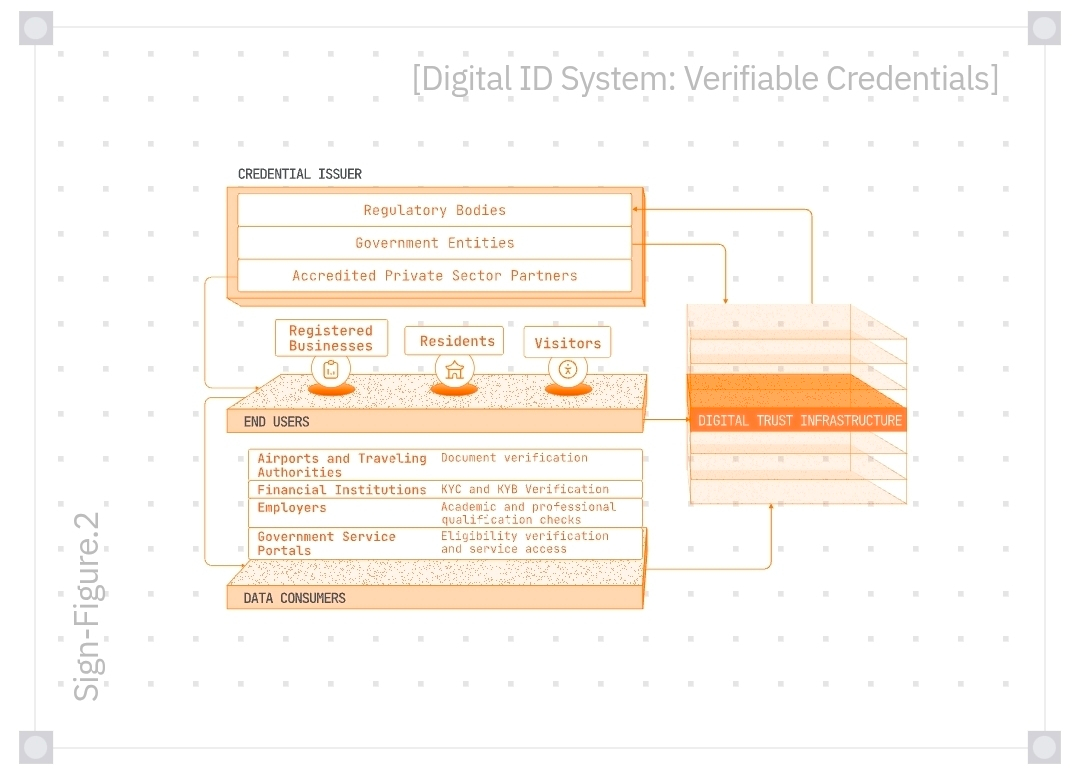
 In the digital era, identity has become the gateway to everything, finance, governance, healthcare, education, and online services. Yet most identity systems remain fragmented, vulnerable to fraud, and controlled by centralized databases. The @SignOfficial Digital ID System introduces a new model: one citizen, one verifiable digital identity secured on-chain and owned by the nation.
This concept could fundamentally reshape how individuals interact with governments, financial platforms, and Web3 services.
🌐 Why Digital Identity Needs an Upgrade
Traditional identity systems rely heavily on centralized databases. These systems face several problems:
• Data breaches exposing millions of records
• Identity fraud and fake accounts
• Slow cross-border verification
• Limited interoperability between services
In a blockchain-driven world, identity should be portable, verifiable, and user-controlled. That is exactly where the SIGN model becomes interesting.
🪪 What is the SIGN Global Digital ID System?
SIGN proposes a sovereign digital identity infrastructure where every citizen receives a verifiable credential anchored on blockchain.
Instead of dozens of separate credentials across platforms, a citizen would have:
One digital identity → Multiple verifiable credentials
These credentials can represent:
• Citizenship
• Education certificates
• Professional licenses
• Government records
• Financial verification
Each credential is cryptographically signed and tamper-proof, meaning anyone verifying the data can trust its authenticity without needing to contact the issuing authority.
🔎 The Role of Verifiable Credentials
At the core of the system are Verifiable Credentials (VCs).
A VC is essentially a digitally signed proof issued by an authority. The holder stores it in a digital wallet and can present it when required.
Example scenario:
A crypto exchange requires KYC verification.
Instead of uploading documents again, the user simply shares a verified credential issued by their national authority.
Verification becomes:
⚡ Instant
🔒 Privacy-preserving
🌍 Globally interoperable
And the individual remains in control of what information is shared.
🧱 Why Blockchain Matters Here
Putting identity infrastructure on-chain introduces three major advantages:
1️⃣ Integrity
Records cannot be altered retroactively.
2️⃣ Transparency
Verification rules and issuance logic can be publicly auditable.
3️⃣ Interoperability
Different governments and platforms can trust the same verification layer.
However, the blockchain does not store personal data directly. Instead, it anchors cryptographic proofs, keeping sensitive information off-chain while preserving trust.
📊 Why This Matters for the Crypto Ecosystem
If implemented correctly, digital ID systems like SIGN could solve some long-standing challenges in Web3:
• Sybil attacks in airdrops and governance
• Duplicate accounts farming incentives
• Fake KYC identities
• Compliance barriers between crypto and governments
Imagine a world where one verified human = one on-chain identity. Governance voting, fair token distribution, and reputation systems could become significantly more reliable.
🧠 My Take
What makes the SIGN concept compelling is the balance between national sovereignty and decentralized verification.
Governments issue identity.
Citizens control credentials.
Blockchain provides the trust layer.
If the system maintains strong privacy protections and avoids over-centralization, it could become a bridge between Web2 identity systems and Web3 infrastructure.
Digital identity might quietly become the most important infrastructure layer for the next phase of blockchain adoption.