
i’ll be honest — when i first looked at sign protocol i was like “ok cool, attestations, registry, moving on.” another infra project doing infra things. skimmed it, nodded, and went back to staring at charts like the degenerate i am 😂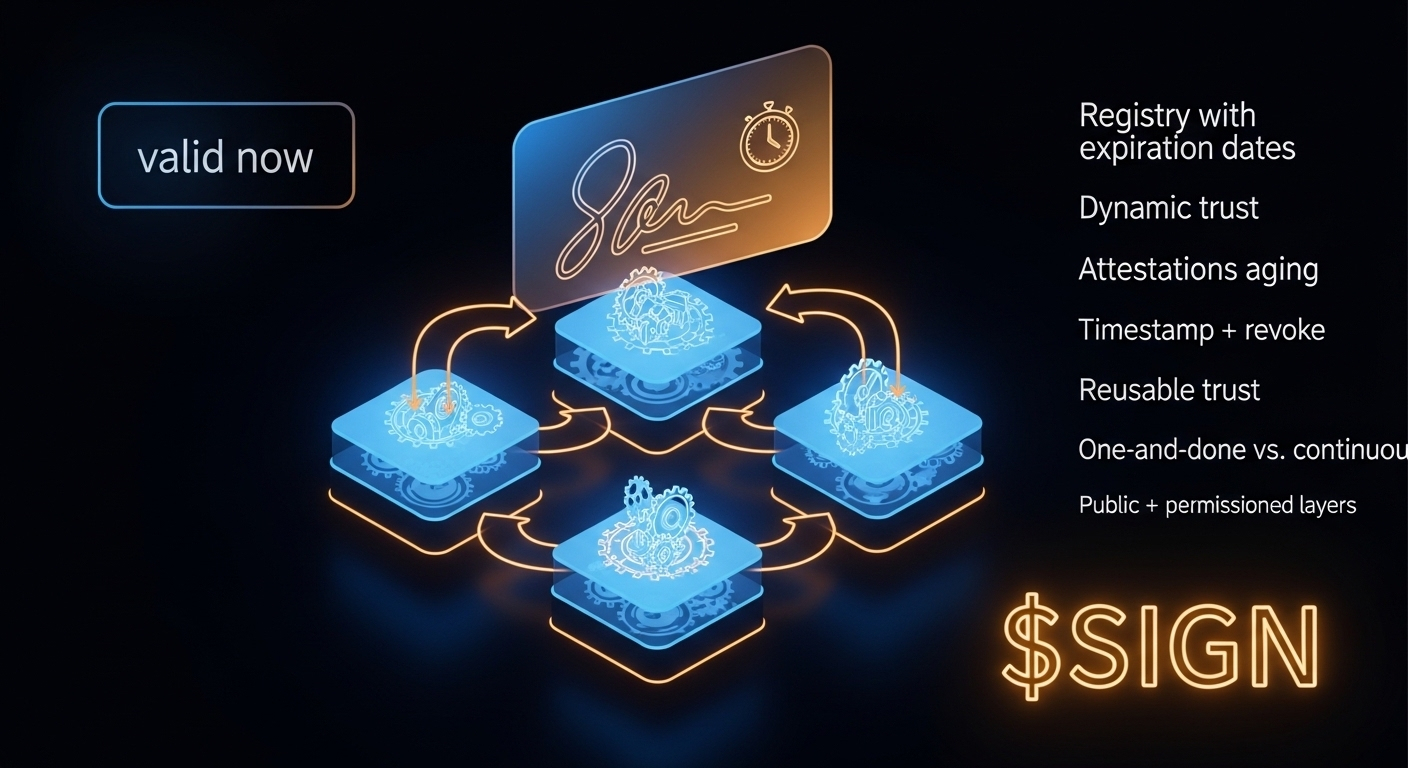
but then i kept circling back. not because someone was shilling it, but because something about the lifecycle thing kept scratching at my brain in a good way.
most systems treat actions like one-and-done. you claim something, you verify it, and then everyone acts like that truth is eternal. but real life isn’t like that. people change roles. licenses expire. permissions get revoked. a credential that was rock solid six months ago might be completely worthless today. but most protocols don’t care about that — they just stamp it and move on.
sign actually gets this. it checks if something is still true right now, not just once upon a time. and that shift is massive. you’re not building static logic anymore. you’re building something that ages, that reacts, that knows when to say “this is no longer valid.” that’s the kind of infrastructure that actually matches how the world works.
i think that’s why people keep calling it a registry and missing the point. it’s not just a place to stick attestations. it’s reusable trust — trust that doesn’t just sit there but actively tells you when it’s still good or when it’s time to refresh. that level of clarity is exactly what’s been missing from a lot of these systems.
and the fact that it’s designed to handle this at scale, across both public and permissioned environments, means you’re not just getting flexibility — you’re getting consistency where it matters most.
still learning. still impressed by how much thought went into making trust actually work in motion.
